
TL;DR
- A medical canvass is telephonic outreach to providers that confirms whether a claimant was treated at a location and on what dates, nothing more.
- Order one when a claim shows soft-tissue injuries, early attorney representation, prior claims across carriers, treatment gaps, or high exposure that hasn't been reserved yet.
- Superunit contacts unlimited facilities at once across phone, fax, and email, with a roughly 24-hour average turnaround regardless of claim volume.
- Every call is timestamped, recorded, and transcribed, so the full chain of confirmations and denials survives a market conduct exam or litigation.
- No PHI is collected and no signed release is required. Superunit is HIPAA and SOC 2 compliant and prices on success.
What Medical Canvassing Does for SIU
A medical canvass answers one question fast. Has this claimant been treated somewhere the claim file doesn't mention? SIU investigators order a canvass early because prior treatment reshapes reserves, and reserves get locked within days of a referral. Learn about the injury after the reserve is set and you're revising a number the file has already committed to. A same-day canvass surfaces that history while triage is still open.
Canvassing confirms dates and locations only. A canvasser asks whether a person was seen at a facility and roughly when, nothing more. No diagnosis, no medication, no treatment detail. Because the canvass never touches protected health information, it needs no signed release and no waiting on the claimant to sign anything.
Records retrieval is the opposite process. Pulling actual medical records means PHI, a signed release or subpoena, and a turnaround measured in weeks. A canvass tells you which providers to retrieve from. Ethos Risk draws the same line, treating any request for a claimant's prior treatment history as a separate records engagement with its own release requirement. Order the two in the wrong order and you pay for records before you know they're worth pulling.
When to Order a Medical Canvass: Trigger Conditions

A canvass earns its cost when a claim carries a specific reason to doubt the treatment story. Not every referral needs one. The conditions below are the ones that consistently justify ordering a canvass before reserves lock.
Soft tissue or difficult-to-diagnose injuries. Strains, sprains, whiplash, and other injuries that lack objective imaging evidence rely on the claimant's account, so prior treatment history becomes the fastest way to test whether the injury is new.
Attorney representation at first contact. When a claimant lawyers up before the file develops, the window to establish an independent treatment record narrows, and a canvass captures dates before they get shaped by counsel.
Prior claims history across carriers. A claimant with filings at multiple carriers may carry a pre-existing condition attributed to the current loss, and a canvass surfaces providers those earlier claims touched.
Treatment gaps or inconsistent timelines. A reported injury with no treatment for weeks, or care that predates the alleged accident, points to a story that does not hold, and the canvass pins down actual dates of service.
Claim size or high exposure. Large-reserve claims justify the canvass on economics alone, since one confirmed prior provider can move a six-figure exposure.
Policy freshness or suspicious claim timing. A loss reported days after binding, or right before renewal, or just after a coverage increase warrants a look at whether treatment predates the policy.
Inconsistent claimant statements or conflicting witness accounts. When the claimant's version shifts or witnesses contradict the mechanism of injury, a canvass provides a factual anchor that either corroborates the account or exposes it.
Any one of these conditions supports ordering a canvass. Several appearing together on the same file usually means the claim belongs in the SIU queue, and the canvass answers the prior-treatment question first.
Lines of Business Covered
Medical canvassing supports any line of business built around a bodily injury claim, and what a canvass reveals shifts by line.
In workers' compensation, a canvass surfaces prior injuries and undisclosed pre-existing conditions that argue the injury did not arise from the job.
In auto bodily injury, it confirms whether soft-tissue treatment matches the reported collision or points to a pre-existing pattern.
For short-term and long-term disability, a canvass identifies treatment activity that contradicts the claimed level of impairment.
In general liability, it establishes where a claimant sought care after an alleged premises or product injury, testing the incident timeline.
For no-fault and PIP, a canvass exposes provider-pattern anomalies, including the same clinic recurring across an unusual share of suspicious files. Each finding gives you the treatment history you need before reserves are locked, without a signed release.
Superunit's Canvass Types and Deliverables
Not every canvass targets the same providers, and separating them by type keeps the outreach focused and the report readable. Superunit runs three canvass types, each with a distinct target set and a distinct deliverable your adjuster or SIU investigator can act on.
Medical Canvass
A medical canvass reaches the providers most likely to have treated a bodily injury claimant. Superunit contacts hospitals, urgent care clinics, physicians, chiropractors, physical therapists, imaging centers, and orthopedic and neurological specialists across the claimant's current and prior addresses. The deliverable is a confirmed provider hit list with facility names and dates of service. That list tells you exactly where prior treatment happened, so you can set reserves against a real treatment history rather than the claimant's account of it.
Pharmacy Canvass
A pharmacy canvass answers a narrower question. It confirms whether the claimant received medication at a given retail or mail-order pharmacy and on what dates. Canvassers never ask what was prescribed or what condition it treated, and no medication names or diagnoses enter the report. What the deliverable surfaces is behavioral. A claimant who fills prescriptions across several pharmacies, or who changes prescribing physicians frequently, shows a pattern the raw treatment list would miss. Those patterns often distinguish a legitimate claim from pharmacy-shopping worth a closer look.
Specialty Canvass
A specialty canvass targets providers that expose a mismatch between the claimed injury and the claimant's actual activity. Superunit reaches fitness centers, pain management clinics, dental offices, podiatrists, ENT specialists, and behavioral health providers. The deliverable identifies treatment patterns inconsistent with the injury type or severity on file. A claimant reporting a disabling back injury who holds an active gym membership, or one whose behavioral health treatment predates the alleged incident, produces exactly the kind of inconsistency an SIU investigator can build on.
Most claims warrant a medical canvass first. Pharmacy and specialty canvasses layer on when the file shows red flags a provider hit list alone won't resolve, and Superunit can run all three in parallel on the same claim without adding to your turnaround.
How Superunit Runs the Canvass
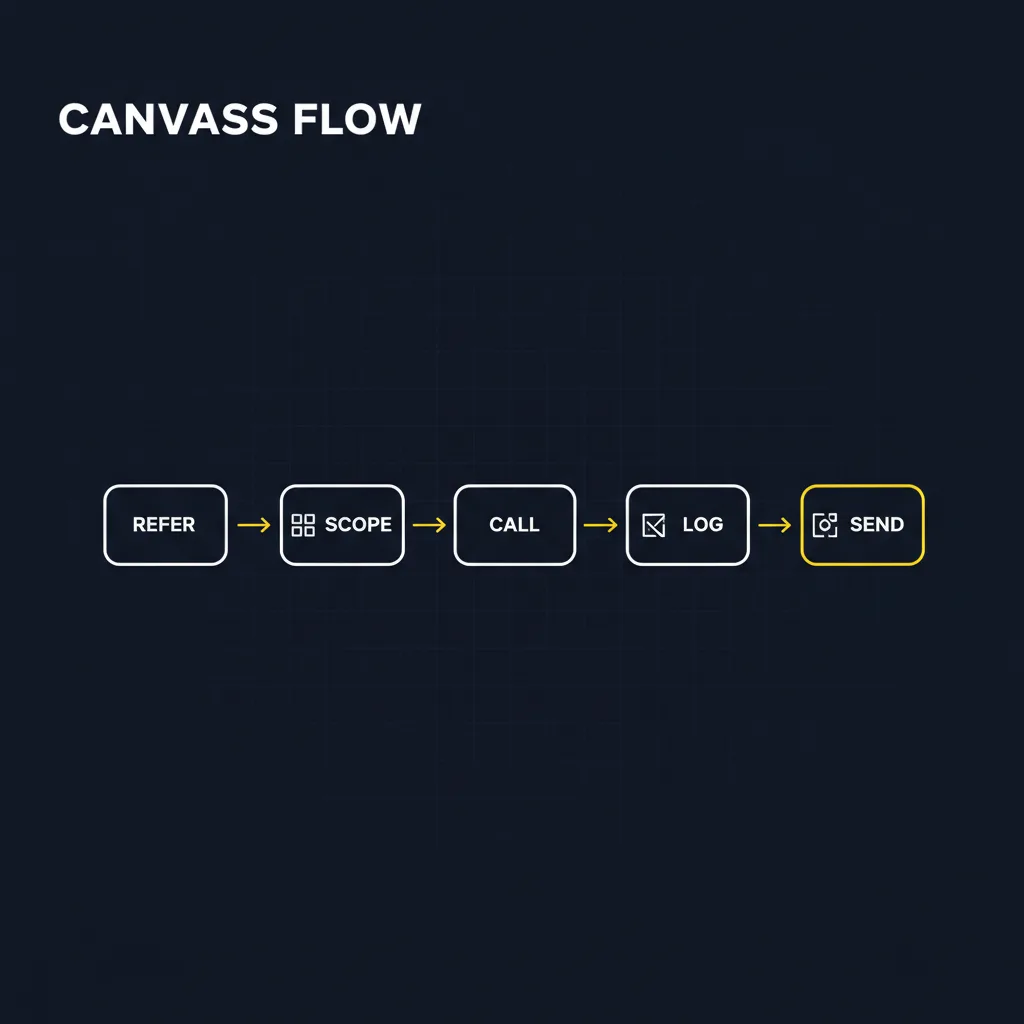
A human canvassing team works one call at a time. One caller dials a facility, waits on hold, gets screened by front-office staff, and moves to the next. That sequence is the throughput ceiling, and it grows longer with every provider on the list and every claim in the queue.
Superunit launches outreach to every facility at the same moment, across phone, fax, and email simultaneously. When a canvass covers forty providers, all forty get contacted in parallel rather than in a line that takes days to work through. Claim volume does not change this. There is no cap on how many facilities run at once, so a heavy referral week does not stretch turnaround the way it does with a fixed roster of callers.
Average turnaround runs about 24 hours from order to report. Outreach-heavy work like canvassing is the throughput bottleneck in most SIU operations, and simultaneous contact is what collapses it. A canvass ordered when a referral lands can inform reserves the next day rather than weeks later.
Every call is timestamped, recorded, and transcribed. You get the full record of confirmations and denials, not just the facilities that came back positive. The pricing is pay-on-success, so cost tracks results rather than raw call attempts. Superunit is HIPAA and SOC 2 compliant, and no PHI moves through the process. Canvassers confirm dates and locations only.
The practical difference from Ontellus or CDI Canvassing is architecture. Their capacity scales with headcount and shrinks with turnover. Superunit's does not.
The Audit Trail
Superunit records every outreach attempt with a timestamp, an audio recording, and a full transcript. The canvass file holds the complete chain of confirmations and denials, not just the facilities that returned a positive hit. A market conduct examiner pulling your referral sample sees exactly which providers you contacted, what each one reported, and when. A single confirmed treatment date with no record of the surrounding effort collapses under scrutiny, so the documented denials matter as much as the hits.
State insurance departments trace referrals from intake to disposition, and examiners scrutinize case closure documentation and fraud reporting timeliness. Several states set fraud bureau reporting deadlines in days, and a case closed with a blank disposition field reads as a paper SIU that invites a corrective action plan. A complete canvass record lets you close every referral with a reason code and a narrative grounded in verifiable contact history.
The same record supports litigation. When an examination under oath locks a claimant into sworn facts, timestamped canvass results that contradict those facts hold up, and the documented denial lets a coverage decision survive a bad-faith challenge.
Frequently Asked Questions
Does a medical canvass collect PHI? No. Canvassers confirm only whether the claimant was a patient at a given location and the approximate dates of service. No diagnoses, medications, or treatment details are collected, so nothing protected under HIPAA changes hands.
Is a signed medical release required? No. Because a canvass confirms only dates and locations rather than clinical records, Superunit can initiate outreach without a signed release. A release becomes necessary later, at the records retrieval stage, once the canvass has told you where to retrieve from.
How long does a canvass take? Superunit averages roughly 24 hours from order to report. That turnaround holds regardless of how many facilities the claim requires, because outreach runs in parallel rather than one call at a time.
How many facilities can be contacted per claim? As many as the claim warrants. Superunit contacts facilities simultaneously with no cap tied to claim volume, so a claim needing forty providers moves at the same speed as one needing four.
What makes this different from records retrieval? A canvass is scope discovery. It identifies whether, when, and where a claimant was treated so you know which records to pull. Records retrieval is the next step, and it requires a signed release or subpoena and takes considerably longer.
What lines of business does Superunit support? Workers' compensation, auto bodily injury, disability including short-term and long-term, general liability, and no-fault/PIP. Each carries its own prior-treatment and pre-existing-condition questions that a canvass answers before reserves lock.
Is Superunit HIPAA and SOC 2 compliant? Yes. Superunit maintains both, and every canvass call is timestamped, recorded, and transcribed so the compliance record holds up under a market conduct exam or in litigation.
Why AI-Automated Canvassing Like Superunit Outperforms Traditional Teams
Traditional canvassing runs on people making calls one at a time. A human canvasser at Ontellus, Intertel, or CDI Canvassing dials one facility, waits on hold, gets screened by front-office staff, leaves a message, and moves to the next number. Each provider on a claim gets worked in sequence, and every additional claim in the queue extends the wait for all of them. Add more volume and the throughput ceiling drops, because the number of callers is fixed and their day is not.
Superunit launches outreach to every facility on a claim at the same moment, across phone, fax, and email. A claim with sixty providers does not take sixty times as long as a claim with one. The system contacts all of them simultaneously, and it does the same across every open claim without any of them competing for a caller's attention.
That difference matters most exactly when human teams break down. SIU units run under heavy caseloads with limited staff, and turnover pulls trained canvassers off the phones right when volume spikes. AI capacity is not tied to headcount, so a surge or a backlog clears on the same day rather than queuing behind whoever is available. You pay for canvasses that produce a result, not for the hours a team spends waiting on hold.
Going Deeper on Medical Canvassing
This guide covers what a canvass is and when to order one. Five companion pieces go further on the questions that come up next:
- How much does medical canvassing cost? — per-facility pricing, what drives it, and how flat-fee and per-location models compare.
- The best medical canvassing companies — how the vendor field splits between human-only firms and AI-augmented providers.
- Medical canvassing vs. records retrieval vs. IME — which of the three to order first, and why sequence changes what each one costs you.
- Scaling canvassing without adding SIU headcount — where throughput breaks under volume and what actually fixes it.
- Pharmacy canvassing — the prescription-side canvass and what it surfaces that a provider canvass won't.