TL;DR
- Pharmacy canvassing is proactive outreach to retail and mail-order pharmacies that confirms whether a claimant received medication at a location and on what dates. It never collects medication names, dosages, or diagnoses.
- Because canvassers seek only a yes/no presence confirmation and no protected health information, no signed HIPAA release is required.
- The canvass surfaces pharmacy shopping, frequent prescriber changes, and undisclosed treatment history the claimant omitted.
- Canvass findings tell you which facilities actually treated the claimant, so you subpoena verified sources instead of requesting records blind.
- Superunit runs pharmacy canvassing alongside medical and specialty outreach on the same 24-hour turnaround, with a full audit trail and no PHI collected.
Why Pharmacy Costs Are a Fraud Vector SIU Can't Ignore
Prescription drugs account for roughly 7% of workers' compensation claim costs in the United States, and pharmacy fraud ranks among the fastest-growing cost drivers in the system. A single fraudulent prescribing pattern can inflate an individual claim by thousands of dollars before an adjuster ever flags it. One corrected fraud series was projected to save a single client over $500,000. The damage compounds quietly because each fill, prescriber switch, and new pharmacy looks defensible in isolation.
The problem for SIU is timing. By the time a suspicious pharmacy bill or an escalating cost curve reaches your desk, the claim has already absorbed months of inflated spend. Standard investigation waits for records requests to come back, and those requests presume you already know which providers and pharmacies to subpoena. A claimant who fills prescriptions across four pharmacies from three prescribers will not volunteer that history, and the records you request only cover the sources you already knew to ask about.
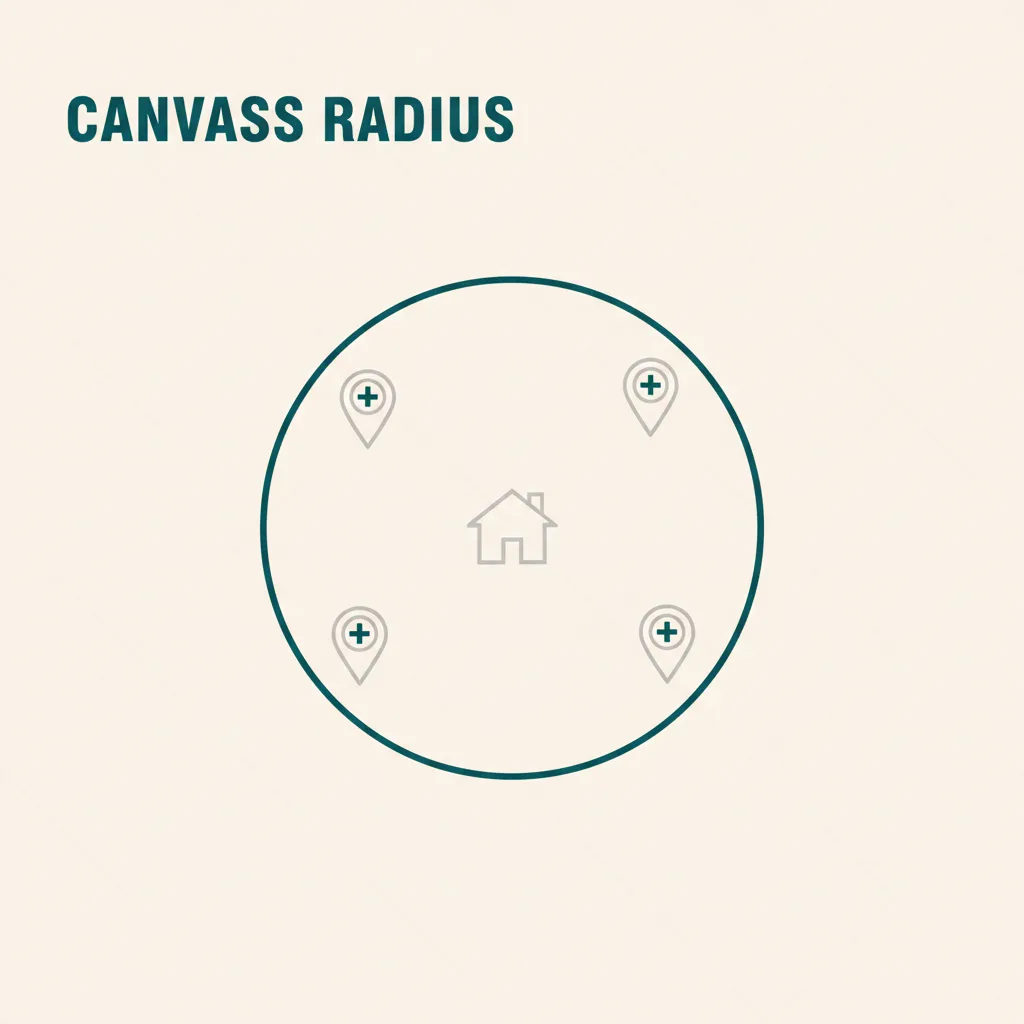
Pharmacy canvassing closes that gap by working the other direction. Rather than reacting to records that trickle in, you canvass pharmacies within a radius of the claimant's home and stated injury location to confirm where medication was actually dispensed and when. That confirmation tells you which pharmacies to pursue, which prescribers to scrutinize, and where the treatment timeline contradicts what the claimant reported. You find the shape of the fraud first, then spend records money only where the canvass points.
What Pharmacy Canvassing Actually Is

Pharmacy canvassing is a specialized form of medical canvassing aimed at the prescription side of a claim. It contacts pharmacies to confirm one thing: whether a claimant received medication at that location and on what dates. The canvasser furnishes a name and date of birth and seeks a yes or no answer from the pharmacy, nothing more (ethosrisk.com). No medication names, no dosages, no diagnoses cross the line.
That boundary separates canvassing from medical record retrieval. Record retrieval asks what a claimant was prescribed and requires a signed medical release to answer it. Canvassing asks only where and when, which produces no protected health information at all. One source describes canvassing as proactive and record retrieval as reactive, and the framing holds up (legalcopyservices.com). A canvass tells you which facilities treated the claimant before you spend time and money requesting full records from any of them.
The scope covers both retail and mail-order pharmacies, contacted within a radius of where the claimant lives or where they say the injury occurred (alpineintel.com). Pharmacy outreach rarely runs alone, and it sits inside a broader canvass that also reaches hospitals, urgent care, walk-in clinics, and specialty providers, all worked at the same time. Run together, those contacts build a treatment timeline and surface providers the claimant never disclosed.
A pharmacy canvass is a pre-record-retrieval intelligence step. It answers the "where to look" question first, so that any subpoena or HIPAA-authorized records request that follows targets verified sources instead of guessing across a region (legalcopyservices.com). You learn what you're dealing with before you commit to the expensive step.
How the Outreach Process Works
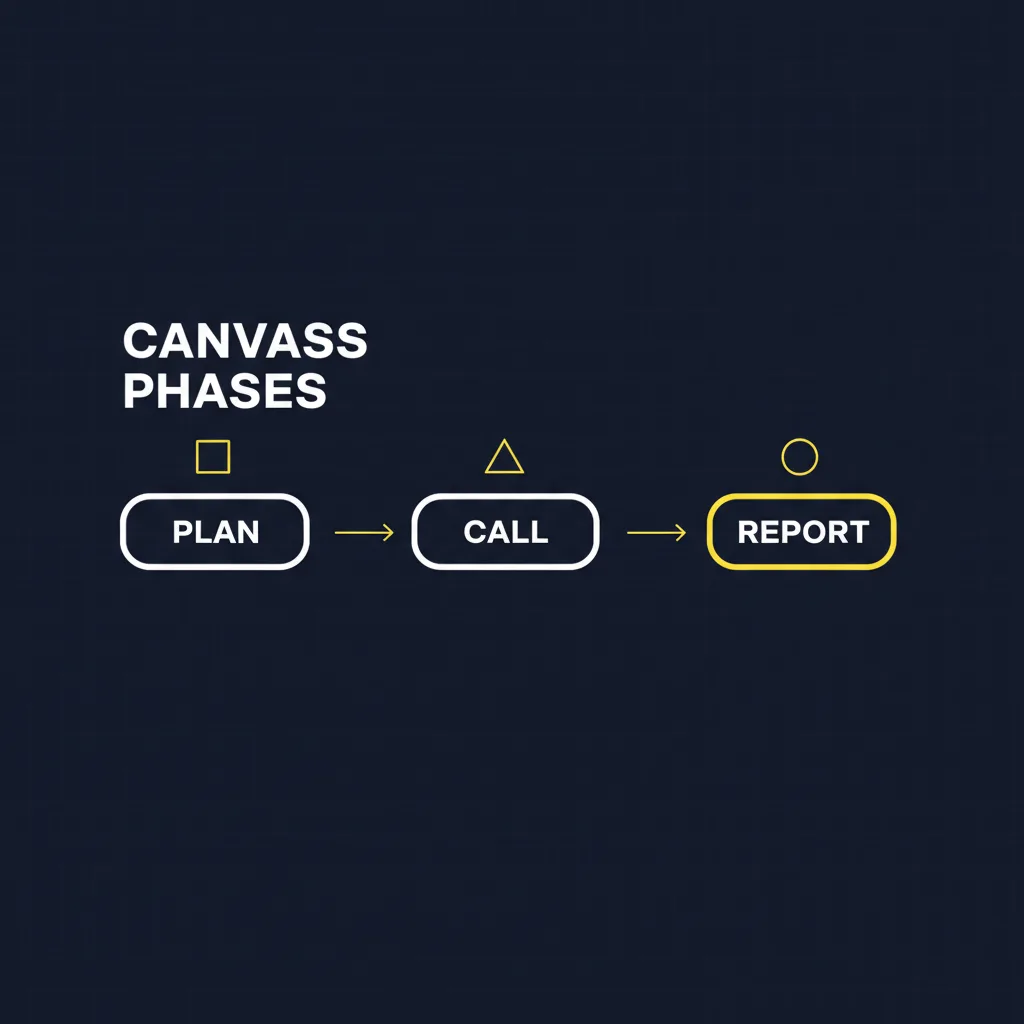
A pharmacy canvass moves through three phases, and the phase most investigators underinvest in is the first. Planning defines the geography, the injury type, and the claimant's stated history before a single pharmacy is contacted. You set a radius around the claimant's home address and around the location where the injury allegedly occurred, then you build the target list from the retail and mail-order pharmacies inside that radius. A workers' comp back injury with a stated home in one county but a treatment claim in another gives you two search radii, not one, and skipping that step is how undisclosed pharmacies stay hidden.
Multi-channel outreach earns its place in the canvassing phase. The canvasser furnishes the claimant's name and date of birth, then asks the pharmacy one question in two parts: did this person receive medication at your location, and on what dates? Nothing else. Running that outreach across phone and fax simultaneously matters because pharmacies respond on different channels. A retail counter takes a phone call during a slow afternoon, while a mail-order operation routes verification requests through a fax queue with its own turnaround. Firing both channels at once for the same target list compresses a canvass that would otherwise stretch across days into a single working window.
What the canvasser asks is narrow by law, and what the canvasser is prohibited from asking is narrower still. The permissible questions cover dates of service and confirmation of presence. The prohibited questions cover medication names, dosages, ailments, and diagnoses. A canvasser who asks what the claimant was treated for or which drugs were dispensed has crossed into protected health information and stepped outside the legal basis that lets the canvass proceed without a signed release. The Ethos Risk Services guidance puts it plainly. Canvassers can ask for dates of service and confirmation, and they cannot ask what medications or ailments the subject was being treated for.
Reporting compiles every confirmation and every denial into a single record, then flags the discrepancies against what the claimant disclosed. A pharmacy that confirms fills the claimant never mentioned becomes a documented gap the adjuster can act on. The three-phase structure ends here because the reported findings, not the individual calls, are what feed the record-retrieval decision that comes next.
HIPAA Compliance: What Investigators Need to Know
The most common reason adjusters hesitate to order pharmacy canvassing is a belief that they need a signed HIPAA release first. The industry practice, and the position taken by most canvassing vendors and SIU legal practitioners, is that a canvass seeking only a yes/no presence confirmation and dates of service does not collect protected health information. No HIPAA authorization is needed (ethosrisk.com). If a claimant was never a patient at a given pharmacy, no PHI about them exists there to protect. That logic holds, but only as long as the questions stay narrow.
Pharmacies are HIPAA covered entities, and the full PHI protection regime applies to them. Civil penalties for improper disclosure can reach into the millions of dollars per violation category, and pharmacy technicians are trained to withhold protected information. A canvasser who drifts into asking about medications or diagnoses will get a wall and can expose the pharmacy to enforcement risk. Any canvasser working these calls needs clear training on exactly what the yes/no confirmation permits and where it stops.
Two obligations sit on the vendor side rather than the pharmacy side. First, a Business Associate Agreement applies when a canvassing vendor creates, receives, maintains, or transmits PHI on behalf of a covered entity or business associate. Most carriers treat canvassing vendors as business associates as a matter of standard practice, so confirm your provider will sign one before work begins. Second, anything past a presence-and-dates confirmation requires a subpoena, which can only issue after the initial canvass identifies where the claimant was treated. If the canvass confirms the claimant was a patient at a pharmacy, pulling the actual dispensing records becomes a separate record retrieval step that does require a formal request and a signed medical authorization (legalcopyservices.com).
The canvass tells you where to look and produces no PHI. Getting the details behind that confirmation is a distinct, authorized step you take next.
Documentation That Holds Up Under Scrutiny

A canvass finding is only as strong as the file behind it, and most vendors treat documentation as an afterthought. When an adjuster acts on a canvass result or takes findings into litigation, the file becomes the record of what you did and when. A defensible file starts with a timestamp on every contact attempt, including the pharmacy contacted, the outreach channel, and whether anyone answered.
Beyond timestamps, the file needs proof of each conversation. For phone outreach, that means a call recording and a transcript. For fax, it means the transmission confirmation showing the number reached and the time it went through. A canvasser's summary note is not evidence, but a recording paired with a transcript is, because it shows exactly what the canvasser asked and confirms no one requested medication names, dosages, or diagnoses.
The most overlooked element is the complete chain of confirmations and denials across every pharmacy contacted. A canvass that reaches twelve pharmacies and reports the two hits is incomplete. The file should show all twelve contacts, the two that confirmed the claimant as a patient, and the ten that denied any record. The denials matter as much as the hits, because they prove you searched the full radius rather than stopping at the first useful answer.
A quality control sign-off closes the file. Before findings go to the adjuster, a reviewer should confirm the planned scope was covered, every attempt is logged, and no PHI appears anywhere in the record. QC exists to catch the gap that undermines the whole canvass, such as a pharmacy that was never reached or a note that strayed into asking about a medication.
The documentation is your evidence of reasonable discovery effort. If a claimant's attorney challenges the canvass in litigation, or an SIU audit questions how findings were reached, a file with timestamps, recordings, transcripts, a full confirmation and denial chain, and a QC sign-off answers those questions on its own. A file that cannot reproduce how the canvasser reached each conclusion invites the challenge instead of ending it.
Behavioral Patterns That Signal Fraud
A canvass gives you dates and locations, not diagnoses, so the fraud signal lives in the pattern across those confirmations rather than in any single fill. Read the whole set of yes/no confirmations together and a handful of behaviors stand out.
Pharmacy shopping shows up when three or four pharmacies each confirm the same claimant filled prescriptions in overlapping windows. A single fill means nothing, but fills at multiple locations with no geographic reason for the spread point toward duplicate supply. Your next step is a subpoena at the confirmed pharmacies to pull actual fill records and dates.
Opioid cycling is harder to see from canvass data alone, because prescribers rotate agents within a drug class every couple of months to stay under system alerts, so each switch looks clinically justified in isolation. What the canvass gives you is the timeline of consistent fills across locations. Hand that timeline to your PBM clinical team and ask whether the cadence matches drug-class rotation.
Multiple concurrent prescribers surface when different pharmacies confirm fills that trace back to different physicians with no shared treatment history. Fraud schemes coordinate across specialties to obtain duplicate prescriptions, and claims running more than five to seven concurrent medications for one injury warrant a closer look. Confirm each prescriber's credentials through the state medical board and the National Practitioner Data Bank before you request clinical justification.
Geographic inconsistency flags itself when a pharmacy far outside the claimant's home or injury radius confirms fills, or when the prescribing physician is an out-of-state telehealth provider with no documented connection to the treatment team. A claimant who lives in one metro but routes prescriptions to a pharmacy two states away is giving you a reason to widen the canvass. Add the out-of-area pharmacy to the outreach list and verify the telehealth prescriber's license.
Undisclosed treatment history is the pattern the canvass surfaces most directly. When a pharmacy confirms fills the claimant never mentioned, you have treatment they intentionally or unintentionally omitted. Compare every confirmation against the claimant's stated medical history, flag the gap, and use it to decide which records to pull. That comparison also tells you whether the omission is isolated or part of a broader pattern already visible in the shopping and prescriber data above.
Pharmacy Canvassing vs. Medical Canvassing: Scope Comparison
Pharmacy canvassing and medical canvassing answer different questions, which is exactly why you run them at the same time. Medical canvassing tells you which facilities treated a claimant. Pharmacy canvassing tells you where prescriptions were filled and when. Neither channel on its own gives you a full picture of care.
| Canvassing Type | Facilities Contacted | What Is Confirmed | PHI Collected | Typical Trigger | Output |
|---|---|---|---|---|---|
| Pharmacy | Retail and mail-order pharmacies within a radius of the claimant's home or injury location | Whether the claimant filled medication there and on what dates | None | Suspected pharmacy shopping, prescriber switching, opioid patterns | Presence and date confirmations across contacted pharmacies |
| Medical | Hospitals, urgent care, walk-in and specialty clinics | Whether the claimant was treated there and on what dates | None | Subjective injuries, memory gaps, undisclosed prior treatment | Facility-level treatment confirmations |
Running both simultaneously is what produces a complete treatment timeline. A medical canvass might confirm a claimant visited a clinic, and a pharmacy canvass run alongside it confirms a matching fill at a pharmacy two counties away that no provider referenced. Run either alone, and you get a partial timeline that leaves the discrepancy hidden until records come back weeks later.
When to Order Pharmacy Canvassing (and Where Superunit Fits)
Order a pharmacy canvass whenever the claim gives you a reason to question the treatment story the claimant has told. Five triggers make it worth the spend.
Start with subjective injury claims. When a claimant reports soft-tissue pain with no objective medical findings, a canvass tells you whether their pharmacy activity matches an injury of that severity.
Claimant memory gaps are the second trigger. A claimant who cannot recall providers, treatment dates, or which pharmacies filled their prescriptions is either disorganized or hiding something, and a canvass settles which.
The third trigger is indicators of misrepresentation. When a claimant avoids diagnostic procedures or the file shows possible malingering, pharmacy confirmations across multiple locations expose treatment they never disclosed.
Litigation support is the fourth. When you need documented verification for a legal proceeding, a canvass produces a defensible record of who confirmed treatment and who denied it, dated and time-stamped.
Routine verification on higher-value claims rounds out the list. On a large reserve, confirming the claimant's treatment footprint is cheap insurance even when no fraud is suspected.
Pharmacy canvassing earns its keep most on bodily injury, workers' compensation, and disability claims. For SIU teams evaluating the broader canvassing workflow, Superunit's insurance SIU solution covers how pharmacy, medical, and specialty outreach fit together. Each turns on causation and treatment history, and each rewards fraud that inflates prescription costs before an adjuster notices. Prescription drugs run roughly 7% of workers' comp claim costs, and a claimant filling across multiple pharmacies can add thousands to a single claim. On those claim types, a canvass tells you where to look before you buy records.
How Superunit Runs Pharmacy Canvassing
Superunit runs pharmacy canvassing as one channel inside a single canvass operation, so pharmacy outreach fires at the same time as hospital, urgent care, specialty clinic, and mail-order contacts. For a full picture of how that scales across high-volume SIU programs, see how to scale medical canvassing without adding headcount. You are not ordering a pharmacy canvass, waiting on it, and then queuing a separate medical canvass. All channels launch together and return inside 24 hours, which is the difference between a treatment timeline you can act on this week and one that arrives after the reserve has already been set.
The outreach itself stays inside the yes/no boundary the law requires. Canvassers furnish a claimant name and date of birth, confirm presence and dates of service, and never ask for medication names, dosages, or diagnoses. No PHI enters the file, so no signed release is needed to run the canvass. Superunit contacts pharmacies across phone and fax at the same time rather than working one number at a time, which is what makes a full-radius sweep finish in a day instead of a week.
Every contact produces a record you can defend. Superunit timestamps each attempt, captures call recordings and fax transmission confirmations, generates transcripts, and compiles the complete chain of confirmations and denials across every pharmacy contacted. That file does two jobs at once. First, it gives the SIU investigator or adjuster a clear basis for the next decision, whether that is a subpoena, a targeted records request, or a denial. It also holds up when the canvass findings are challenged, because the documentation shows exactly who was contacted, when, and what each pharmacy said.
The same audit standard applies to every canvass channel, not just pharmacy. When you pull the file for one claim, the medical and specialty results carry the same timestamps and transcripts, so the record reads as one investigation rather than three stitched together.
Conclusion
Pharmacy canvassing changes what you know before you spend a dollar on records. A canvass confirms which pharmacies actually filled prescriptions for a claimant and on what dates, and that answer tells you exactly where to send a subpoena or a signed authorization. You narrow the request to verified sources instead of casting wide.
Skip the canvass and you invert that sequence. You request records reactively, guessing at which providers matter, paying for broad pulls that return volume you don't need and miss the pharmacies you never knew to ask about. Meanwhile the behavioral patterns that flag fraud stay buried. By the time a suspicious opioid cycle or an out-of-area prescriber surfaces in retrieved records, the claim has often already ballooned. Running the canvass first is cheaper and faster, and it puts the fraud signal in front of you while you can still act on it.
Frequently Asked Questions
Does pharmacy canvassing require a signed HIPAA release? Most SIU legal practitioners and canvassing vendors hold that it does not, on the basis that a yes/no presence confirmation and dates of service do not constitute protected health information. Superunit's outreach never asks for medication names, dosages, or diagnoses, which is what keeps the canvass on the right side of that line. Confirm the position with your own counsel before the first order if your program has not done so already.
What information can a canvasser legally ask for? A canvasser can ask a pharmacy to confirm whether the subject received medication there and the relevant dates of service. They cannot ask what medications were dispensed, at what dosage, or for what condition. Any detail beyond that yes-or-no confirmation requires a subpoena, which can only follow the initial canvass.
What happens when a pharmacy confirms the claimant was a patient? A confirmation tells you where to send a targeted record request rather than what was prescribed. Superunit documents the confirmation with a timestamp and transmission record, and you then issue a formal records letter with a signed medical release to obtain the underlying detail. Record retrieval is a separate, subsequent step from the canvass itself.
Does Superunit need a BAA? A Business Associate Agreement applies whenever a vendor handles data adjacent to protected health information on your behalf. Because Superunit collects only presence-and-date confirmations, the canvass itself produces no PHI, but you should execute a BAA to cover any data your program routes through the vendor. Treat it as standard practice, not an afterthought.
How long does a canvass take? Superunit returns pharmacy canvass results within 24 hours. That turnaround holds whether you order pharmacy canvassing alone or alongside medical and specialty outreach.
Can pharmacy canvassing run at the same time as medical canvassing? Yes, and running both concurrently is how you build a complete treatment timeline instead of a partial one. Superunit contacts pharmacies, hospitals, urgent care, and specialty clinics simultaneously, then compiles the confirmations and denials into a single report with discrepancies flagged.
What do I do with a canvass result that shows an undisclosed pharmacy? Treat an undisclosed pharmacy as a lead, not a conclusion. Cross-reference the confirmed dates against the claimant's stated treatment history and the date of loss, and if the timeline conflicts, issue a subpoena or a records request to that pharmacy. The canvass documentation, with its full chain of confirmations and denials, supports the decision if the finding is later challenged in litigation or an SIU audit.