
TL;DR
A medical canvass can come back with "no hits" for a few reasons. Sometimes, the claimant was truly never treated at those facilities. Other times, the facility refuses to answer, requires a HIPAA release, or the canvasser simply didn't try hard enough. Understanding these reasons is crucial to the outcome of your investigation. This post covers why canvasses miss, the test every no-hit should pass, what a defensible result looks like, and how Superunit delivers no-hits that actually hold up.
What a No-Hit Actually Means
At its core, a medical canvass is a set of short questions asked to a list of healthcare facilities: Has this person been seen here? If so, when, and by whom?
Typically, a report will return one of four outcomes:
- Hit: The facility confirmed treatment, usually providing the dates the patient was seen and the provider's name.
- No Record: The facility checked and found no record of treatment using the identifiers provided.
- Release Needed: The facility wouldn't confirm or deny treatment without a signed authorization form.
- Unreachable: Nobody who could actually answer the question was ever reached.
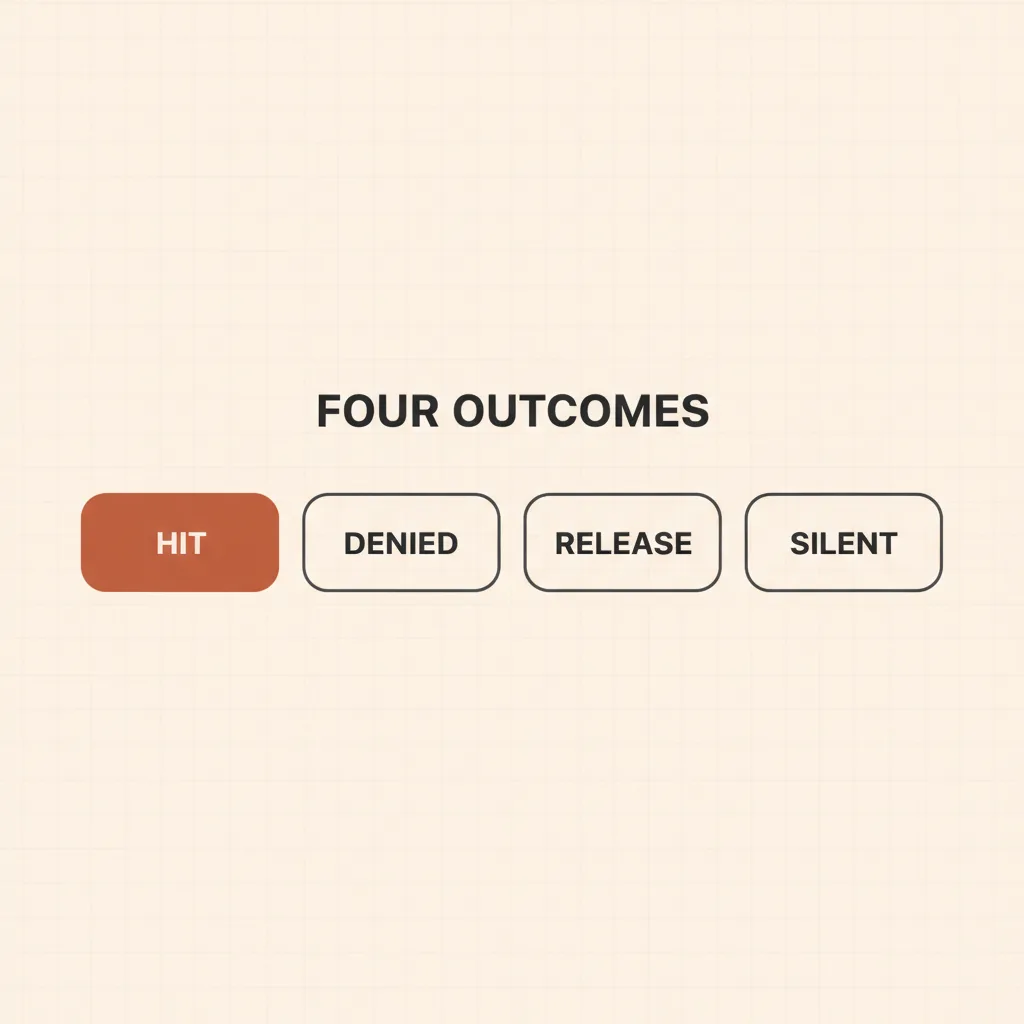
It's important to realize that only "No Record" is a confirmed negative. "Release Needed" and "Unreachable" are unknowns. If a report counts those unknowns as negatives, it's claiming coverage it never actually got. This is a common complaint in Special Investigations Units (SIU). A vendor returns a clean canvass, but an adjuster later finds a date of service at a facility on that exact list. When that happens, nobody can tell if the canvasser called the wrong department or if the facility simply refused to answer.
The Five Reasons a Canvass Misses
The facility list was built poorly. Before any calls happen, you have to build the facility list. If the search radius was based on habit instead of actual geography, or if the facility types don't match the injury, you won't reach the right providers. For example, a ten-mile radius in a rural area might only include a handful of providers, while a two-mile radius in a dense city could include hundreds. If you are investigating a soft-tissue claim and don't include chiropractors, physical therapists, or urgent care centers, your canvass is flawed before it even begins.
Ignoring centralized records. Many large hospital systems and pharmacy chains (like CVS or UCLA Health) keep their records centralized. One call to the central records department can give you results for every location in the area. If a canvasser calls ten different branches of the same pharmacy and logs ten separate results, they are just repeating the same work on the same records system, while ignoring the independent clinic down the street. Calling the centralized pharmacy line is often the highest-yield call you can make because it returns prescriber names that point the rest of your canvass in the right direction. (Pharmacy canvassing covers this in detail.)
The wrong department answered. Front desk staff usually aren't authorized to answer medical record questions from a third party. When they say "no," they often just mean "not that I can see" or "not something I can tell you." You always want to speak with the medical records or billing departments. If you have the bandwidth, it's always best to confirm answers with multiple sources.
The identifiers didn't match. Facilities might ask for a full name, date of birth (DOB), address, phone number, and sometimes a Social Security Number (SSN). A match using a name plus a DOB or SSN is usually solid. However, some facilities will refuse to provide information if secondary details, like a phone number or address, don't perfectly match what they have on file. You should always push to use the DOB or SSN as your primary identifiers.
A refusal was logged as "no record." You don't need a signed release to start a canvass. Many facilities will confirm if a person has been seen without one. However, some facilities treat that basic confirmation as protected health information and demand authorization first. A refusal leaves the question open. If your report doesn't clearly separate refusals from actual denials ("no record"), the SIU can't tell the difference between a canvass that successfully cleared seven facilities and one that only cleared five but got shut down at two.
The Hidden Sixth Reason: Lack of real attempts. Underneath all these reasons is a sixth issue: the number of attempts. If a facility was called once during lunchtime and never again, it's just "silent." A single attempt tells you absolutely nothing.

The Adjuster Test
There is one standard for any no-hit report: Are you prepared to defend it if the adjuster contradicts it?
A good report provides supporting evidence. It should tell you which department was reached, who answered, what identifiers were used, the exact outcome, whether a release was requested, and when every attempt was made.
If the adjuster suddenly produces a date of service, you should be able to look at your report and say, "The admissions desk said they had no record of the patient at 12:40 PM on Tuesday, but nobody tried contacting medical records." A report that simply says "no record" with no other details gives the SIU team or the adjuster very little to work with.
However, if a facility is a strong candidate for canvassing (like the closest emergency room or the claimant's primary care office), a refusal from one department shouldn't immediately lead to replacing that facility on your list. First, try contacting another department. If the admissions desk refuses to provide information, try calling billing or medical records next. If they still won't help, you can then escalate the request by sending a signed release form.
What a Defensible No-Hit Looks Like
To make a "no-hit" hold up as actual evidence, your report needs to include specific details for every facility. Here is what you should track and why:
- Facility and Location: Confirms the correct place was contacted.
- Department Reached: Notes whether you spoke to the front desk, records, or billing.
- Who Answered (by role): Shows if the person you spoke to actually had the authority to check records.
- Identifiers Provided: Proves you used the right details (like DOB or SSN) to find a match.
- Outcome: Clearly states if the result was a hit, no record, release needed, or unreachable.
- Dates of Service (if hit): Includes the first visit, last visit, and the provider's name.
- Release Requested: Notes whether the facility asked for a HIPAA release, so you know if you need to try again later.
- Attempts with Timestamps: Proves how many times you tried to reach an "unreachable" facility.
- Replacement: Notes which previous refusal this new facility is replacing on your list.
When a report includes these details, a "no-hit" becomes solid evidence. A "release needed" status turns into an actionable next step once you get a signed authorization in the claim file. An "unreachable" status means you need to try again. And a "no record" response from a medical records department, using the correct patient identifiers, is as close to a true negative as you can get.
How Superunit Reports a No-Hit
Superunit's medical canvassing clearly categorizes every outcome and logs every point of contact. We provide exactly the kind of detail listed above:
- Multiple contact methods: We reach out to every facility by phone, email, and fax, and we always follow up. If a facility is marked "no response," it means we tried every channel and have the timestamps to prove it.
- Clear outcomes: Every facility is categorized as a hit, no record, release needed, or no response. Hits include a comprehensive list of the dates the patient was treated and the provider name(s). If a facility refuses to answer, we tell you exactly which department refused and whether they asked for a release form.
- Direct lines for large chains: For big hospital networks or pharmacy chains, we don't waste time calling individual storefronts. We go straight to their centralized records departments.
- More coverage than humanly possible: You can build your list based on a specific geographic radius or a set number of facilities. Because we use a combination of AI agents and live team members, we can significantly expand your facility coverage without slowing down the process. We routinely turn around canvasses of 70+ locations in under 24 hours.
- Transparent, per-facility pricing: Canvassing starts at just $1.50 per location (about $45 for a standard 30-facility canvass). This exact same detailed logging system is what powers Superunit's 200,000+ verifications for screeners and lenders.
Frequently Asked Questions
Is a medical canvass with "no hits" good news for the claim? Yes, but only if those "no hits" are definitive confirmations that no records exist. You need to know that the correct department checked their system using the right patient details. If your report is just full of front-desk brush-offs or facilities refusing to answer, you haven't actually cleared anything.
How many refusals are normal? It varies based on your region and the types of facilities you are contacting. Large hospital systems and corporate practices tend to require a release form more often than small, independent clinics. However, the total number of refusals matters less than how your vendor handles them. Refusals should be clearly marked so you can follow up with a signed release form, or you can try a different department before replacing the facility on your list.
Should I re-run a canvass that came back empty? You shouldn't need to re-run the entire order. You should only follow up on the specific locations that were marked "unreachable" or "release needed." If your canvass report doesn't clearly separate those unresolved outcomes from actual "no record" results, you may want to reevaluate your vendor's reporting methods before spending money on another canvass.
Does a "no-hit" mean I don't need records retrieval? If a facility gives a definitive "no record" answer, then there is nothing to retrieve from that specific location. However, this doesn't guarantee the claimant wasn't treated somewhere else. Running a canvass before pulling records is a smart, cost-saving strategy, but it only works if you can completely trust the accuracy of your canvass results.