
TL;DR
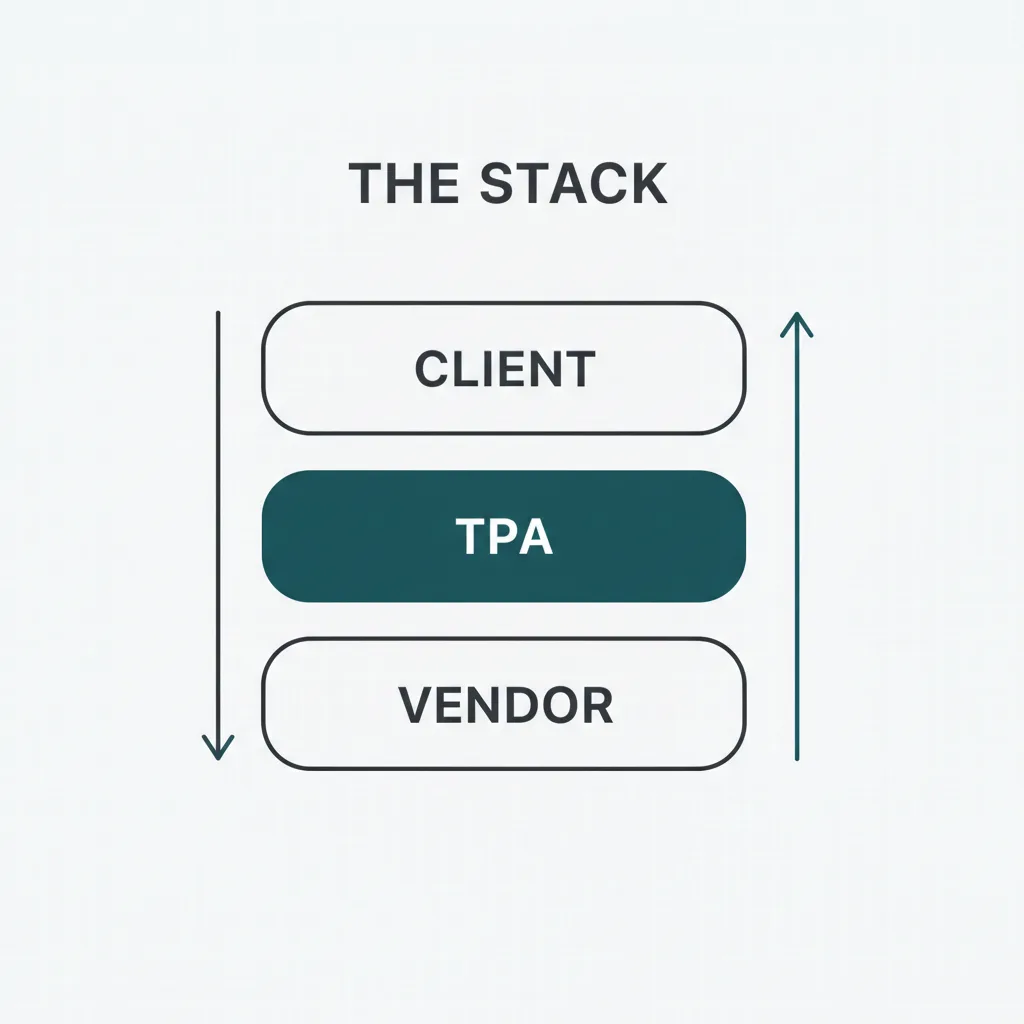
A third-party administrator runs medical canvassing under different economics than a carrier. The canvass is a billable service sold to self-insured employers and smaller carriers, ordered across several client brands, and often subcontracted to an investigations vendor that white-labels the report.
TPA SIU teams we've spoken with run a few dozen canvasses a month on fixed models in the 15-to-35-facility range, get an average cycle time of about five days from vendors, and name the same three problems: results an adjuster can contradict, facilities that should have been linked or skipped, and vendors that go quiet. This post covers how canvassing works inside a TPA, why the referral threshold is really a pricing question, what a protocol built for TPA work looks like, and where Superunit fits.
Why Canvassing Sits Differently Inside a TPA
A carrier's SIU is a cost center that protects the carrier's own reserves. A TPA's SIU is closer to a product line. The TPA administers claims for self-insured employers, public entities, and smaller carriers that don't have an investigations unit of their own, and investigative services are typically billed to the client as a separate line.
That changes four things about how a medical canvass gets ordered and delivered:
- The order comes with a client attached. A TPA may administer claims under several brand names it has acquired, and every canvass goes back out on that client's report template. The facility hears "calling on behalf of" the TPA or the adjuster, not the end client, and not the vendor.
- The adjuster is the customer of the SIU. When the SIU returns a canvass with no hits and the adjuster already knows from the file that the claimant treated at one of those facilities, the SIU hears about it. TPA SIU leaders describe that scenario as routine, not hypothetical.
- Volume tracks claim volume, not fraud volume. Canvasses are a routine step on comp and liability files, not an exception. The TPA teams we've spoken with describe it as daily workflow.
- Price is visible. Because the canvass is billed through to a client, its unit cost is something the TPA's account managers see and defend.
How TPA SIU Teams Run Canvassing Today
The pattern we hear from TPAs is a swing between two models. Some run canvassing with internal investigators. Many have moved to a vendor model, where outside investigators do the phone work, drop the results onto the TPA's report template, and return it. Some have swung between the two more than once, and more than one told us the question is still open.
The mechanics look like this:
| Step | What a TPA SIU typically does |
|---|---|
| Referral | Emailed to the vendor with the claim number, date of loss, injury, claimant identifiers, any signed medical authorization, and instructions. Not the whole claim file. |
| Scope | A fixed-size model, often 15, 25, or 35 facilities depending on the client, across chosen facility types such as hospitals, urgent care, diagnostics, and primary care. |
| Work | Vendor investigators call each facility, ask whether the claimant has treated there, and record the answer. |
| Report | White-labeled onto the TPA's template, returned by email, with a monthly performance report from the vendor. |
| Cycle time | About five days on average, against a service standard the TPA sets and enforces by moving business. |
| Volume | A few dozen canvasses a month at a mid-size TPA SIU, moving with claim volume. |
Newer claims systems at TPAs have API and SFTP capabilities, but in our experience few are wired to canvassing vendors yet. The referral still travels as an email.
The Three Problems Every TPA SIU Lead Describes
Results the adjuster can contradict. The core of a canvass is a phone call to a front desk, and a "no hit" has two possible causes: the claimant never treated there, or the person who answered didn't want to say. A TPA SIU can't tell which from the report. When an adjuster then produces the date of a visit at that facility, the SIU has to decide whether the vendor reached the right department or the facility simply refused. Neither answer helps the file.
Facilities that should have been linked or skipped. Pharmacy chains hold records centrally, so one call to a chain can answer for every location in the area. Hospital systems do the same. A canvass that counts ten calls to ten branches of the same chain as ten facilities overstates the coverage, and a canvass that calls seven hospitals and gets "need a release" from two has really only canvassed five. Investigators who do this well replace refused facilities with new ones rather than reporting a short list.
Vendors that go quiet. The TPA sets the service standard, but between referral and report it often hears nothing. Status updates on open items, especially records requests that drag for months, arrive inconsistently or not at all. More than one SIU leader said a vendor that simply checks in every couple of weeks would beat most other features.
Underneath all three sits a fourth that rarely makes it into an RFP: morale. Calling medical offices all day to ask for a patient's treatment history is unpleasant work, front desks push back on it, and teams burn out doing it.
The Referral Threshold Is a Pricing Question
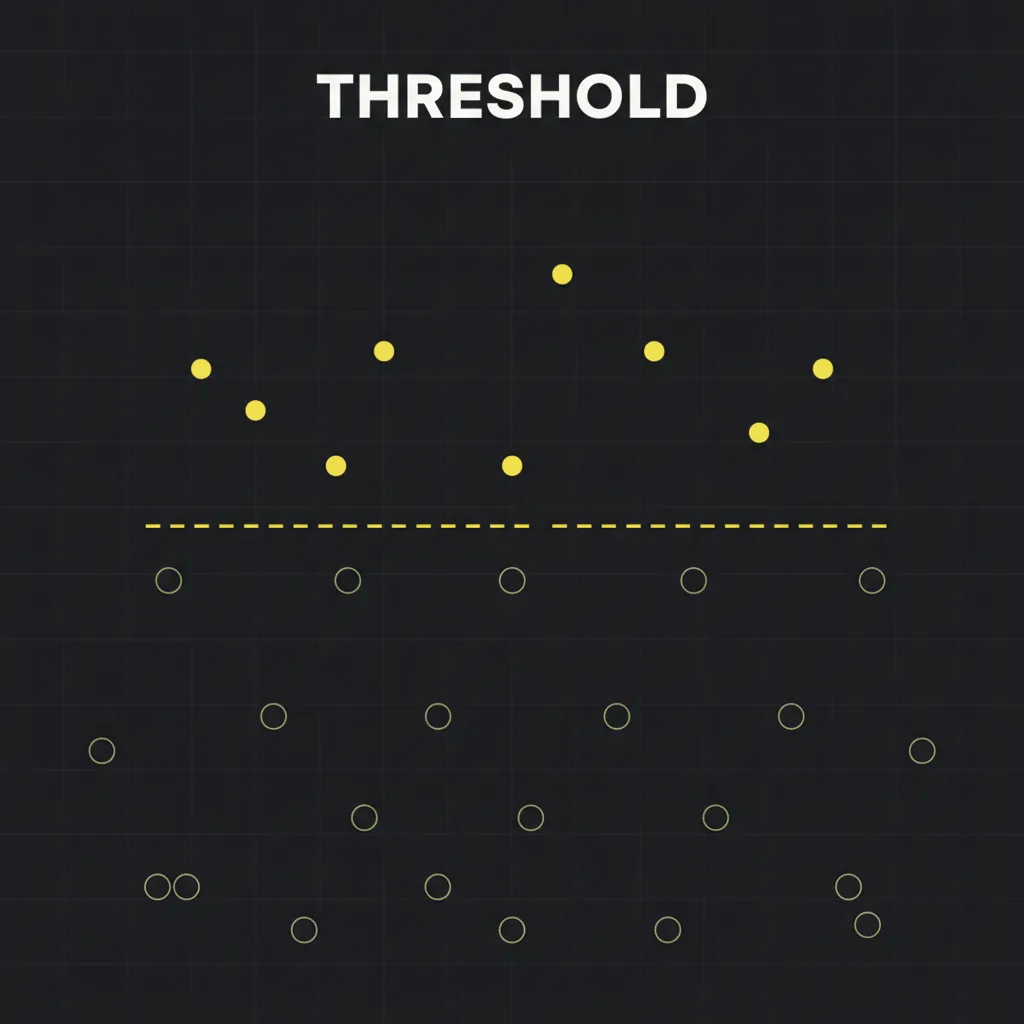
Most claims operations use some mix of red-flag indicators and model scores to decide which claims reach SIU, with a threshold somewhere in the mix. Everyone would like the threshold lower, because a canvass that catches a pre-existing condition or an undisclosed provider on a file that scored just under the line is worth a lot more than it costs. The threshold stays where it is because each referral triggers spend that someone has to justify to a client.
That makes the unit price of a canvass the real lever on referral volume. At a few hundred dollars per canvass, the threshold holds. At a few dollars per facility, a TPA can afford to canvass files that would never have been referred, and the SIU's hit count goes up without the fraud rate changing at all. For a TPA, which bills the work through, that's also more billable volume. The cost post covers what vendors actually charge; the short version is that most quote $150 to $400 flat and almost none publish a rate.
What a Canvass Protocol Built for a TPA Looks Like
The investigators who canvass well for TPAs run a consistent protocol. These are the parts that matter most.
Present on behalf of the right party. The facility wants to know who's asking. Calling on behalf of the TPA, or in the adjuster's name since the adjuster is who the facility already deals with, gets further than a third-party vendor introducing itself. The presented identity should be set per client, because a TPA runs canvasses for several.
Lead with the identifiers facilities actually ask for. Full name, date of birth, address, and the last four of the Social Security number are what front desks request. A full SSN helps on common names, but it shouldn't travel in a referral unless the client's policy allows it.
Call the department that can answer yes or no. A canvass is a yes-or-no question, not a records request, so call the department that can answer it. Front desk, then medical records, then billing is a reasonable order; some investigators go to billing first because billing can sometimes confirm a visit without opening the chart. The chart comes later through records retrieval if the hit warrants it.
Two more rules cover the paperwork and the map.
Submit the release whenever there is one. Only a minority of referrals arrive with a signed authorization. When it's there, send it on every contact; when it isn't, a refusal should be recorded as "release needed," not as a no-hit, and the facility replaced so the report still covers its full count.
Treat chains as one source. One call to a pharmacy chain's central records line covers every store in the radius, and that call often returns prescriber names that let the investigator aim the rest of the canvass. The pharmacy canvass is worth running first for that reason.
Set the radius by geography, not by habit. Ten miles in a rural county is a handful of providers; two miles in parts of Los Angeles is a few hundred. The facility count, not the mileage, is what the client is paying for.
How Superunit Runs Medical Canvassing for TPAs
Superunit's medical canvassing product is built around the protocol above, with AI agents doing the contact work instead of a phone room. For a TPA the parts that matter are:
- White-labeled presentation per client. The agent introduces itself on behalf of the TPA, the adjuster, or the client brand, configured per order, so a TPA administering claims under several names doesn't run several vendors.
- Every facility in parallel. Phone, email, and fax go out to every facility in the order at once, which is how Superunit holds a roughly 24-hour average turnaround on a 15-facility canvass and on a hundred 60-facility ones alike. Against a five-day vendor cycle time, that's the difference between canvassing before the adjuster's next decision and after it.
- Each result documented, including the non-answers. A confirmed hit records first visit, last visit, and provider. A refusal records which department refused and whether a release was requested. A no-answer records every attempt with timestamps. The adjuster can see why a facility is a no-hit instead of guessing.
- Pricing by the location, published. Canvassing starts at $1.50 per location contacted, which puts a standard 30-facility canvass around $45. That is the number that moves the referral threshold.
- A record built for the claim file. The same contact-logging that backs Superunit's 200,000+ verifications for screeners and lenders produces a timestamped audit trail on every canvass, which is what a TPA needs when an adjuster, a client, or opposing counsel asks how a result was obtained. Canvassing is domestic only today; the agent is multilingual.

Frequently Asked Questions
Can a TPA order canvassing on behalf of a self-insured client? Yes. That is the normal case. The TPA orders, the report goes out on whichever template the client expects, and the facility hears the TPA's or the adjuster's name.
How many facilities should a TPA canvass per claim? Common models are 15, 25, and 35 facilities, sometimes per facility type. The right number depends on the density of providers around the claimant, not on a fixed radius. Price per location rather than per canvass lets the count flex without a change order.
What should a TPA include in a canvass referral? Claim number, date of loss, injury description, claimant name, date of birth, address, last four of the SSN, any signed medical authorization, the facility types wanted, and the identity to present. The whole claim file isn't needed.
Does a canvass require a HIPAA authorization? It depends on the facility. A canvass asks only whether a claimant has been seen, and many facilities treat that as something they can confirm to a claims administrator without a signed release; others treat it as protected health information and won't. A records request always requires authorization. Send the release whenever one exists, and record a refusal as "release needed" rather than a no-hit.
How does a TPA know a no-hit is real? Only through documentation. A no-hit that shows which department was reached, what was asked, and what was said is a result. A no-hit with nothing behind it is a guess. Ask the vendor for the contact log, not just the summary.
Where does ISO ClaimSearch fit? Before the canvass. ClaimSearch tells the adjuster whether the claimant has claimed before; the canvass tells the SIU where they've been treated. A TPA with ClaimSearch access runs it first and canvasses when the match report raises a question it can't settle.
Pulling It Together: Where Superunit Fits for a TPA
Canvassing is a billed service inside a TPA, which is why TPA SIU teams care about unit cost, cycle time, and defensible results more than carriers do. The vendor model gives them the white label and a known cycle time but leaves them with contradicted no-hits, short facility counts, and silence between referral and report. Fixing the protocol fixes the first two; fixing the unit cost moves the referral threshold. Superunit is built to do both: a TPA-specific protocol run by AI agents, at $1.50 per location, back in about a day. The scaling post covers what happens to volume once both are in place.