
Rental application fraud is any material misrepresentation on a lease application: fabricated income documents, falsified employment, borrowed or stolen identities, or applicants fronting for occupants who could never pass screening. It has moved from a nuisance to a line item: in the National Multifamily Housing Council's fraud survey of 75 large apartment operators, 93.3% reported experiencing fraud in the prior twelve months, and the most common form — reported by 84.3% of them — was falsified pay stubs, employment references, or other income documentation.
This guide covers how the fraud actually works, what it costs when it gets through, and the layered defense that catches each scheme.
TL;DR: Rental application fraud concentrates on income and employment because that's the gate: most communities screen for roughly 3x rent in gross income, and applicants who fall short can buy a convincing pay stub online for under $10. NMHC's respondents attributed nearly a quarter of their eviction filings to fraudulent applications, and wrote off millions in fraud-linked bad debt. No single tool stops it. The operators who contain it run four layers: clear income standards, document fraud detection, connected payroll/bank data, and direct employer verification on everything the first three can't settle.
The Numbers: How Common, How Expensive
The two best data sources are the NMHC Pulse Survey (operator-reported) and Snappt's scan data (document-level):
| Finding | Number | Source |
|---|---|---|
| Large operators experiencing fraud in 12 months | 93.3% | NMHC Pulse Survey, Jan 2024 |
| Most common type: falsified income/employment docs | 84.3% of those | NMHC |
| Operators reporting fraud increased | 70.7% (avg. increase 40.4%) | NMHC |
| Eviction filings linked to fraudulent applications | 23.8% on average | NMHC |
| Average bad debt written off per respondent (12 mo.) | ~$4.2M, with 24.5% attributed to fraud-linked nonpayment | NMHC |
| Applications with edited documents (2025 scan data) | 5.1% of 1.4M+ submissions | Snappt 2026 Fraud Report |
| PMs who found the fraud only after move-in | 38% | TransUnion |
The TransUnion figure is the operational one: fraud you catch at application costs a rejection; fraud you catch after move-in costs months of unpaid rent, legal process, turnover, and damage.
The Five Schemes

1. Fabricated pay stubs. The workhorse. Online generators sell professional-grade stubs for $4–$35 each (most under $10, with unlimited-stub subscriptions from $3–$7 a month), and security firm Resistant AI has catalogued over 150 generator sites, with the top twenty drawing more than 10 million visits in 2025. NMHC's survey notes the growth is driven partly by how openly the technique circulates on TikTok and Instagram. The tells, and the checks that catch them, are in our fake pay stub checklist.
2. Edited bank statements. Real statements with doctored balances or pasted-in deposits, submitted where stubs won't work (self-employed applicants). This is the category document-forensics tools are strongest against; Snappt's data puts "template farms" (resold fake-document templates) as the dominant method behind the documents it flags.
3. Fake or complicit employers. The scheme document scanners can't see: a registered shell company or a cooperative friend "confirms" employment that doesn't exist, sometimes packaged with a matching offer letter for a job with no pay stubs yet. Offer-letter fraud is its own discipline, covered in our guide to spotting fake offers, and it's why serious verification uses independently sourced employer contact information, never the number printed on the application.
4. Identity fraud. Stolen or synthetic identities, or a clean-record applicant fronting for the true occupant. NMHC respondents reported identity theft and fraudulent IDs at 70%. This layer belongs to identity-verification tooling and is out of scope for income checks, but it compounds them, since a fake identity usually arrives with fake income documents attached.
5. Occupancy fraud. Unauthorized cohabitants and illegal subletting (67.1% in NMHC's survey), often the purpose of the schemes above rather than a separate technique.

Why It Grew
Three curves crossed. Rents rose faster than incomes in most metros, pushing more legitimate applicants under the 3x-rent gate. The cost of convincing fraud collapsed — a decade ago a fake stub took skill; now it takes a search query and $10. And screening industrialized in a way fraud adapted to: once operators standardized on document review, a document-shaped attack became the rational move. Detection vendors responded, which is why Snappt's own flagged-document rate has fallen (from roughly one in eight scans at its millionth-scan milestone in 2022 to 5.1% in 2025): edited documents get caught more, so the sophisticated end of the market moves toward documents that aren't edited at all: authentic-format files describing employment that isn't real.
The Layered Defense
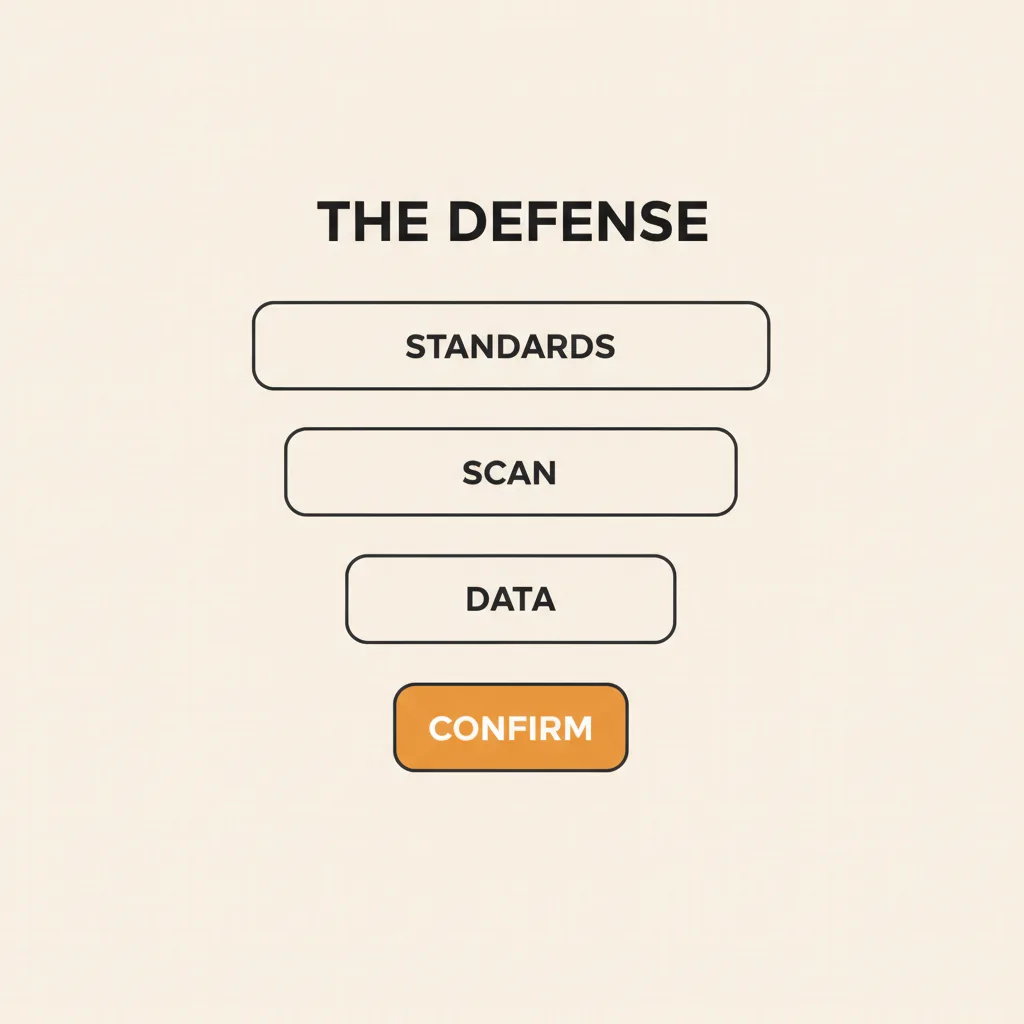
No layer catches everything; each catches the previous layer's misses.
- Clear, consistently applied income standards. A written policy (income multiple, acceptable document types, guarantor terms) applied identically to every applicant: both the fraud gate and the fair-housing baseline.
- Document fraud detection. Forensic scanning of everything submitted. Catches edits, template fraud, and metadata artifacts at a scale no leasing agent matches. What it establishes — and what it can't — is the subject of our Snappt vs. source verification comparison.
- Connected payroll and bank data. Where the applicant completes the flow, this verifies income against the source system. The gap is coverage: gig workers, small-employer staff, cash income, and abandoned logins fall through, the same 30–40% dynamic we document in our enterprise property manager guide.
- Source verification: contact the employer. The layer that catches scheme #3 and settles every "the documents look fine but…" case: confirming with the employer, at an independently sourced contact, that the applicant works there in the stated role at the stated income, today. Details in our guide to how apartments verify income and employment.
Where Superunit Fits: Layer 4 Without the Phone Tag
The reason most screening operations skip employer contact isn't doubt about its value; it's that manual calling doesn't fit leasing timelines. Superunit removes that constraint: AI agents look up the employer independently, then call, email, and fax in parallel, re-attempting across business hours until a person confirms employment, title, dates, and income where disclosed. Every attempt is logged, every call recorded and transcribed, and the file gets a verification record rather than a sticky note.
Superunit's Speed and Pricing for Leasing Timelines
Half of outreach verifications complete within 24 hours and three-quarters within 48, pricing is per completed verification, and Superunit has run more than 200,000 verifications across screening, lending, and property management. For screening operators, that turns Layer 4 from a special-occasion escalation into a default step for every application the fast layers can't settle. See the tenant screening workflow.
Frequently Asked Questions
What is rental application fraud? Any material misrepresentation made to obtain a lease: fabricated or edited income documents, falsified employment, fake references, stolen or synthetic identities, or applying on behalf of an undisclosed occupant. Falsified income documentation is the most commonly reported form.
How common is rental application fraud? Among large operators, nearly universal as an experience: 93.3% of NMHC survey respondents encountered it within a year, and 70.7% said it was increasing. At the document level, Snappt flagged about 5.1% of 2025 submissions as edited — a floor, not a ceiling, since unedited-but-false documents aren't in that count.
What does application fraud cost a property? The direct costs are unpaid rent, the eviction process, unit turnover, and damage. NMHC respondents attributed roughly a quarter of both their bad-debt write-offs and their eviction filings to fraudulent applications.
Is submitting a fake pay stub for an apartment a crime? Yes: obtaining a lease through fabricated documents is fraud, with civil and, depending on jurisdiction, criminal exposure. The "novelty use" disclaimers on generator sites don't protect the person who submits one.
Can AI detect rental application fraud? AI runs three of the four defense layers today: document forensics, income-data verification, and automated employer outreach. What it doesn't replace is the layered design itself; each tool covers a different scheme, and operators who buy one layer and stop tend to meet the schemes that layer doesn't see. Our overview of AI tenant screening maps which tools do what.
The Fraud Follows the Weakest Layer
Application fraud is adaptive: when eyeball review was the standard, it sent bad fonts; when forensics became standard, it moved to clean templates and shell employers. The defense that holds isn't a tool, it's the sequence — standards, scan, data, and a confirmed conversation with the employer for everything that matters. Operators who run all four layers make fraud more expensive than the apartment is worth, which is the only deterrent that scales.