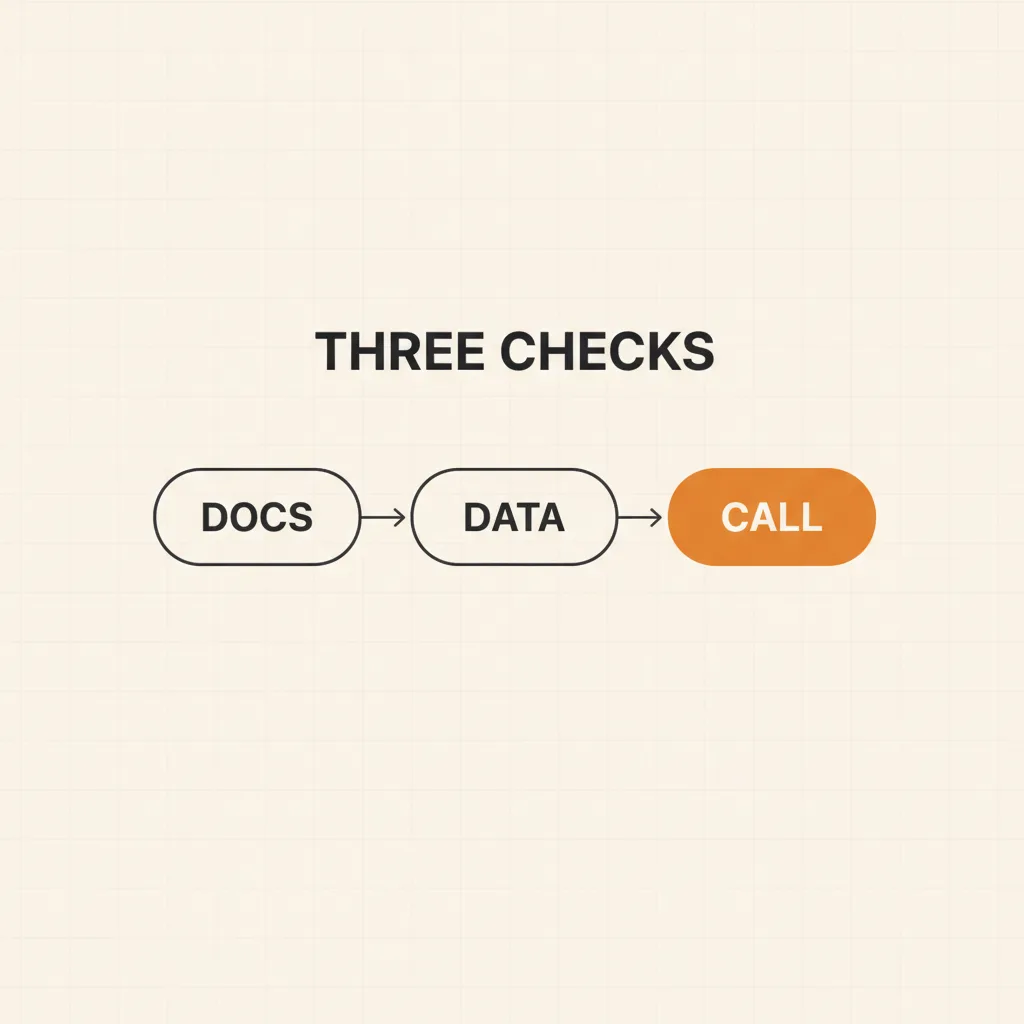
Apartments verify income and employment in three ways, usually in this order: reviewing the documents the applicant submits (pay stubs, offer letters, bank statements, tax forms), pulling data directly from payroll or bank accounts the applicant connects, and contacting the employer to confirm the job and salary at the source. Most communities use the first method on every application, an increasing share layer in the second, and the third — an actual call or email to the employer — is what decides the applications the first two can't settle.
This guide explains what leasing teams actually check at each step, how the common income standards work, and what happens when a verification comes back inconclusive.
TL;DR: A typical apartment application asks for 1–2 recent pay stubs or equivalent proof of income, screens them against an income standard (most commonly gross income of about 3x the monthly rent), and confirms employment either through a payroll data provider or by calling the employer's HR department. Documents prove what the applicant handed over; payroll data proves what a database holds; only employer contact proves the job as it exists today. Communities with fraud problems increasingly run all three.
The Three Methods, in the Order They Run
The mechanics mirror income verification everywhere else (our income verification guide covers the general framework), but apartments apply them under leasing deadlines, which changes what runs when.
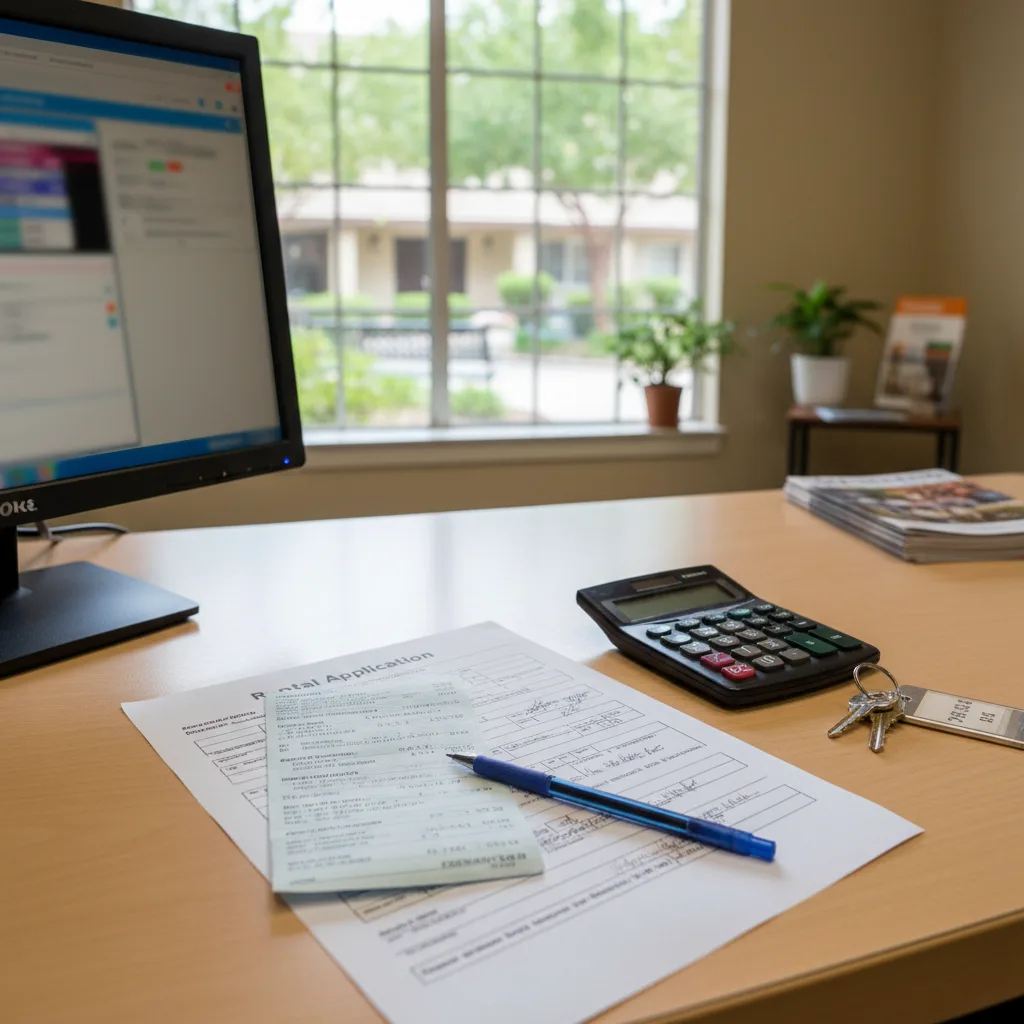
1. Document review. The leasing agent collects pay stubs (usually the two most recent), an offer letter for new hires, bank statements or tax returns for self-employed applicants, and award or benefit letters for non-wage income. The agent checks that the math supports the income standard and that the documents look internally consistent: dates in sequence, year-to-date totals that add up, employer names matching the application. Larger operators run submitted documents through fraud-detection software that catches edits and template artifacts a human eye misses; our comparison of document fraud detection and source verification covers what that software does and doesn't establish.
2. Payroll and bank data. The applicant is invited to log into their payroll provider or bank through a connectivity service. When it works, it returns verified income and employment in minutes. When it doesn't (the applicant is paid in cash, works for a small employer that isn't in the network, won't share bank credentials, or simply abandons the flow), the application is back where it started. In multifamily portfolios these misses are not edge cases; the applicant types most likely to fail a database check (gig workers, small-employer staff, recent job changers, new hires) are covered in our guide to employment verification at enterprise scale.
3. Employer contact. Someone reaches the employer directly (by phone, email, or fax) and confirms that the applicant works there, in what role, since when, and (where the employer will disclose it) at what income. This is the only method that verifies the job as it exists today rather than as a document or a database snapshot describes it. It is also the method leasing teams skip most often, because doing it manually means phone tag on a deadline. The process, and what a compliant record of the call looks like, is documented in our verbal VOE for tenant screening guide.
The Income Standards Applications Are Screened Against
Most communities screen gross income against a multiple of rent — 3x monthly rent is the common convention, with 2.5x in some markets and higher thresholds at luxury properties. A few things follow from that standard being the gate:
- The math is done on gross, documented income. Undocumented side income generally doesn't count, which is exactly why applicants short of the threshold are tempted to inflate documents.
- Co-signers and guarantors carry their own verification. A guarantor's income (typically screened at a higher multiple than the tenant's) has to be verified by the same methods; a fake guarantor pay stub passes or fails the same checks.
- Housing vouchers change the calculation. Where a voucher covers part of the rent, many jurisdictions require screening on the tenant's share, not the full rent, and source-of-income protections in a growing number of states restrict how income type can be considered. Screening policy should come from counsel; verification of whatever income is claimed still has to happen.
What Apartments Ask When They Call an Employer
An employment verification call for a lease is short and scripted. The caller confirms the applicant works there, their title, their start date, employment status (full-time, part-time, seasonal), and — where the employer discloses it — rate of pay. Two details separate a real verification from a rubber stamp:
- The number comes from independent lookup, not the application. A phone number the applicant supplied can ring the applicant's friend. Verifiers source the employer's number themselves, the same discipline we describe for which department to call.
- The attempt gets documented. Date, time, number, respondent name and role, and what was confirmed. If the employer never responds, the documented attempts are what justify the decision made without them.
What Happens When Income Can't Be Verified
An application that fails or stalls verification doesn't automatically fail screening. In practice leasing teams do one of four things: request additional documents (tax transcripts, additional stubs), accept a larger deposit or a guarantor where policy and local law allow, extend the review window while outreach continues, or deny with an adverse-action notice where the standard genuinely isn't met. The expensive failure mode is the fifth path — approving because the deadline arrived before the verification did. That's a fraud-screening decision made by the calendar, and it's the path most application fraud actually takes; our rental application fraud guide covers what that costs.
Where Superunit Fits: The Employer Call, Automated
Superunit does the third method (direct employer contact) with AI agents instead of a leasing coordinator's afternoon. The agents look up the employer's contact information independently, then call, email, and fax in parallel, re-attempting across business hours until they reach someone who can answer. Every attempt is logged with a timestamp and channel, calls are recorded and transcribed, and the result lands as a documented verification the file can rely on.
Superunit's Turnaround Inside a Leasing Window
For tenant screening operators the practical numbers: half of outreach verifications complete within 24 hours and three-quarters within 48, which fits inside a leasing decision window. Pricing is per completed verification, with no subscription, a use pattern that matches the reality that most applications only need outreach after the faster layers come up empty. Superunit has completed more than 200,000 verifications across screening, lending, and property management. See how it works for tenant screening.

Frequently Asked Questions
Do apartments actually call employers? Many do, especially when documents look inconsistent, the applicant is a new hire with only an offer letter, or a payroll-data check returned nothing. Smaller landlords call more often than large operators, who historically relied on documents and databases because calling at portfolio scale was impractical, which is the constraint automated outreach removes.
What proof of income do apartments accept? Typically recent pay stubs, an offer letter for a job starting before move-in, bank statements or tax returns for self-employed applicants, and benefit or award letters for non-wage income. Policies vary by operator, and fair-housing and source-of-income laws in many jurisdictions shape what can be required or excluded.
How do apartments verify employment for new hires with no pay stubs? The offer letter gets verified with the employer directly: start date, role, and salary. An unverified offer letter is one of the easiest documents to fake; our offer letter verification guide for landlords covers the process.
Can an applicant fake a payroll or bank connection? It's much harder than faking a document, which is why connected-data checks are valuable when they complete. The weakness isn't forgery; it's coverage: the applicants who can't or won't connect still have to be verified another way.
How long does apartment income verification take? Document review is same-day. Payroll or bank connections complete in minutes when the applicant cooperates. Employer outreach historically took days by hand; automated outreach completes half of verifications within 24 hours.
Is it legal for an apartment to contact my employer? Generally yes, when you've authorized it on the application; rental applications almost always include consent to verify the information provided. Verifiers confirm employment facts; they don't disclose why they're asking beyond what the consent covers.
The Order Matters More Than the Tools
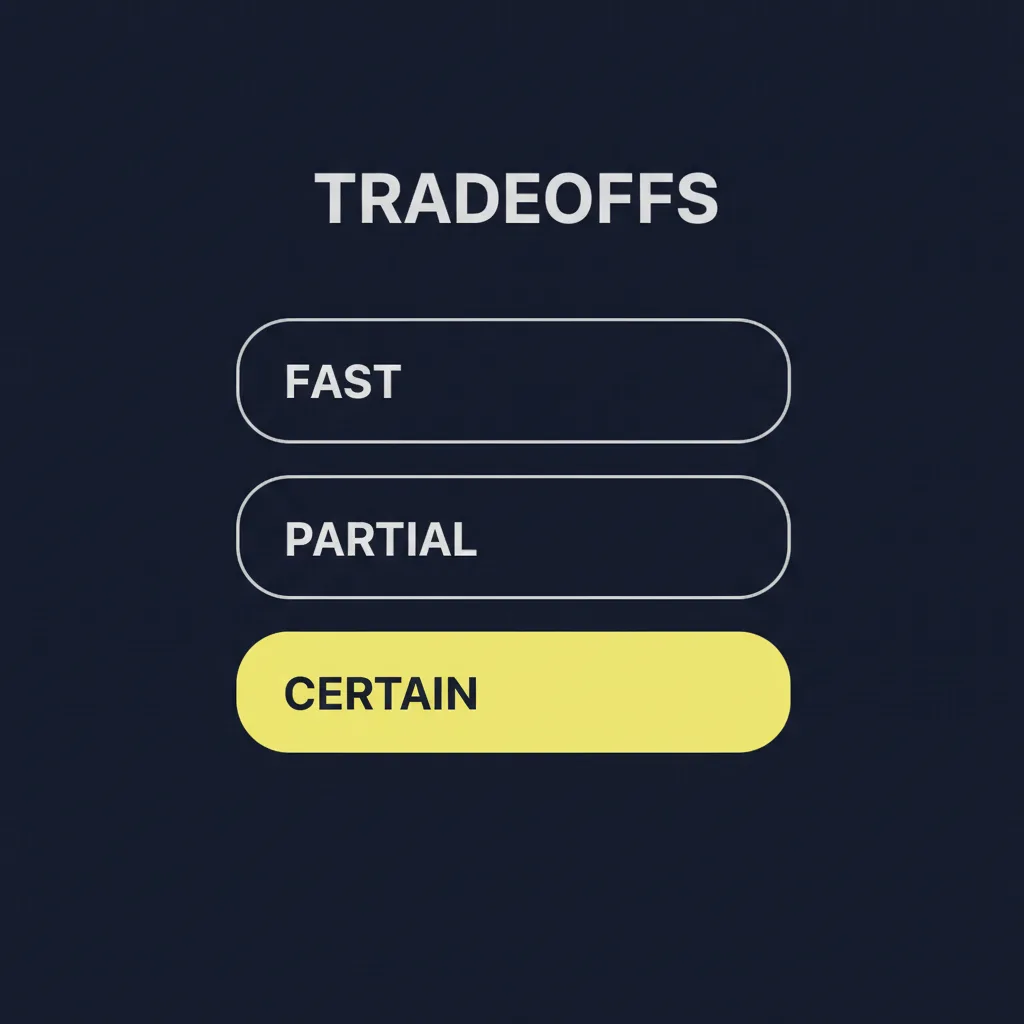
Documents are fast and weak. Connected data is fast and partial. The employer call is slower and definitive. Communities that get burned are almost never missing a tool — they're missing the third step on the applications where the first two came back thin, because doing it by hand didn't fit the deadline. Run the layers in order, and route what falls through to outreach that actually completes: that's the whole design.