TL;DR
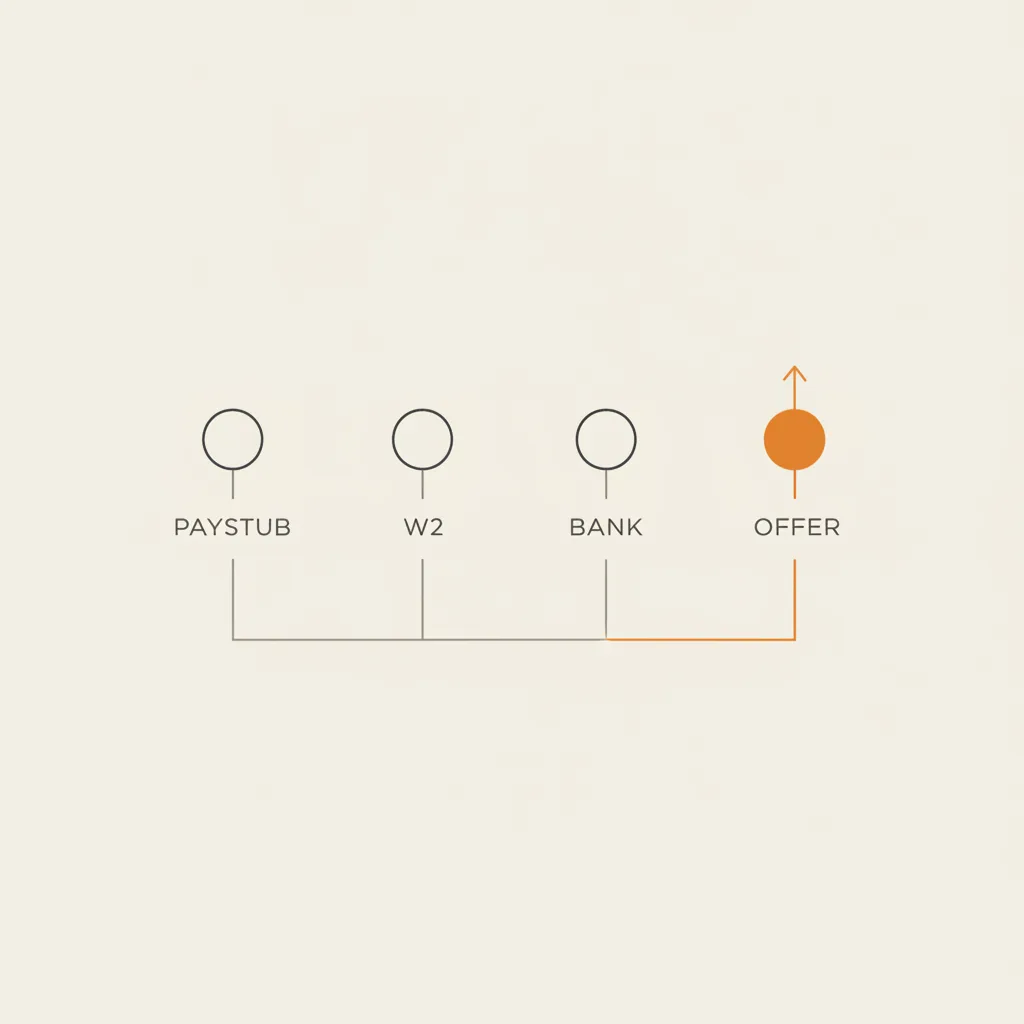
An offer letter is the hardest income document to verify because nothing sits behind it. A pay stub traces back to payroll, a W-2 traces back to the IRS, but an offer letter points to a job that hasn't started and a paycheck that hasn't arrived. Inspecting the document tells you how it looks, not whether the job is real.
- Red flags narrow the list of offers worth a second look, but only direct contact with the issuing employer confirms one is genuine.
- You need two things to work through a suspicious offer. A checklist to filter fast on the first pass, and a verification framework to confirm the offer against the employer who supposedly wrote it.
Why offer letters are the hardest income document to verify
Every income document carries a trail behind it except the offer letter. A pay stub reflects a payroll run that already happened. A W-2 sits in an employer's records and, indirectly, the IRS system. Bank statements show deposits that either landed or didn't. Each one points back to an event you can, in principle, trace to a source. An offer letter points forward to a job that hasn't started, a paycheck that doesn't exist yet, and a payroll record that won't appear for weeks.
That forward-looking quality is what makes the offer letter so easy to fake and so hard to check. There's no payroll history to reconcile against, no prior employer already reporting wages, no database that stores pending offers. The only thing referenced is a company and a hiring manager, and the only artifact you hold is the document itself. When the letter is the sole evidence, verifying it means verifying the paper.
Tenant screening is where the stakes climb highest. An applicant relocating for a new job, finishing school, or switching careers often has no recent pay history to show. The offer letter becomes their entire income case, and approving the lease means betting a year of rent on a single sheet that claims a salary and a start date. Get it wrong and you've placed a tenant whose promised income never materializes.
Format-checking tools hit their ceiling for the same reason. They compare a document against patterns of what real letters look like. Fonts, logos, letterhead, and layout. A convincing forgery mimics all of that, and a legitimate startup offer written in plain text with no logo fails those same checks. The document's appearance tells you how polished the fraud is, not whether the job is real. The only thing that resolves the question is the issuer, meaning the company that supposedly wrote the letter and the person who supposedly signed it. Confirming the offer against that source is the step everything else in this guide builds toward.
Red flags that suggest a fake offer letter
Before you spend time calling anyone, run the offer letter through a quick visual and logical scan. A handful of signals show up often enough in fraudulent offers that they earn a first-pass filter, and a letter that trips several of them deserves closer scrutiny before you approve a lease.

The email domain is the fastest tell. A real HR contact or hiring manager writes from a corporate domain tied to the company, not a Gmail, Outlook, or ProtonMail address. When the letterhead names a well-known employer but the signature routes to a free consumer inbox, treat that as a mismatch worth explaining.
Look next for a way to reach the person who supposedly signed the letter. Legitimate offers usually list a direct phone number or extension for the issuing manager or HR office. A missing phone number, or a number with no name attached, means you have nothing to contact except the applicant.
Formatting inconsistencies are the next layer. Watch for a logo that looks stretched or low-resolution, fonts that change halfway through the document, misaligned margins, or a company name spelled two different ways. Fabricated letters often get assembled from a template and a copied logo, and the seams show under a careful read.
The numbers themselves can also be off. A start date months out with no clear reason, a salary well above the market rate for the role and location, or a title that doesn't match the pay band all warrant a second look. Applicants sometimes inflate a real offer's figures to clear an income threshold, so the letter can be genuine even when a line on it is not.
Pressure to move fast rounds out the list. When an applicant pushes you to sign a lease immediately, discourages you from contacting the employer, or invents a reason the company can't be reached, the urgency itself is the signal. Fraud relies on you skipping the verification step, so anything that rushes you past it deserves the opposite response.
None of these signals proves fraud on its own. A polished, well-formatted letter from a corporate domain can still be fake if someone spoofed the address or forged the sender, and a legitimate offer from a small business can look rough, arrive from a personal inbox, and list no extension. The red flags tell you where to focus, not what to conclude. Anything that raises your suspicion should move to direct verification, which is the only step that settles the question.
Why document inspection alone isn't enough
A well-made fake offer letter can clear every check on your list. Anyone with a stolen logo, a template, and a free afternoon can produce a document with clean formatting, a plausible salary, and a signature that looks real. Document review rewards the forgers who put in effort, because effort is exactly what makes a fake look legitimate. The applicants most likely to defraud you are the ones whose letters look best.
The reverse failure is just as common. Legitimate offers frequently arrive as informal emails, PDFs exported from a template a manager grabbed at random, or letters with inconsistent fonts because someone edited them twice. A smaller employer without a formal HR department rarely produces polished paperwork. If you reject rough-looking letters, you screen out real applicants and keep the polished frauds.
Tools like Two Dots analyze documents for tampering, metadata anomalies, and formatting inconsistencies, and they catch the sloppier fakes that manual review misses. That work is genuinely useful as a first pass. Its limit is structural. Every one of these tools examines the document you were handed. None of them examines the job the document claims to describe.
A forger controls the entire document. The salary, the start date, the letterhead, and the signature all originate from the same person you are trying to verify, which means the letter can be internally consistent and completely false at once. No amount of inspection resolves that, because the answer does not live inside the file.
The only source that can confirm an offer is the employer who supposedly wrote it. That company either extended the offer on those terms or it did not, and reaching them directly is the single check that tests the claim against reality rather than against its own appearance.
The verification framework: confirming the offer with the employer
Confirming an offer means reaching the employer through a channel you trust, not the one printed on the letter. A fraudulent offer often lists a phone number that rings to an accomplice and an email address at a lookalike domain. Both will happily confirm whatever the letter claims. Your first job is to find contact details independently, then use those to reach a real person at the company.

Start with the phone. Look up the company's main line through its official website or a directory, dial that number, and ask for HR or the hiring manager named in the letter. When you reach someone, confirm three things. The offer exists, the salary and start date match what the letter shows, and the person who signed it actually works there in that role. If a caller can only confirm employment but not the specific offer terms, treat that as incomplete. The terms are what the applicant is asking you to trust.
Email works as a backup or a paper trail. Send your request to an address at the company's verified corporate domain, not the address on the letter. A generic domain in the letter's contact block is a reason to route around it entirely. Some HR departments, particularly at hospitals, staffing firms, and older enterprises, still handle verification requests by fax because it produces a signed, dated record they can retain. If the employer routes you there, follow it rather than pushing for a channel they don't use.
What you ask matters as much as how you reach them. Confirm the salary figure, the start date, the job title, and whether the offer is still active, since some applicants submit rescinded or expired letters. Ask the person to confirm their own name and title too. A verifier who won't identify themselves is a signal worth noting.
The problem with all of this is that it takes real time, and almost no one does it consistently. Finding an independent number, waiting on hold, getting transferred to the right department, and leaving a callback request can eat half an hour per applicant, and that is the good case. Many calls go to voicemail, and the follow-up never happens because the reviewer moves on to the next file. Property managers screening dozens of applications a week can't run this step by hand on every offer, so it becomes the exception instead of the rule. The result is that offer letters, the single hardest income document to verify, are the one document teams verify least. That gap is exactly where fraud survives, because a fraudster is betting no one will pick up the phone and call the number they didn't provide.
How Superunit scales direct employer verification without adding headcount
Direct employer confirmation stays the exception for most landlords because doing it by hand doesn't scale. One application takes a phone call, a hold, a transfer to HR, and a callback that lands two days later. Run that across a full pipeline during a leasing surge and the math breaks. You either hire people to make calls or you skip the step and hope the red-flag scan caught the fakes.
Superunit removes the staffing constraint by placing the outreach itself, not by adding reviewers to place it. Its AI voice agents call the employer's verified line, navigate the phone tree, wait on hold, and ask HR to confirm the offer exists and the terms match. When a company routes verifications through email or requires fax, Superunit runs those channels the same way. The outreach volume scales with the number of applications you receive, not with how many people you employ to chase them.
That model is the same one behind Superunit's broader employment verification work, where the job is confirming income and dates against the actual employer rather than trusting the document in front of you. An offer letter is a narrower case of the same problem. There's no payroll history to pull, so the only source of truth is the company that supposedly wrote the letter. Reaching that source is exactly what AI outreach across voice, email, and fax handles at whatever volume your leasing calendar throws at it.
For the landlord-specific playbook on the same problem — what a credible offer must include and how to handle a silent employer — see Offer Letter Verification for Landlords.
The practical result is that you can make direct confirmation the default step instead of the one you save for suspicious applications. Every offer letter gets checked against its issuer, not just the ones with a free email domain or an odd font. Clean-looking fakes that pass document inspection still fail when the employer has no record of the hire, and legitimate offers that looked informal clear immediately once HR confirms them. Superunit doesn't replace your judgment on the lease. It closes the one gap manual review keeps leaving open, and it does so without a hiring plan attached.
FAQs
How can I tell if an offer letter is fake without calling the employer?
You can raise or lower your suspicion, but you can't confirm authenticity from the document alone. Cross-reference the issuing manager against the company's public directory or LinkedIn, and check that the email domain matches the employer's real corporate domain rather than a lookalike. These checks catch sloppy fakes. They do nothing against a well-built one, which is why they narrow the field instead of settling it.
What should I do if the employer won't confirm the offer details over the phone?
Many HR departments won't discuss compensation or start dates verbally, and that refusal is normal rather than a red flag. Ask them to confirm in writing through a corporate email address or fax, which is the format most employers use for verification requests. If the company confirms only that the person is an incoming or prospective employee without terms, treat that as partial confirmation and weigh it against the applicant's other income documentation.
Is a notarized or signed offer letter more trustworthy than a plain one?
A signature or notary stamp verifies who put ink on the page, not that the job or the stated salary exists. A notary confirms the identity of the signer and the date, and a signature confirms someone authorized the document. Neither reaches the employer's records, so a notarized fake is still a fake. The signature raises the effort required to forge the letter, but the employer remains the only source that can validate the terms.
How long does direct employer verification usually take?
By hand, confirming a single offer can take days of voicemails and callbacks, which is why most manual reviewers skip it. Automated outreach across phone, email, and fax runs those attempts in parallel, so confirmation that stalls for a week manually often lands the same day.