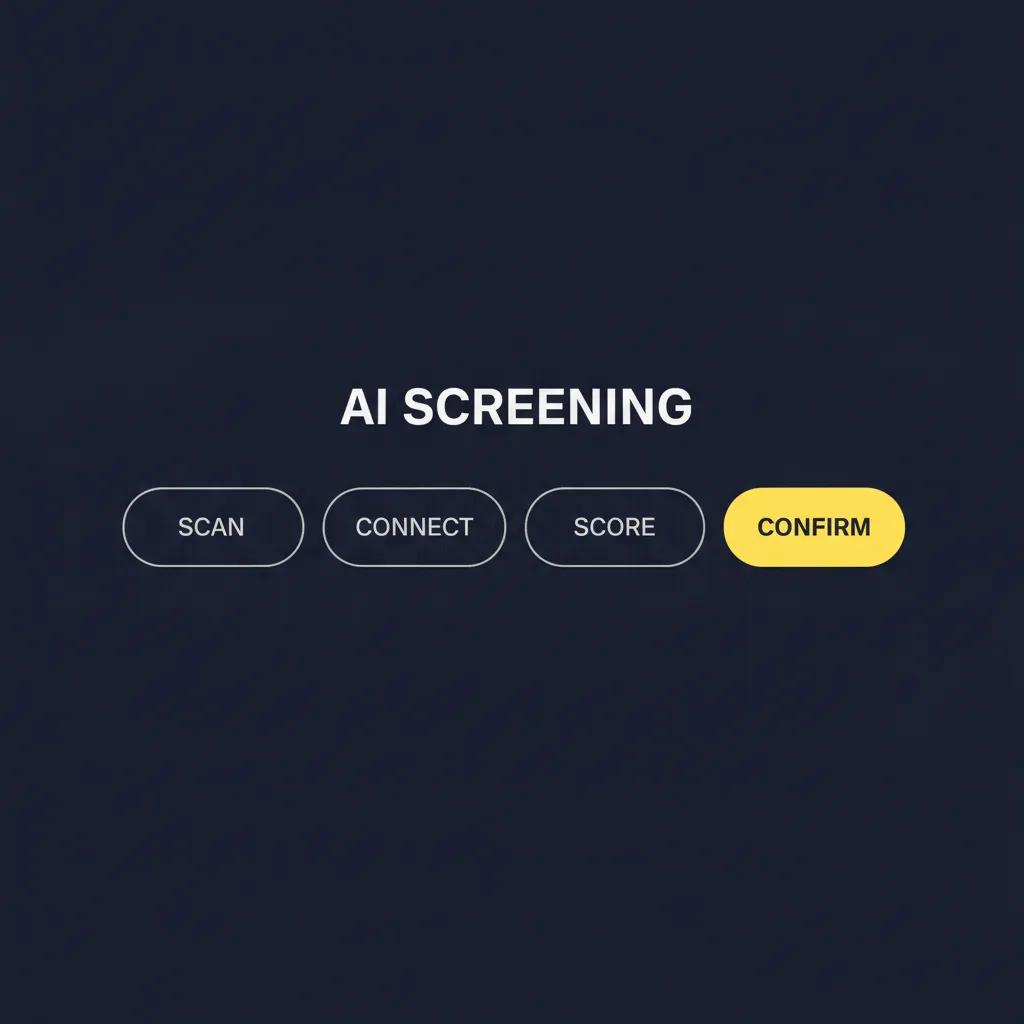
"AI tenant screening" gets used as if it named one product. In practice it's four different jobs, done by different tools, with different failure modes: scanning documents for fraud, connecting income and identity data, scoring applicant risk, and doing the verification outreach a human used to do by phone. Evaluating "AI screening" means knowing which of the four you're buying — and which fair-housing rules follow all of them.
Here's the map as it stands in 2026, with the actual vendors in each category.
TL;DR: AI in tenant screening does four things today: (1) document fraud detection: forensic scanning of pay stubs and statements (Snappt, Docuverus); (2) connected verification: consumer-permissioned payroll, bank, and identity data (Payscore, Argyle, Truv, Snappt's Argyle-powered income product); (3) risk scoring: ML models predicting payment behavior (RealPage AI Screening, screening-bureau scores); and (4) verification outreach: AI agents that contact employers directly to confirm jobs and income (Superunit). HUD's 2024 guidance makes clear the Fair Housing Act applies to all of it, and the landlord — not the vendor — holds the liability, which makes explainability and audit trails a buying criterion, not a nice-to-have.
The Four Jobs, and Who Does Them
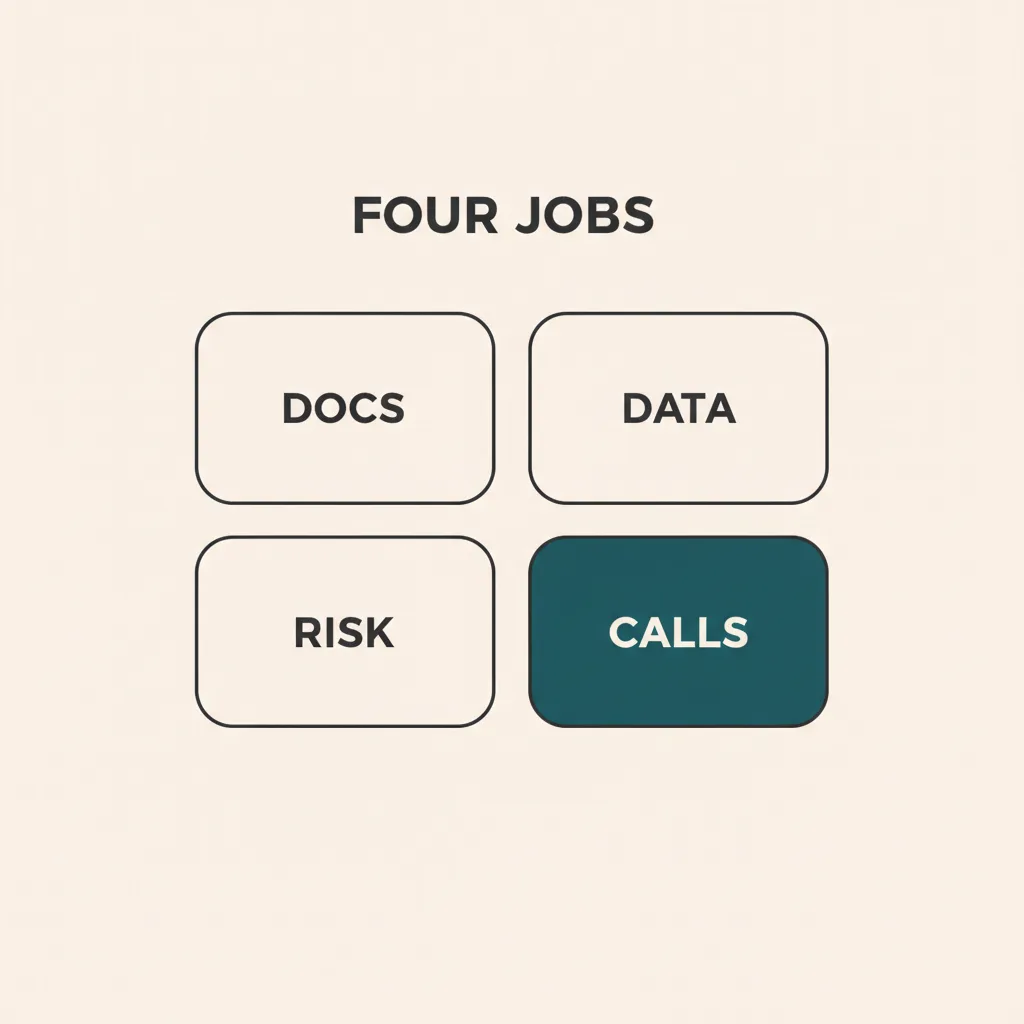
1. Document fraud detection. Forensic analysis of submitted documents: edit traces, template fingerprints, metadata. Snappt is the category leader (trained on 16M+ documents, claimed 99.8% accuracy, ~5.1% of 2025 submissions flagged as edited per its 2026 fraud report); Docuverus and bureau-integrated tools compete. Strength: catches fabrication at scale. Limit: it authenticates the artifact, not the underlying employment, the distinction we unpack in Snappt vs. source verification.
2. Connected income and identity verification. The applicant links payroll or bank accounts; the tool returns verified income in minutes. Payscore, Argyle, and Truv sell this directly; Snappt's income verification runs on Argyle underneath. Strength: near-instant, hard to fake. Limit: coverage; the applicants who can't or won't connect (gig, cash-paid, small-employer, privacy-averse) fall out of the flow and still need verifying.
3. Risk scoring. ML models that predict payment outcomes from application and credit data. The most prominent is RealPage's AI Screening, trained on more than thirty million lease outcomes; notably, RealPage says the model deliberately does not use rent-to-income ratio, which it calls a poor predictor. Strength: better calibration than blunt rules. Limit: it's a prediction about a person, which is exactly where fair-housing scrutiny concentrates.
4. Verification outreach. The newest category: AI voice agents doing the verification work itself — looking up the employer independently, calling, emailing, and faxing in parallel, and returning a documented confirmation of employment and income. This is Superunit's category, and it exists because the third layer of every screening stack (confirm at the source) never scaled manually.
The Compliance Frame: The FHA Applies to All Four
Two developments define the legal ground rules:
- HUD's April 2024 guidance on the screening of applicants for rental housing states that the Fair Housing Act applies to tenant screening "including when algorithms and AI are used," and that housing providers can't offload responsibility onto their screening vendors (overview and guidance links). The landlord owns the outcome of the tool it buys.
- Louis v. SafeRent settled for $2.275 million in late 2024 over claims that an algorithmic screening score had a disparate impact on Black and Hispanic voucher applicants; the settlement barred use of the score on voucher holders for five years (case summary). The DOJ had earlier filed a statement of interest confirming the FHA reaches algorithmic screening.
(A note on a case that gets conflated here: the DOJ's antitrust suit against RealPage concerned algorithmic rent pricing, not screening. The screening-relevant precedent is SafeRent.)
The practical implication for buyers: prefer AI that verifies facts over AI that predicts behavior, and demand audit trails from both. A verified fact — "employer confirmed applicant works there at $X" — is the same fact for every applicant, straightforward to apply consistently, and easy to defend in an adverse-action file. A predictive score requires you to understand and monitor what drives it, because HUD's guidance leaves you holding its disparate-impact risk. Whatever you deploy, the file needs to show what was checked, when, and what came back, which is an argument for tools that log their work.

Where Superunit Fits: The Verification Agent
Superunit is the fourth category: AI agents that do the outreach. For a tenant screening operation that means employment and income confirmed with the employer (at an independently sourced phone number, email, or fax) for every application where documents and data connections weren't enough: new hires with offer letters, applicants whose payroll won't link, incomes the decision rides on.
The Audit Trail Superunit Returns
The compliance-relevant part is the record. Every attempt is timestamped with its channel; calls are recorded and transcribed; results land as structured verifications, so the screening file shows the same defensible trail for every applicant. Half of outreach verifications complete within 24 hours and three-quarters within 48, priced per completed verification, the economics of a step you run on the subset that needs it, not a per-door subscription. Superunit has completed more than 200,000 verifications; the workflow is on the tenant screening solution page.

What AI Tenant Screening Still Doesn't Do
- It doesn't make the decision. Screening criteria are policy; AI executes checks against them. Operators who let a score quietly become the policy inherit its biases as their own.
- It doesn't verify what nobody will confirm. An employer who never responds is still an unknown; the value of automated outreach there is the documented attempt trail, which justifies whatever the policy does next.
- It doesn't replace the layered design. Each of the four jobs covers a different fraud or risk surface; our rental application fraud guide maps which schemes each layer catches. Buying one layer and calling it "AI screening" leaves the other three surfaces open.
Frequently Asked Questions
What is AI tenant screening? The use of machine learning and AI agents across four screening jobs: detecting fraudulent documents, verifying income and identity through connected data, scoring applicant risk, and performing verification outreach to employers. Most operators combine tools from more than one category rather than buying a single "AI screening" product.
Is AI tenant screening legal? Yes, subject to the same laws as manual screening: the Fair Housing Act (including disparate-impact liability, per HUD's 2024 guidance), the FCRA where consumer reports are involved, and state and local screening laws. The landlord retains responsibility for outcomes even when a vendor's algorithm produced them.
Can AI verify employment for a rental application? Two ways: connected payroll data (instant, but only for applicants who complete the link) and AI outreach agents that contact the employer directly (slower, typically within a day or two, but covering everyone with a reachable employer). Together they cover most applications; documents alone verify the least.
Does AI tenant screening discriminate? It can, which is what the SafeRent settlement was about — an algorithm trained on historical data can reproduce historical disparities. Fact-verification AI carries less of this risk than behavioral-prediction AI, and any predictive tool should come with documented fairness testing and an audit trail the operator can stand behind.
What should I ask an AI screening vendor before buying? Which of the four jobs the product actually does; what its coverage gaps are (document types, payroll networks, employer reachability); what record it produces for the applicant file; whether it supports consistent application across all applicants; and, for predictive scores, what drives the model and what fairness testing exists.
Buy the Layer You're Missing
The question isn't whether to use AI in screening — at multifamily volume, three of the four jobs stopped being manual years ago. The question is which layer your losses are coming through. If doctored documents get past you, buy the scanner. If your data checks come back empty on the applicants who matter, add outreach. If your criteria live in a leasing agent's head, fix the policy before automating anything. AI rewards operators who know exactly which question they're paying it to answer.