ISO ClaimSearch is the insurance industry's shared database of claims. An insurer reports a new claim into it, and the system hands back a match report listing every prior claim it holds for that person, vehicle, or property, across every contributing carrier. Verisk runs it, it holds over 1.8 billion U.S. claims, and it covers roughly 95% of the property and casualty market.
If you work in claims or SIU you use it every day. If you're newer to it, or trying to work out what it can and can't tell you, this is the plain explanation.
TL;DR
ISO ClaimSearch is Verisk's all-claims database. Contributing insurers report claims in; the system returns a match report of a claimant's prior claims across property, casualty, and auto, from any contributing carrier. It's available to credentialed insurers, self-insureds, and TPAs by subscription, to law enforcement through the NICB, and not to claimants or their attorneys directly. Verisk doesn't publish pricing. It answers one question well: has this person, car, or address been in a claim before. It doesn't answer the question an SIU usually needs next, which is where a claimant has actually been treated. That's a medical canvass.
What ISO ClaimSearch Is
Verisk describes ClaimSearch as the world's largest database of property and casualty claims. As of July 2025 it held over 1.8 billion U.S. claims, representing roughly 95% of the U.S. P&C market, up from the 1.5 billion records and 90% of insurers it reported in 2021. Verisk's compliance brochure puts the subscriber base at more than 93% of the industry by direct written premium, plus state workers' comp funds, self-insureds, third-party administrators, the NICB, state fraud bureaus, and law enforcement.
It exists because no single carrier can see a claimant's history with other carriers. A person who files a soft-tissue injury claim with four different insurers over three years looks like a first-time claimant to each one. ClaimSearch is the industry's answer: everyone contributes, so everyone can see.
The "ISO" in the name is a leftover. ISO is Insurance Services Office, the Verisk unit better known for publishing policy forms and loss costs. It built ClaimSearch in 1998 by merging the industry's older claim index databases with the NICB's vehicle theft files; Verisk now brands the product simply as ClaimSearch, and in practice everyone still says ISO. It has nothing to do with "ISO ratings," the fire-protection scores that set property premiums.
How It Works
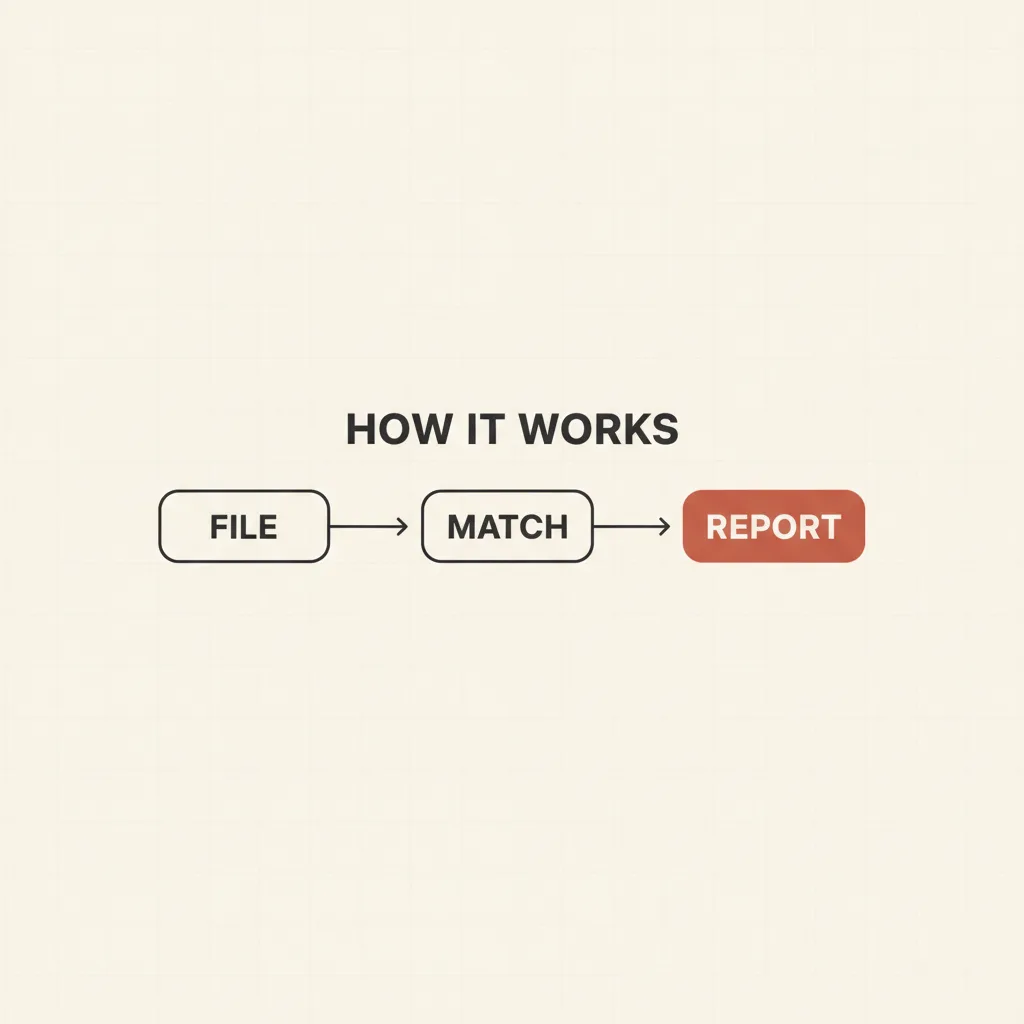
The mechanism has three steps.
You file. When a claim opens, the insurer reports it to ClaimSearch, either by keying it into the web interface or, for most carriers of any size, automatically from the claims system. Verisk provides the system-to-system integration at no extra charge, and Guidewire ClaimCenter and other platforms offer marketplace integrations.
It matches. The system stores the new claim and searches everything it holds for the same claimant, the same vehicle, the same property, or the same contact details. Matching runs on names, addresses, dates of birth, phone numbers, Social Security and driver's license numbers, VINs, license plates, and policy and claim numbers.
You get a report. The match report lists the prior claims it found, with the carrier, the date of loss, the type of claim, and the claim number, so the adjuster can follow up with the other carrier if something looks off. For enrolled property carriers, the report also flags prior claims that carry photos, so an adjuster can see whether the same damage has been claimed before.
Because reporting happens at intake, ClaimSearch does two jobs at once. For the large majority of claims that come back clean, it fast-tracks them. For the ones that light up, it gives the adjuster or the SIU a reason to look harder before anything is paid.
What a Match Report Shows
A match report is a claims history. For each prior claim it typically shows:
| Field | What it tells you |
|---|---|
| Carrier and claim number | Who handled it and how to reach them |
| Date of loss | Frequency, and how prior losses cluster |
| Line of business | Auto, property, casualty, workers' comp |
| Role | Claimant, insured, third party, service provider |
| Loss description and injury or damage type | Whether the same body part or the same roof keeps appearing |
| Vehicle or property identifiers | The same VIN or address across claims |
| Service providers and adjuster contact, where reported | The doctors, attorneys, and body shops a prior carrier recorded on the claim, and who handled it |
| Images, where contributed | Prior loss photos for comparison |
Providers appear only when a prior carrier reported them on a claim. What the report doesn't show is anything that happened outside a claim. If the claimant saw a chiropractor for six months on their own health plan and never filed, that isn't in ClaimSearch, because nobody reported it.
Who Can Access It
Access is tighter than people assume, and the rules differ by who you are.
Insurers, self-insureds, and TPAs subscribe. Use is restricted to processing active claims where an initial report has been filed, and the investigations query function is limited to users whose primary job is investigating potentially fraudulent claims. A county risk-management office that licensed it described the terms this way in a public procurement record: designated and approved users only, active claims only, and no sharing of the output outside the organization without Verisk's written consent. The same record bars contract SIU firms, TPAs, and other third parties from running inquiries on a carrier's behalf without ISO's prior written consent.
Law enforcement, criminal justice, and regulatory agencies get in through the NICB, free of charge, at three levels. "Qualified" agencies, meaning those with a unit whose primary function is investigating or prosecuting insurance crime, see the full claims data, and only to the extent contributing insurers permit it. "Non-qualified" agencies see vehicle-related data only. A third tier covers VIN decoding alone.
State fraud bureaus and fire marshals have direct access for their own investigations, and ClaimSearch reports to them on subscribers' behalf where state law requires it.
Claimants and plaintiff attorneys do not get direct access; the license terms above forbid a subscriber from handing the output to anyone outside the organization. A claimant's own ISO history surfaces in litigation through discovery, which is why "ISO ClaimSearch for attorneys" is a common search: defense counsel receive it from the carrier, and plaintiff counsel request it in discovery. Either way it's a lead-finding tool, not evidence in itself.
How Much Does ISO ClaimSearch Cost?
Verisk doesn't publish a price, and we won't guess at one.
What the public record does show is the shape of the deal. It's a contributory database membership licensed to the organization, with no per-seat cap but every user designated and approved. Core reporting, inquiry, and the system integration are included. Add-ons are priced separately: customized data appends, DecisionNet public records, police reports and motor vehicle records, and the law-enforcement and manufacturer vehicle data the NICB authorizes for a fee. OFAC screening is offered in tiers. Lines outside standard P&C, such as life, disability, and warranty, need a separate agreement.
If you're a carrier or TPA you already have it. If you're a self-insured employer evaluating it, the price comes from a Verisk sales conversation and scales with the book you're reporting. If you're a contract investigations firm, note that you generally can't buy inquiry access to search on a carrier's behalf; the carrier runs the report and hands you the lead.
What ClaimSearch Also Does Quietly
A lot of what runs through ClaimSearch isn't fraud detection at all. Because claims are already being reported there, Verisk offers it as the pipe for reporting carriers would otherwise handle one agency at a time: Medicare Secondary Payer Section 111 reporting, child-support lien matching, Medicaid recipient notification through the Medicaid Recovery Network in enrolled states, state fraud-bureau and fire-marshal reporting, and optional OFAC screening of claim submissions against the Treasury's sanctions list (Verisk compliance brochure). For an SIU the point is that contributing carriers report in as a condition of searching, so the claims database is close to complete, even though a contributor can restrict which outside agencies see its data.
What It Can't Tell You
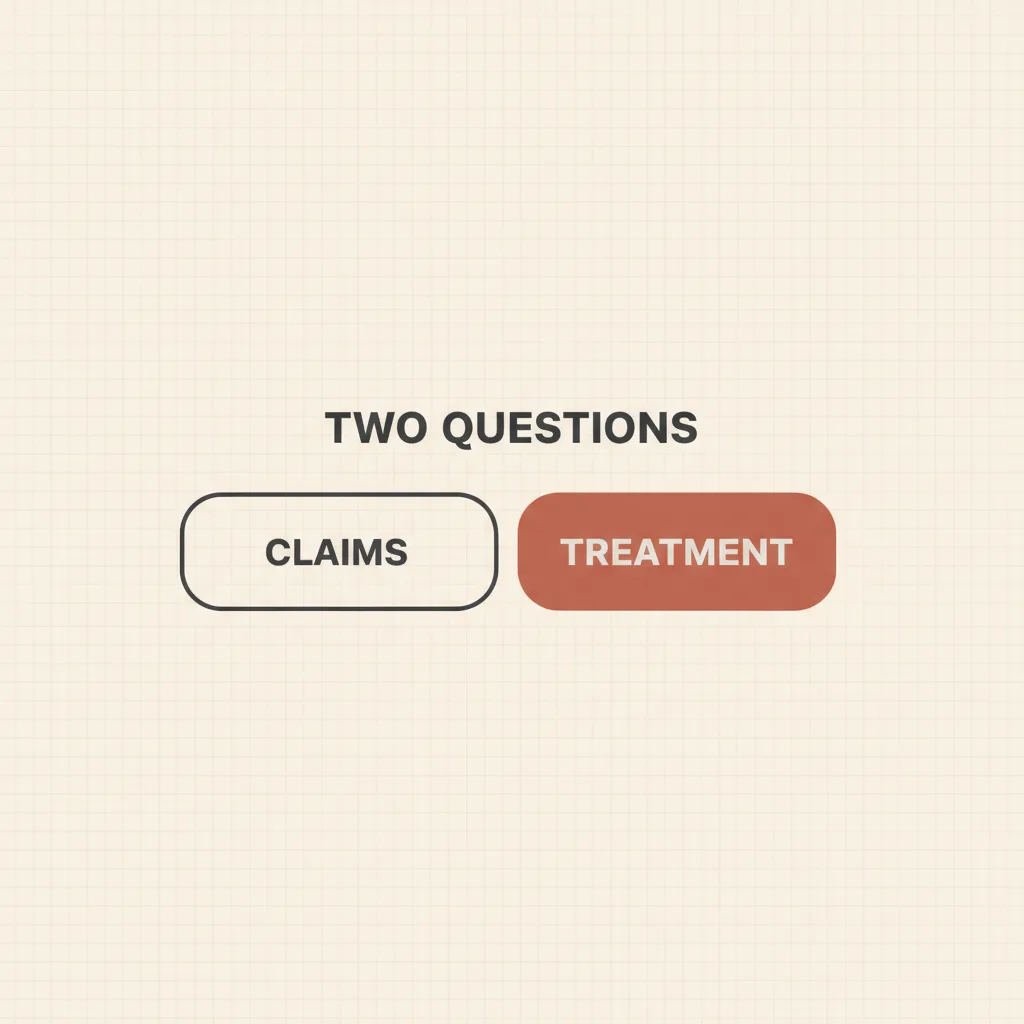
Here is the limit that matters for an investigation.
ClaimSearch answers: has this person been in a claim before? It does not answer: where has this person been treated, and for what? Treatment that never became a claim, prior injuries handled on a health plan, a pharmacy history that contradicts the current narrative, a provider the claimant didn't disclose: none of that is in a claims database, because none of it was reported as a claim.
That second question is the one that decides most soft-tissue, workers' comp, and bodily-injury files, and it's answered by contacting providers directly. In practice an SIU runs ClaimSearch first, and when the match report raises a question the report can't settle, orders a medical canvass: outreach to hospitals, clinics, urgent cares, and pharmacies in the claimant's area asking whether this person has been seen. In the SIU process the two run in sequence, and canvassing vs. records retrieval covers what comes after a canvass finds something.
Where Superunit Fits After the Match Report
Superunit runs the canvass. When a ClaimSearch report shows a prior injury claim and the adjuster needs to know whether the claimant was treated between then and now, our AI agents contact the medical facilities and pharmacies in the search radius (25 miles by default) by phone, email, and fax, ask the yes-or-no question, and document every answer and every non-answer with timestamps. The output is a list of facilities with a confirmed, denied, or no-response result for each, with dates of service where confirmed, which is what an investigator or a records-retrieval request needs next.
Pricing starts at $1.50 per location, so a standard 30-facility canvass runs about $45. Superunit has completed over 200,000 verifications across its product lines; the canvassing product is built on the same outreach engine as the rest.
What Superunit Doesn't Replace
We aren't a claims database. ClaimSearch is the system of record for claim history, and nothing an outreach vendor does substitutes for it. Run the match report first. We're the step after it, for the question it can't answer. For how that step is priced and how long it takes, see how much medical canvassing costs.
FAQ
What is an ISO ClaimSearch match report? The output of a ClaimSearch query: a list of prior claims the database holds for the same claimant, vehicle, or property, across all contributing carriers, with the carrier, claim number, date of loss, line of business, and loss description for each.
How do I get access to ISO ClaimSearch? Insurers, self-insureds, and TPAs subscribe through Verisk. Law enforcement applies through the NICB. There is no individual or consumer access.
Is ISO ClaimSearch the same as the NICB? No. The NICB is a nonprofit funded by insurers that investigates insurance crime. Its vehicle-theft data was folded into ClaimSearch in the 1990s and it still administers law-enforcement access, but the database is Verisk's.
Can an attorney search ISO ClaimSearch? Not directly. Defense counsel get a claimant's ISO history from the carrier they represent; plaintiff counsel request it in discovery.
Can I get my own ClaimSearch report? Not from Verisk. ClaimSearch isn't a consumer report; it's licensed to insurers for claims handling. If you want your own loss history, request a CLUE report from LexisNexis or an A-PLUS report from Verisk, both of which individuals can order. A claimant's route to their ClaimSearch history is their insurer or, in litigation, discovery.
How far back does ISO ClaimSearch go? It holds claims reported since the system's predecessors were built, so decades for most lines. How much of a given person's history appears depends on which carriers contributed at the time.
Does ISO ClaimSearch show medical treatment? Only treatment that was part of a reported claim. Treatment paid through a health plan, out of pocket, or never billed isn't in it. That is what a medical canvass is for.
Pulling It Together
ISO ClaimSearch is the industry's shared memory for claims: everyone reports in, everyone gets a match report back, and 1.8 billion records make it hard for a repeat claimant to look new. It's restricted to credentialed insurers, TPAs, and law enforcement, it's priced by subscription, and it's complete by design. Its boundary is the edge of the claim. When the question moves from "has this person claimed before" to "where has this person been treated," the database has done its job and the canvass starts.