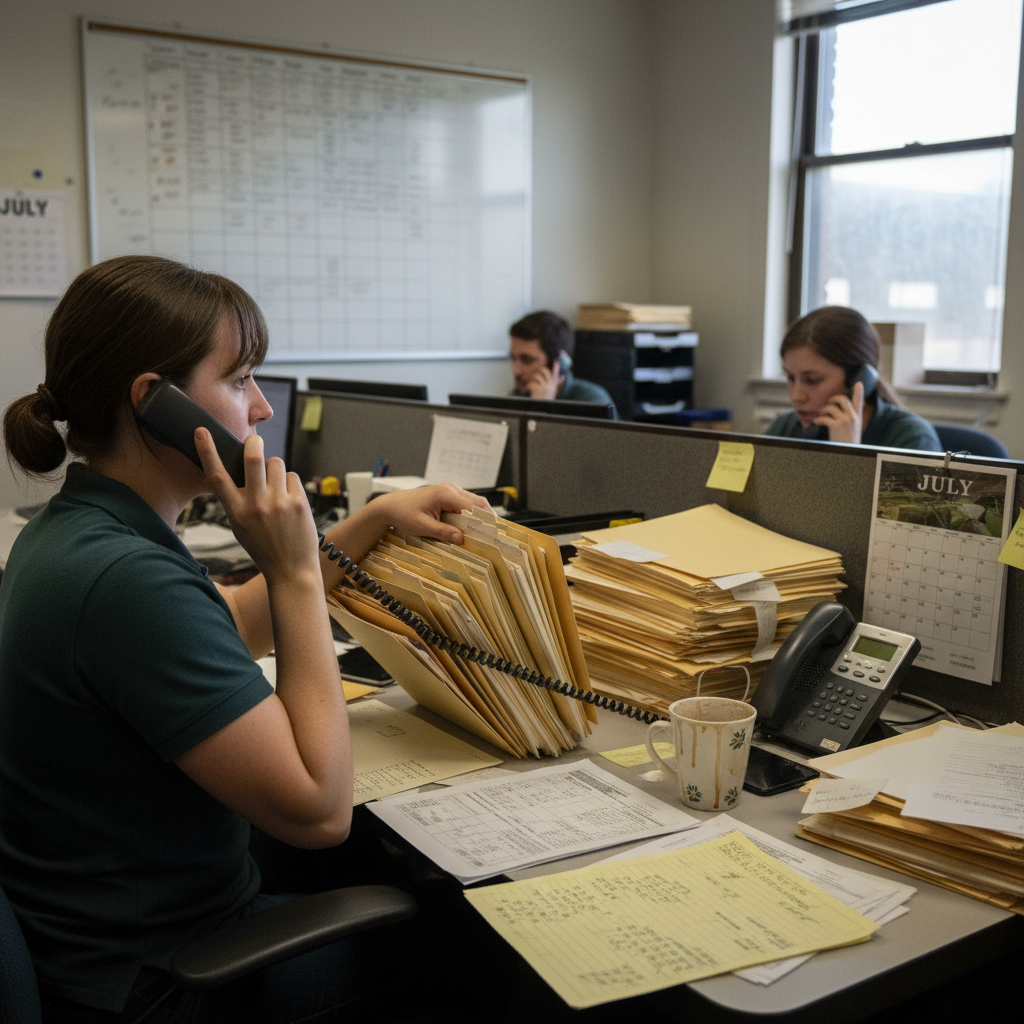
Every summer, CRA operations leaders face the same crisis: hiring season order volume doubles, verification queues explode, and clients start calling. The instinct is to hire more verifiers, but the math reveals a different problem entirely.
Your backlog isn't a headcount shortage — it's a throughput constraint. When one verifier can only contact one employer through one channel at a time, sequential outreach becomes the bottleneck that no amount of staffing can solve efficiently.
The queue backs up because manual verification fundamentally doesn't scale with surge demand. Adding temporary workers takes weeks to reach productivity, introduces compliance risk, and leaves you overstaffed when volume returns to baseline.
Smart CRA leaders recognize this as an operations problem, not a hiring problem. The solution isn't more people making more phone calls — it's removing the sequential constraint that creates the backlog in the first place.
The Staffing Math Doesn't Work During a Surge
CRAs consistently underestimate the ramp-up time for new verification staff. Training a verifier to handle complex employment scenarios, navigate FCRA requirements, and manage difficult employer contacts takes 4-6 weeks minimum. By the time new hires reach productivity, the hiring surge is over.
Temporary staffing helps at the margins but comes with real tradeoffs. Temp workers need training on your workflow, your CRM, and your documentation standards before they can close cases independently. They're also unfamiliar with client-specific requirements — which employers route through third-party services, which require fax-first outreach — and those gaps show up in completion rates and QC findings.
Post-surge, CRAs face an impossible choice: maintain expensive headcount for seasonal volume that won't return for months, or churn through staff and rebuild the same capacity next year. Either path destroys profitability. The fundamental error is treating verification backlogs as a headcount problem when they're actually a throughput problem.
Adding bodies doesn't solve the core constraint: each verifier can only contact one employer through one channel at a time. When those employers are also overwhelmed with their own hiring surge, the sequential nature of manual outreach creates compounding delays that no amount of overtime can fix.
The Real Constraint: Sequential Outreach Throughput
Your verifiers work one employer at a time. One phone call, one email, one fax attempt — then wait for a response before moving to the next case. This sequential constraint creates the bottleneck that explodes during hiring season.
The math is unforgiving. A verifier working eight hours can make roughly 40-60 outbound call attempts in a day — but most of those are voicemails, holds, and transfers, not completions. When 200 new cases arrive on top of an existing queue, you're not keeping pace. You're falling behind.
The constraint compounds when employer HR departments face their own hiring surge. The retail chain's corporate office that normally responds in 24 hours now takes 72 hours because they're processing verification requests from every CRA in town. Your verifier sits idle, waiting for callbacks that don't come.
Small employers with single HR contacts become impossible during peak season. The restaurant manager who verifies employment between lunch rushes in March becomes completely unreachable in July when they're training new summer staff. Manual outreach fails precisely when you need it most.
This throughput constraint explains why overtime and prioritization schemes don't work. Adding more hours to sequential processes still leaves you with the same fundamental limitation: one verifier, one employer conversation at a time.
Why the Typical Fixes Don't Hold
Your CRA already knows what doesn't work. You've tried asking verifiers to work overtime during the summer surge, only to watch accuracy drop and burnout climb. You've implemented case prioritization systems that create client tier conflicts and still leave someone waiting.
Manual overflow vendors sound like the obvious solution until you realize they're facing the same seasonal surge. Every CRA hits the same June-August volume spike, which means your backup vendor is already running at capacity when you need them most. Turnaround times from manual overflow providers typically get worse in peak season, not better.
BPO verification teams are a step up from ad-hoc overflow — offshore or nearshore teams dedicated to employment verification outreach, often at lower per-case labor cost. The economics can work for steady-state volume. The problem during surges is the same: BPO teams are still human verifiers working sequentially, and their capacity is still headcount-bound. Spinning up additional BPO capacity takes weeks of contracting and onboarding. And if your BPO partner serves multiple CRA clients, their surge is your surge too.
Overtime pay scales linearly with volume while creating more quality control problems. Prioritization moves the backlog around without reducing it — Tier 2 clients still wait while Tier 1 clients jump the queue.
The constraint is the same across all of these: one verifier, one employer, one channel at a time. Whether that's your own staff, a BPO team, or an overflow vendor, the sequential nature of manual outreach creates a throughput ceiling that no amount of human effort can break.
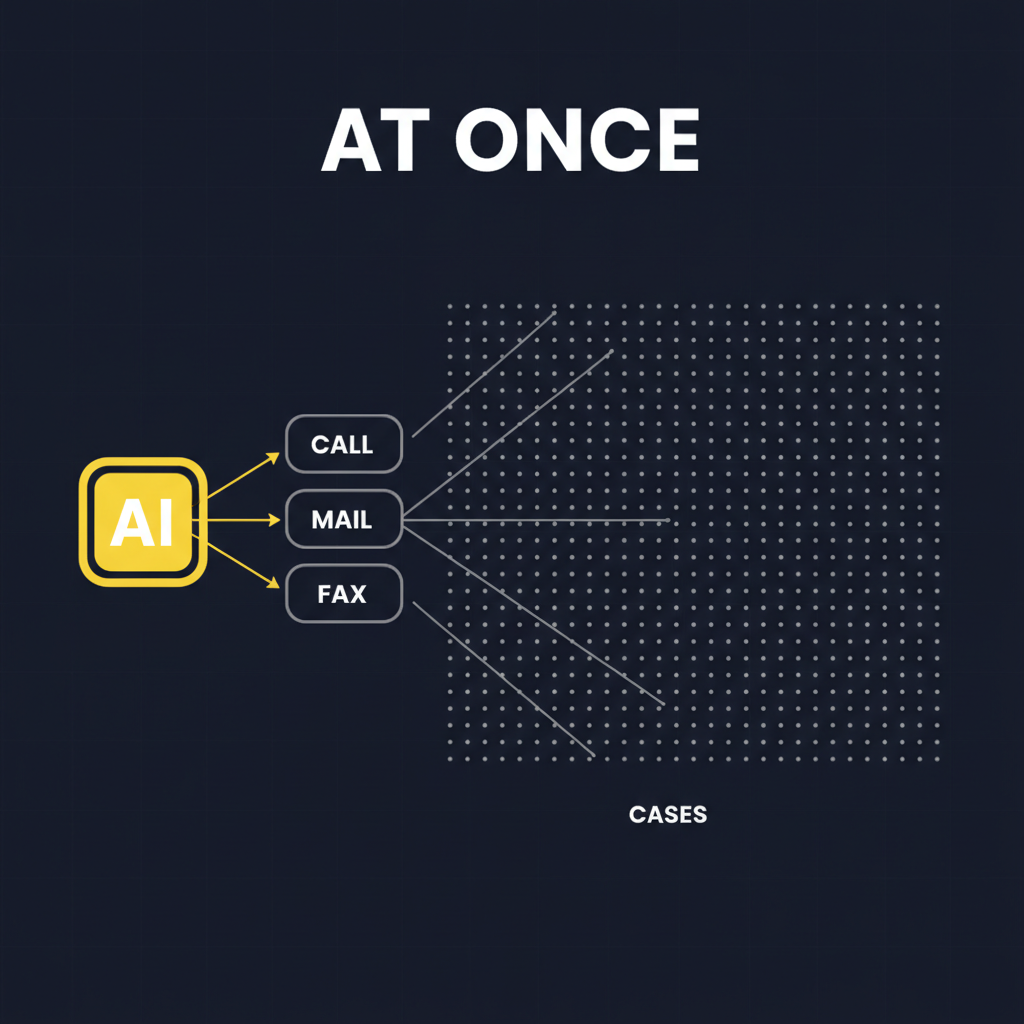
The Structural Fix: Simultaneous Outreach at Scale
The throughput ceiling in manual verification exists because every outreach attempt is sequential. One verifier, one employer, one channel, one moment in time. The only way to move faster is to add more people — and as we've covered, that doesn't work during a surge.
AI verification agents remove the constraint entirely. Instead of one verifier working one case, AI agents initiate phone, email, and fax outreach simultaneously across every open case the moment an order arrives. There's no queue in the traditional sense. A CRA sending 500 orders or 50,000 orders gets the same immediate outreach cadence — the system doesn't have a headcount ceiling.
The scale difference isn't incremental. A manual team might clear a backlog over days or weeks. AI agents can work through that same backlog in hours, because they're not waiting for one employer to respond before starting the next. Every case gets worked in parallel, with automated follow-up built in at the right intervals.
This is also why the seasonal surge problem disappears structurally. A 10x spike in order volume doesn't require a 10x increase in staff. It requires the same AI infrastructure that was already running — just with more cases flowing through it. The operation scales to the volume rather than the volume overwhelming the operation.

What This Looks Like in Practice During Peak Season
The cases that pile up fastest in manual queues during a surge are the ones that require the most follow-up — not the straightforward verifications at large employers with responsive HR departments. Here's where the difference is most visible:
Small employers with no HR function. The owner of a ten-person landscaping company isn't sitting by the phone waiting for verification calls. A manual verifier might get to them once or twice before moving on. AI agents make multiple attempts across phone and email at different times of day, without consuming a verifier's time on repeated dials. The case stays active rather than aging in a queue. This is the same long tail of unresponsive employers that quietly wrecks surge-season turnaround.
Fax-only employers. Healthcare systems, school districts, and some government agencies only accept fax-based verification requests. In a manual workflow, these cases often get deprioritized because they require extra steps. AI agents initiate fax outreach simultaneously with phone and email on the first attempt — fax-only employers aren't a special case, they're just another channel.
Multi-location employers. A candidate who worked at a regional branch of a national retailer may require routing the verification to a specific location's HR contact rather than the corporate line. AI agents can work through contact research and routing across hundreds of cases at once rather than one at a time.
During peak season, these case types are exactly what backs up first in manual operations. They're also the ones where AI outreach has the largest practical impact on turnaround time and completion rate.
The FCRA Documentation Problem During Surges
The FCRA requires CRAs to maintain reasonable procedures to assure maximum possible accuracy — and that standard doesn't relax during peak season. But documentation quality in manual operations almost always does.
Under volume pressure, verifiers cut corners on logging. Notes get entered after the fact, or not at all. The timestamped attempt trail that demonstrates good-faith outreach — required before an "unable to verify" result can be returned — becomes inconsistent. A QC audit of verifications completed during a summer surge will surface exactly these gaps.
The problem compounds because surge periods generate more verifications in a compressed window. More potential compliance exposure, less time to be thorough.
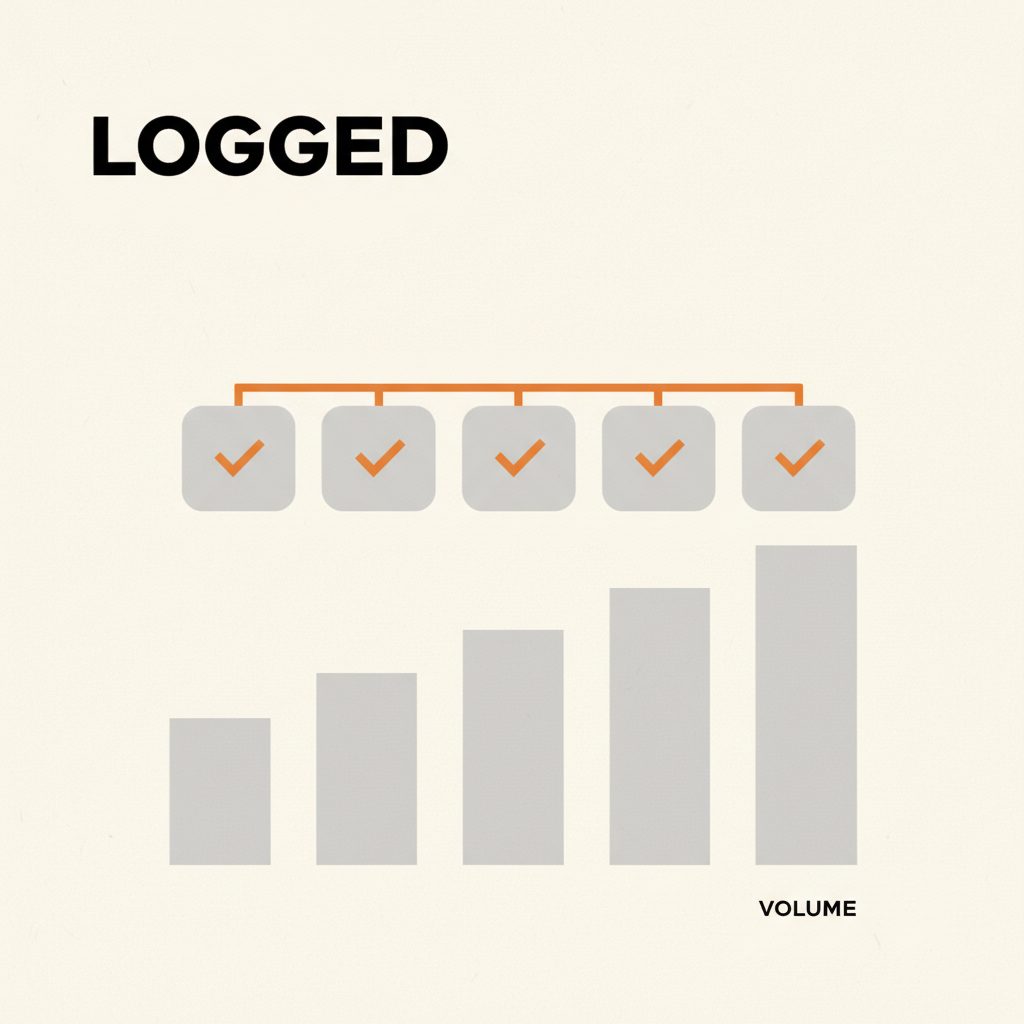
AI-generated verification records solve this structurally. Every call is recorded and transcribed. Every email and fax is timestamped with delivery confirmation. The documentation is produced automatically regardless of how many cases are running simultaneously. A 10x surge doesn't produce 10x the documentation risk — it produces the same documentation quality per verification as a normal week. Compliance risk doesn't scale with order volume when the audit trail is automated.
How to Evaluate Whether Your Operation Is Ready for Next Season
Three questions worth answering before the next surge hits:
What is your peak versus off-peak turnaround gap? If your average turnaround climbs from two days to five days during June and July, that gap is the cost of your throughput constraint — and it's what your clients are experiencing. A well-run operation should hold roughly the same turnaround time regardless of volume.
What percentage of peak-season orders complete within 48 hours? Across all verification types, the majority of verifications that will complete do so within 48 hours of first outreach. If your 48-hour completion rate drops significantly during peak season, the backlog is compounding in real time — cases that should close in two days are aging into five-day or seven-day completions.
What happens to your hard-to-reach employer cases during peak? Small businesses, fax-only employers, and unresponsive contacts are where manual operations break down fastest under pressure. If your team is triaging these to the back of the queue during surges, they're aging into unable-to-verify results that could have been completed with more persistent outreach.
If the answers to any of these reveal a meaningful gap, the underlying issue is throughput — and adding headcount before next summer won't close it.
Frequently Asked Questions
Can AI verification agents handle the full range of employer types CRAs encounter? AI agents handle outreach across phone, email, and fax, which covers the majority of employer contact scenarios — small businesses, large employers with HR departments, fax-only employers, and multi-location organizations. They don't solve verification for defunct employers with no surviving records, or for self-employment scenarios where the candidate would be verifying their own business.
What happens when an AI agent can't reach an employer? The case is documented as unable to verify after a defined outreach cadence across channels. Every attempt is timestamped and logged automatically, producing the good-faith attempt trail the FCRA requires before an unable-to-verify result can be returned. The documentation is consistent regardless of how many cases are running simultaneously.
Does AI outreach create FCRA compliance risk? The opposite, typically. AI-generated verification records produce more complete documentation than manual records because every interaction is logged automatically rather than relying on a verifier to enter notes under time pressure. The FCRA's reasonable procedures standard requires documented good-faith attempts; automated outreach produces that trail by default.
How quickly can AI verification scale up for a surge? Immediately. There's no onboarding period, no training ramp, and no capacity ceiling tied to headcount. A CRA processing 500 orders in a normal week can send 50,000 orders the following week without any operational changes on their end.
What about programs that require human-to-human employer contact? Some enterprise clients or regulated programs specify that a live verifier must be on the call. For those programs, a hybrid model works: AI handles the bulk of outreach across the full case volume, and human verifiers are reserved for the specific programs or exception cases that genuinely require it. That's a much smaller staffing requirement than running a fully manual operation through a surge.
Hiring season isn't going to stop arriving every summer, and the employers your team can't reach aren't going to get easier to reach. CRAs that treat the surge as a throughput problem — and remove the one-verifier-one-channel-at-a-time constraint with parallel, automated outreach — protect their margins, hold their TAT commitments, and produce a clean FCRA audit trail no matter how high volume climbs. The ones that keep answering a throughput problem with a headcount answer will keep rebuilding the same expensive capacity every June, only to dismantle it every September.
To see what this looks like on your own volume, start with the background screening solution or compare approaches in our 2026 ranking of CRA-focused verification vendors.