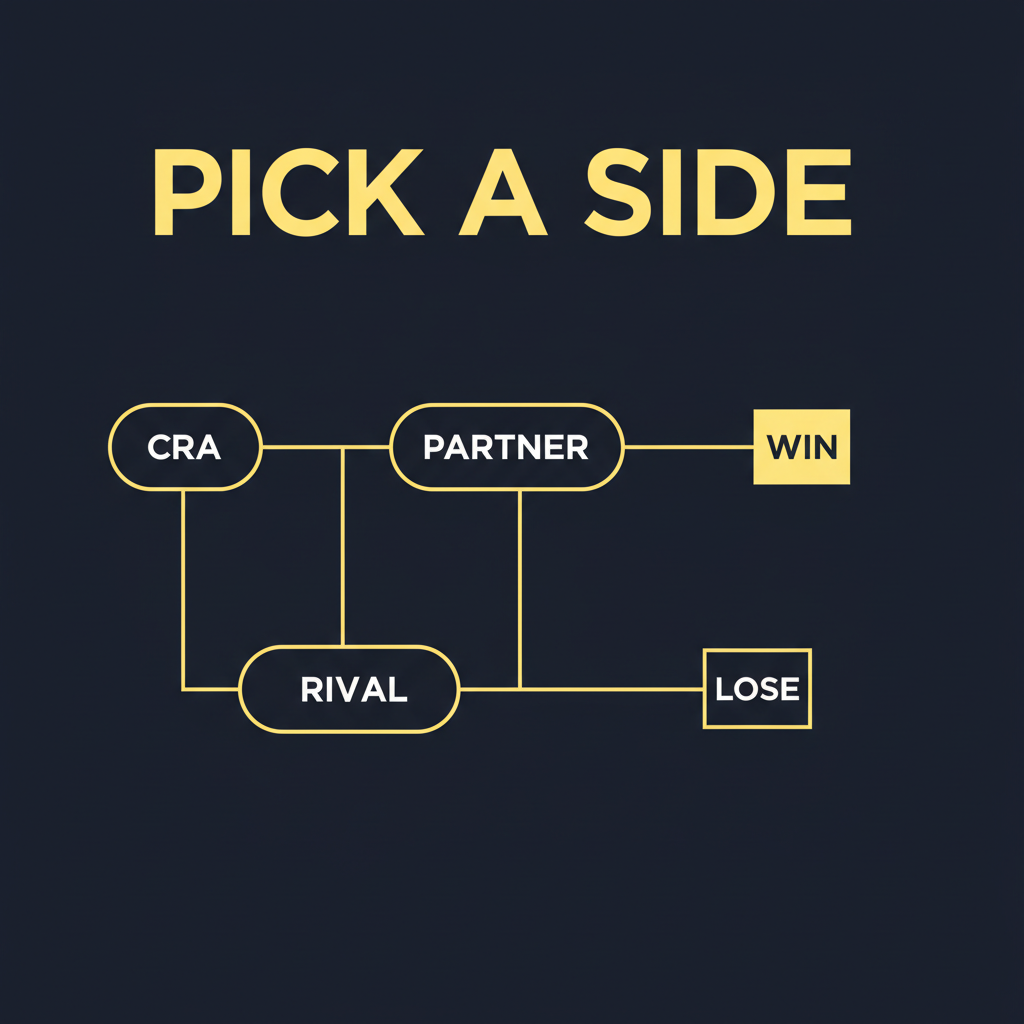
Most employment verification comparison guides are written for employers. If you're a Consumer Reporting Agency, those guides point you toward vendors who sell to the same HR buyers you depend on. CRAs are regulated intermediaries producing consumer reports under the FCRA. Picking a verification tool designed for employers often means sending volume, and revenue, to a company that competes with you for clients.
As of 2026, the verification vendor market has more options than ever. Fewer of those options are actually built for CRAs. Checkr, GoodHire, and similar platforms aren't software a CRA would license — they're competing CRAs selling background reports directly to the same employers you serve.
This guide covers the eight verification vendors CRAs should know in 2026, evaluated against the criteria that actually matter for screening operations: FCRA chain-of-custody documentation, manual outreach capability when databases miss, CRA-channel partnership model, and audit-trail depth. Each vendor's fit depends on the shape of your case file — the comparison table at the end summarizes who fits where. For a full primer on the CRA verification function, see the CRA's complete guide to employment verification.
How We Evaluated Verification Vendors for CRAs
Six criteria, weighted by operational reality for background screening companies:
- CRA channel model. Does the vendor sell exclusively to CRAs and screeners (partner), sell to employers directly (competitor), or operate as a neutral data utility? Whether a vendor competes for your end-buyer relationships is the single biggest risk most CRAs overlook when evaluating vendors.
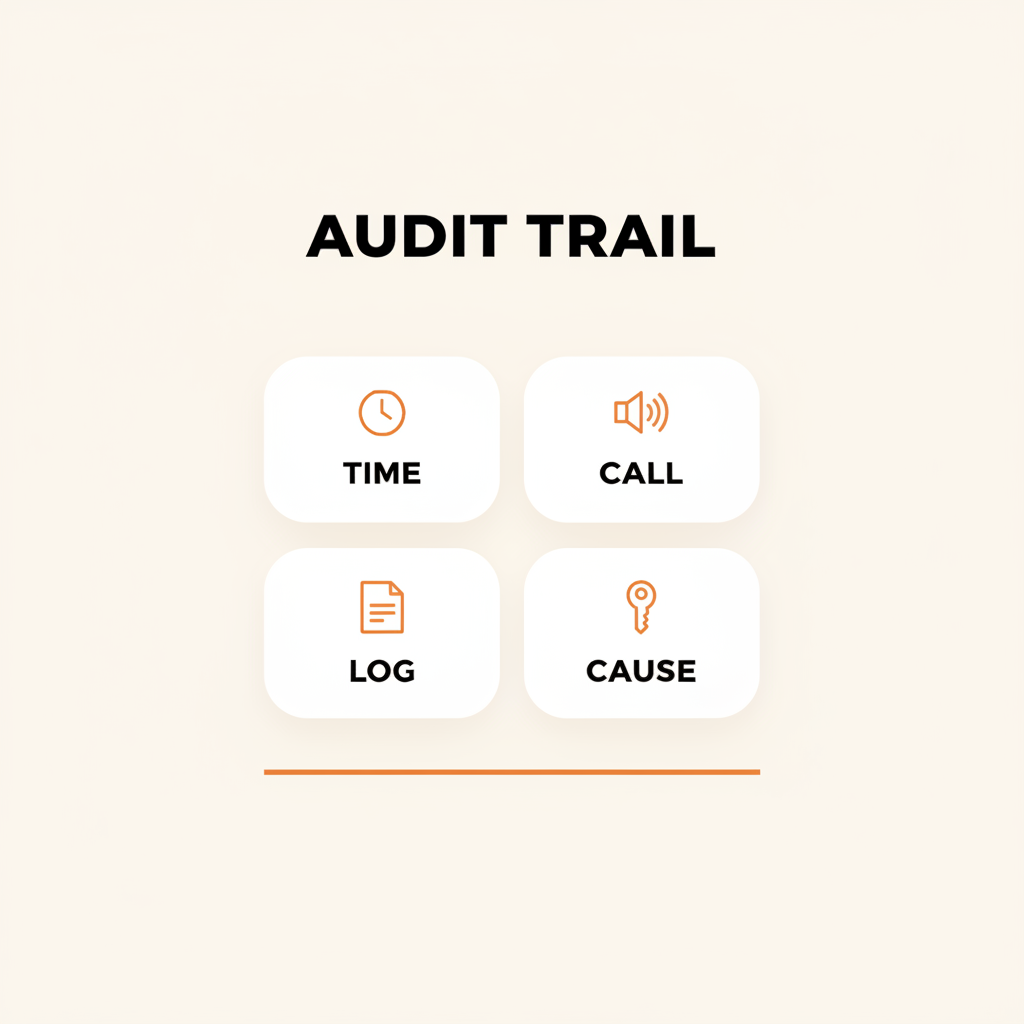
- FCRA chain-of-custody. Timestamped logs, call recordings, documented contact attempts. If a verification is disputed or audited, the CRA needs a defensible paper trail, not just a database hit.
- Manual outreach capability. Databases cover large enrolled employers. The long tail of small, private, and non-enrolled employers requires actual outreach: phone calls, emails, faxes. A vendor that stalls on database misses leaves the CRA holding the bag.
- Adverse action workflow support. The report format must contain employer name, dates, position, and verification source in a structure that supports downstream FCRA adverse action procedures.
- Case management integration. API depth, webhooks, and compatibility with CRA platforms matter for operational throughput. A standalone portal with no integration adds labor instead of removing it.
- Cost-per-completion. Not cost-per-order. A low per-order price paired with a low completion rate produces a higher true cost per usable result. Completion rate changes the economics entirely.
The 8 Verification Vendors CRAs Should Know in 2026
1. Argyle
Best for: CRA case files with a high concentration of gig-economy or tech-sector workers.
Argyle's direct payroll API integrations with gig platforms (Uber, Lyft, DoorDash) give it coverage that other vendors simply don't have. If you're running verifications on gig workers, Argyle is one of the few vendors that can return real-time data on those employers. That said, Argyle's primary customers are lenders and fintechs, not CRAs. The go-to-market overlap is real: Argyle is building relationships with the same financial services buyers that many CRAs depend on. Whether that matters to your specific business depends on your client base, but the incentive structure points away from CRA partnership over time.
Pros:
- Deep gig-platform coverage including Uber, Lyft, and DoorDash through direct payroll API integrations
- Real-time data delivery with fast turnaround on covered employers
- Strong developer docs that simplify API integration
Cons:
- Lender and fintech focus means Argyle's sales team is calling on the same buyers CRAs serve
- Coverage drops sharply outside payroll-connected employers
- Not optimized for FCRA adverse action workflows or CRA report formatting
Pricing: Per-verification API pricing with volume discounts.
2. Superunit
Best for: Scaling long-tail employer outreach (small businesses, private companies, non-enrolled employers) without adding headcount.
Superunit sells exclusively to CRAs, lenders, and background screening firms. No employer sales channel exists. There is no scenario where Superunit ends up pitching your client.
Backed by Y Combinator (S24) and founded in 2024 in Los Angeles, Superunit built AI verification agents that contact HR departments by phone, email, and fax simultaneously. That simultaneous approach matters because sequential outreach (call, wait two days, email, wait two more days, fax) is what makes manual verification slow. As of 2026, Superunit has processed over 70,000 verifications. The completion rate across that volume sits at 62%, with an average turnaround of 0.82 business days.
Every call is recorded, transcribed, and timestamped, producing the kind of FCRA-grade audit trail that CRAs need for disputed cases and compliance reviews. The 98% pilot-to-full-time conversion rate across 45 customers (including InformData, TruView BSI, CIC Screening, and Data Facts) suggests the product works in production, not just in demos.
Pros:
- Solves the long-tail problem that database vendors like The Work Number leave open, covering the employers no one else reaches
- Full FCRA audit trail with recordings, transcripts, timestamps, and documented contact attempts for every case
- Pay-on-success pricing means CRAs only pay for completed verifications, eliminating cost-per-incomplete-order math
- 0.82 business-day turnaround fast enough to keep case files moving without bottlenecking downstream steps
Cons:
- No coverage for self-employed individuals or defunct employers; those cases still require alternative handling
- Newer entrant (founded 2024); enterprise integrations are still expanding, and CRAs with deeply customized case management systems should confirm API compatibility before committing volume
- 62% completion rate means 38% of cases still come back incomplete, which is significantly better than most manual teams but still requires a fallback workflow
Pricing: Pay-on-success flat fee per completed verification. Free tier available for testing. Custom enterprise pricing for high-volume accounts. See Superunit's background screening solutions for details.
3. InformData
Best for: CRAs that want a single outsourcing partner handling the full verification function (employment, education, references).
InformData was built for background screening companies and has never operated a direct-to-employer sales channel. For CRAs that want to hand off the entire verification function rather than manage multiple vendor relationships, InformData is the most established option.
Pros:
- Exclusively serves CRAs and screeners, with no direct-to-employer sales channel
- Multi-type verification coverage spanning employment, education, and references under one partner
- Documented good-faith attempts per case, with published CRA-specific operational guides
Cons:
- Pricing not public; requires sales engagement to evaluate
- Traditional outreach methodology compared to AI-native entrants; less automation in the workflow
Pricing: Custom enterprise. Contact InformData directly.
4. Equifax / The Work Number
Best for: Instant hits on Fortune 500 and large mid-market employers already enrolled in the database.
Equifax operates as a neutral data utility here. It does not compete with CRAs for end-buyer relationships, but it also does not function as a channel partner. You get access to the data. What you do with it is your problem.
Pros:
- 700M+ employment records make it the largest instant-access payroll database in the US
- 24/7 API availability with FCRA-vetted verifier credentialing required for access
- Instant turnaround on enrolled employers with no manual intervention needed
Cons:
- $130.69 per report as of January 2026, a price set by Equifax and non-negotiable through third parties
- Zero small-employer coverage for private, non-enrolled, or small businesses
- No outreach capability whatsoever; if the employer is not in the database, the case stalls
Pricing: Per-report, set by Equifax.
5. Neeyamo
Best for: CRAs serving clients with global hiring pipelines or cross-border employment histories.
Neeyamo covers 190+ countries, the broadest international footprint on this list. For CRAs whose case files regularly include non-US employment histories, Neeyamo fills a gap that domestic-focused vendors cannot.
Pros:
- 190+ country coverage, the broadest international footprint on this list
- Cross-border outreach capability including non-English-speaking HR departments
- FCRA-aware documentation for international verification cases
Cons:
- Less optimized for domestic US high-volume case throughput
- Pricing not public; requires direct engagement
Pricing: Custom enterprise. Contact Neeyamo.
6. HRLogics Clear Verify
Best for: CRAs that need documented permissible-purpose trails and employer-side audit logs per request.
HRLogics takes an interesting approach: it charges verifiers (including CRAs) per request while keeping employer enrollment free. That removes a common adoption barrier on the employer side and, in theory, expands the coverage base over time.
Pros:
- Credentialed access model creates a built-in FCRA permissible-purpose record for every request
- Full audit log per verification with version control
- No employer cost, which removes enrollment friction and expands the potential coverage base
Cons:
- CRA integration depth is limited compared to CRA-native vendors; primarily an employer-side platform
- Coverage depends on enrollment; smaller employer base than database-first alternatives
Pricing: Per-verification fee to the verifier. No employer cost.
7. Truework
Best for: CRA case files heavily weighted toward mid-to-large employers with payroll system integrations.
Here's where it gets complicated. Truework has a genuinely good payroll network and a hybrid waterfall model that reduces manual fallback frequency. If your case mix is 80%+ mid-to-large employers with payroll integrations, Truework can handle real volume. The problem is not the product. The problem is that Truework sells directly to mortgage lenders, and if your CRA serves the mortgage vertical, you're feeding a vendor that may eventually pitch your clients a direct relationship. For CRAs focused on pre-employment screening with minimal lender overlap, the risk is lower but still worth tracking. For a detailed vendor comparison, see the head-to-head breakdown.
Pros:
- Strong payroll network coverage on mid-to-large employers
- Hybrid waterfall model that reduces manual fallback frequency
- Well-documented API with clear integration paths
Cons:
- Direct lender sales mean Truework competes with CRAs that serve mortgage and financial services clients
- Limited small-employer coverage where manual outreach is still required
- Per-report costs escalate at higher volumes without proportional completion rate gains
Pricing: Per-report and subscription tiers. Custom enterprise available.
8. Mitratech AssureHire
Best for: CRAs wanting to consolidate criminal, employment, education, and drug screening under one platform.
AssureHire is PBSA-accredited and carries built-in FCRA-compliant workflows including adverse action support. The wrinkle: AssureHire is itself a CRA. That creates a CRA-to-CRA dynamic where your vendor is also, structurally, a peer. Some screening firms find this arrangement workable. Others see it as an uncomfortable dependency.
Pros:
- PBSA accreditation with built-in FCRA-compliant workflows including adverse action support
- All-in-one coverage spanning criminal, employment, education, drug screening, and ongoing monitoring
- Post-hire monitoring available for continuous screening use cases
Cons:
- AssureHire is itself a CRA, which introduces potential competitive complexity for screening firm customers
- Primarily employer-facing in practice; CRA-specific workflow depth varies by use case
- Pricing requires sales engagement with no public rate card
Pricing: Custom enterprise. Contact Mitratech.
How to Choose the Right Verification Partner
The right vendor depends on the shape of the CRA's case file and operational priorities:
- Scaling without adding headcount: Layer Superunit for long-tail employer outreach and The Work Number for large-employer instant hits. InformData fits CRAs that prefer a single outsourcing relationship. For a deeper look at the staffing math, see how to outsource employment verification and reduce staffing costs.
- Case file skews Fortune 500 / large mid-market: The Work Number covers the volume. Build a fallback workflow for database misses, which will still represent a significant portion of cases.
- Need a full platform (criminal + employment + drug): Mitratech AssureHire consolidates screening types, but evaluate the CRA-to-CRA dynamic carefully.
- Case file skews gig or tech workers: Argyle works as a supplement, not a primary vendor. The go-to-market overlap with lenders limits its role.
- Hard-to-reach or unresponsive employers: Superunit for domestic volume. Neeyamo for international cases.
FCRA Chain-of-Custody: What a Verification Partner Must Produce
Any vendor handling employment verifications on behalf of a CRA must produce documentation that holds up under FCRA scrutiny. Five non-negotiables:
- Timestamped contact log. Every attempt (call, email, fax) with date, time, and method recorded. A single "unable to verify" note without supporting timestamps is a compliance gap.
- Call recordings and transcripts. A verbatim record of what was confirmed and by whom. Text summaries alone are not sufficient when a consumer disputes the report.
- Documented good-faith attempt history. Attempt count, channels used, and timeframe are required even when the employer is unresponsive. Incomplete cases still need a defensible trail.
- Permissible purpose verification. Evidence of FCRA Section 604 permissible purpose must be established before access, not after.
- Adverse action-ready report format. Employer name, dates of employment, position title, and verification source, all present in a format that supports downstream adverse action procedures.

Frequently Asked Questions
What is the difference between a CRA and an employer using background checks?
A CRA is a regulated intermediary that produces consumer reports under the FCRA. An employer is the end-buyer receiving those reports. Many popular verification tools sell directly to employers, which means a CRA using those tools is routing volume through a competitor.
Can CRAs use Checkr or GoodHire for employment verification?
No. Checkr and GoodHire are themselves CRAs — they sell completed background reports directly to employers. They aren't software a CRA would license. Adopting them in your workflow means routing your end client to a competitor. CRAs are better served by CRA-channel vendors (Superunit, InformData) or neutral data utilities (The Work Number).
What does FCRA chain-of-custody documentation require?
Timestamped contact logs, call recordings, documented attempt histories, and permissible purpose evidence under FCRA Section 604. The report format must support adverse action procedures with complete employer name, dates, position, and source fields.
How do CRAs handle employers who don't respond to verification requests?
Historically, that outreach was absorbed in-house or the case was returned incomplete. As of 2026, AI platforms like Superunit automate simultaneous phone, email, and fax attempts, reaching a 62% completion rate on long-tail employers that databases miss entirely.
What should CRAs look for in a verification vendor's pricing model?
Cost-per-completion, not cost-per-order. A vendor charging $5 per order with a 30% completion rate costs more per usable result than one charging $12 per completed verification. Pay-on-success models eliminate the incomplete-order cost problem entirely.
Comparison Table
| Vendor | Channel Model | Best For | Pricing |
|---|---|---|---|
| Argyle | Channel conflict | Gig/tech employer coverage via direct payroll APIs | Per-verification API |
| Superunit | Pure CRA partner | Long-tail employer outreach via AI phone, email, and fax | Pay-on-success; free tier |
| InformData | CRA-native | Full-service outsourcing (employment, education, references) | Custom enterprise |
| Equifax / The Work Number | Data utility | Instant hits on 700M+ enrolled large-employer records | $130.69 per report |
| Neeyamo | CRA-side partner | Cross-border verifications across 190+ countries | Custom enterprise |
| HRLogics Clear Verify | Verifier-friendly | Permissible-purpose audit logs built into access | Per-verification |
| Truework | Channel conflict | Mid-to-large payroll VOE via hybrid waterfall | Per-report + subscription |
| Mitratech AssureHire | Itself a CRA | All-in-one screening platform (criminal + VOE + drug) | Custom enterprise |
Ready to see how AI-powered outreach handles long-tail employers? Book a demo with Superunit or read the CRA's complete guide to employment verification for a full operational walkthrough.