Picture this: a mortgage processor needs to verify employment for a borrower who works at a regional hospital. She calls the HR line. An automated message directs her to send a written request — by fax. She emails instead. No response. She tries the hospital's online portal. There isn't one for external verifications. The HR department's policy is fax-only, and it has been for years. Without a fax, the VOE sits open. The loan stalls.
This scenario plays out constantly in 2026, and it is not an anomaly. Fax is not a dying technology in employment verification — it is a mandatory channel for entire categories of employers. Healthcare systems, government agencies, school districts, and large institutional HR departments maintain fax-only verification policies for documented compliance and records-retention reasons. Teams that treat fax as "legacy we can skip" do not avoid the problem — they simply fail to verify those borrowers and applicants.
The right response is not to avoid fax employers. It is to automate the fax workflow: digital fax with AI that selects the right form, sends it, receives the response, parses it into structured data, and logs the full exchange to the audit trail — no physical machine, no manual re-keying, no orphaned image files.
Which Employers Still Require Fax — and Why
Fax persists in employment verification for a specific, identifiable reason: compliance and records-retention requirements that are set at the organizational or regulatory level, not by individual HR staff preferences.
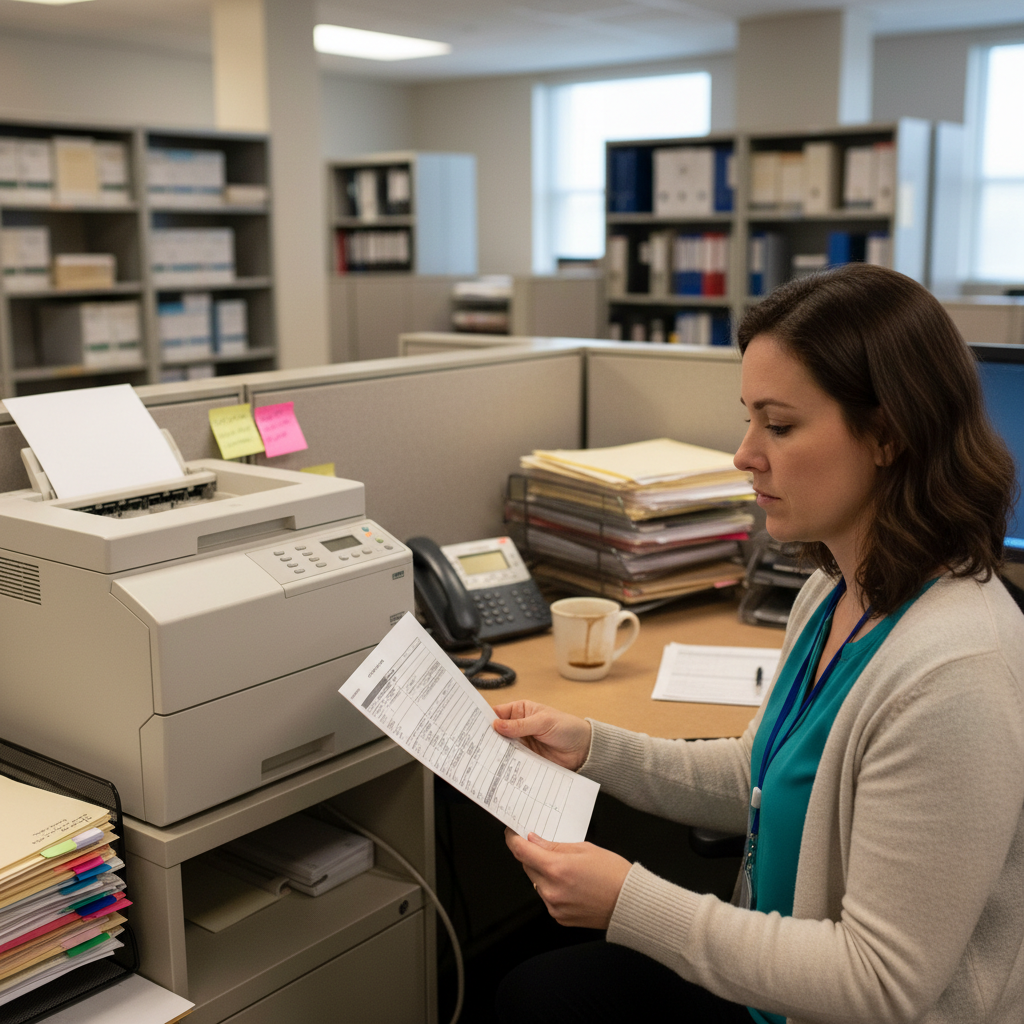
Healthcare systems and regional hospitals are the most common fax-only employers verification teams encounter. Many route employment verification requests through their compliance or medical records departments rather than through a central HR line. These departments operate under HIPAA-adjacent records-management policies that require written, traceable requests — and fax, with its inherent send/receive confirmation, satisfies that requirement in a way that email often does not under their internal policies. A hospital with 8,000 employees may have a single fax number for all external verification requests, and that fax number is the only channel they will accept.
Government agencies — county offices, municipal departments, federal contractors, and state agencies — frequently require fax as part of their documented chain-of-custody requirements for personnel records. Government HR is often governed by civil service rules or union agreements that specify acceptable methods for releasing employment information. Fax is commonly listed; email and online portals frequently are not.
School districts and public universities operate under board-level HR policies that can be years or decades old. Many require a written, signed verification request before releasing employment data, and fax is the established channel for submitting and receiving that request. Updating those policies requires board action — which means they change slowly.
Large institutional HR departments and union halls sometimes maintain fax-only policies for internal compliance reasons: standardized form intake, documented receipt, and clear separation between verification requests and other HR communications.
The common thread across all of these is not technophobia. It is a deliberate compliance posture — one that is unlikely to change on a timeline that helps a CRA or mortgage ops team today.
Why "Just Skip the Fax Employers" Quietly Kills Completion Rate
Healthcare, government, and education are not niche employer categories. Together, they represent a substantial portion of the US workforce. A verification operation that cannot reach fax-only employers is not missing edge cases — it is missing a structurally significant slice of every case queue that touches these sectors.
The damage is often invisible. Cases do not fail loudly when a fax-only employer goes unreached. They accumulate in "pending" or "unable to verify" status. Processors move on. The case closes without a completed VOE, or it delays a closing while someone manually tracks down an alternative contact. Neither outcome is acceptable in a high-volume mortgage or background screening operation.
The operational math is straightforward: every fax-only employer that a verification platform cannot reach is a case that either stalls, closes incomplete, or requires manual escalation. At scale, that is a measurable drag on completion rate — and completion rate is the metric that determines whether a CRA or mortgage ops team can serve its clients reliably.
For a deeper look at how leading CRAs handle the full range of hard-to-reach employers, see How CRAs Handle the Long Tail of Unresponsive Employers.
The Manual Fax Workflow and Everything Wrong With It
Most verification teams that do handle fax employers are doing it manually. The workflow typically looks like this:
A processor identifies that the employer requires fax. She locates the employer's fax number — often from a previous case, a web search, or a call to the main HR line. She prepares the VOE form, which may or may not be the correct form for that employer type. She sends the fax from a shared office machine or a basic online fax account. Then she waits.
If the employer responds — and response timelines for fax range from same-day to never — the returned fax arrives as an image file. The processor opens it, reads the handwritten or typed fields, and manually re-enters the employment data into the case management system. She then scans or saves the fax image somewhere, hopefully in a location linked to the case file.

Every step in this process is a failure point:
- Fax numbers go stale. Hospital HR departments change fax lines. A number that worked six months ago may route to a disconnected line today.
- Form selection is inconsistent. Different employers require different VOE forms. Sending the wrong form means the employer returns it uncompleted or ignores it entirely.
- There is no delivery confirmation. A basic fax send does not confirm that the employer's machine received and printed the document.
- Returned faxes are unstructured. An image of a handwritten form is not structured data. Transcription errors happen.
- The audit trail is fragmented. The sent fax, the returned document, and the case record exist in three different places — if they are linked at all. Under the Fair Credit Reporting Act (FCRA), a complete chain of custody is required for every verification. A manually assembled fax trail rarely meets that standard without additional effort.
For context on what a complete outreach and documentation workflow looks like across channels, see Calling HR Departments for Employment Verifications.
What Automated Fax Verification Actually Looks Like
Automated fax verification eliminates each of the failure points above by treating fax as a first-class channel in the verification workflow — not an afterthought handled outside the system.
Here is what the workflow looks like when it is properly automated:
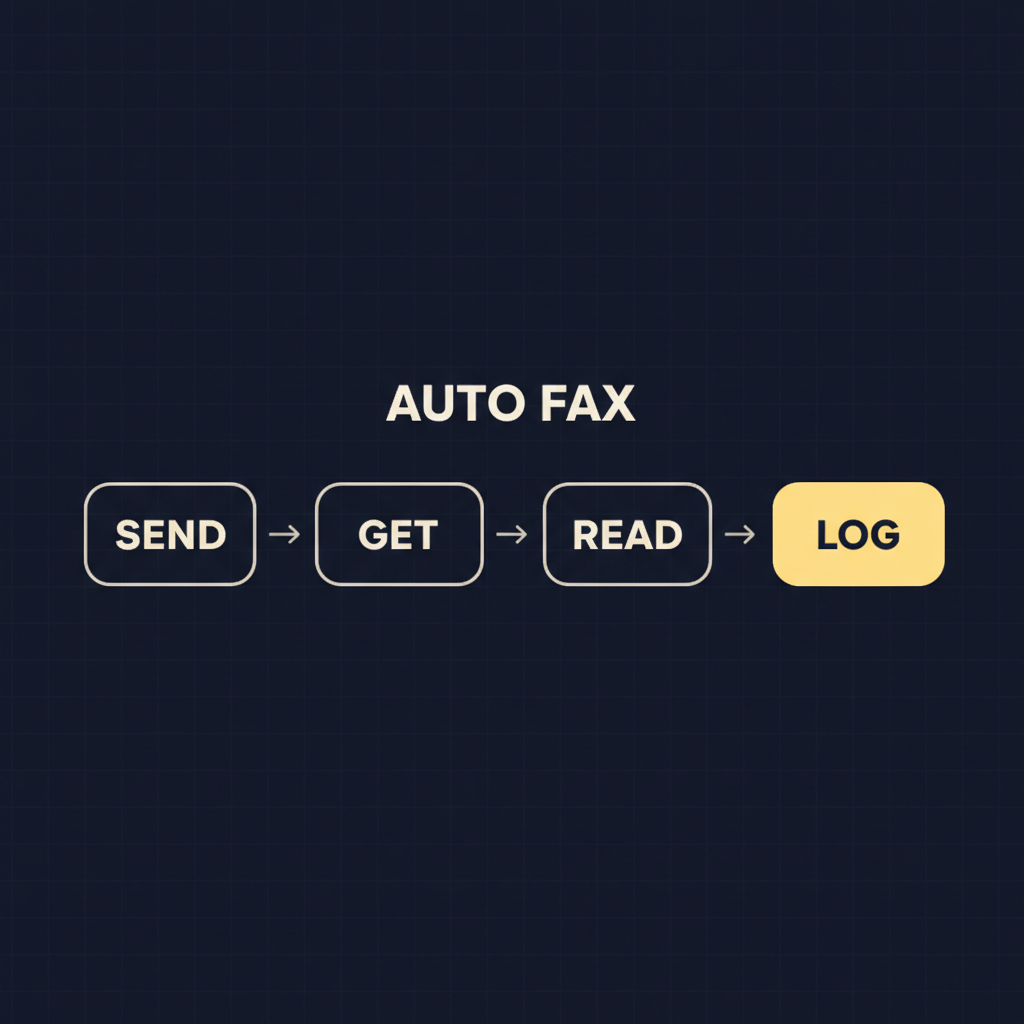
1. Employer identification and form selection. The system identifies that the employer requires fax based on employer profile data and selects the appropriate VOE form for that employer type (standard VOE, mortgage-specific VOE, government form, etc.). No manual form hunting.
2. Digital fax transmission. The system sends a digital fax to the employer's verified fax number. The fax number is maintained and validated as part of the employer contact database — not looked up case by case. A transmission confirmation is generated and logged to the case record.
3. Inbound fax receipt and case association. When the employer's HR department returns the completed form, the inbound fax is received digitally and automatically associated with the open case. No manual routing, no inbox monitoring.
4. AI parsing of the returned form. The returned fax — typically a scanned image of a completed form — is processed by AI. Optical character recognition (OCR) extracts the relevant fields: employer name, employment dates, job title, employment status, and any additional fields required by the verification request. The parsed data is structured and validated against the original request parameters.
5. Validation and exception handling. If the returned data matches the request, the verification is completed. If there are discrepancies — a name mismatch, missing dates, illegible fields — the system flags the case for review rather than passing bad data through silently.
6. Audit trail logging. The full exchange — the outbound fax with timestamp, the inbound response with timestamp, the parsed structured data, and the validation result — is logged to the case audit trail automatically. The chain of custody is complete as a byproduct of the workflow.
No physical machine. No manual re-keying. No orphaned image files saved to a shared drive with no case linkage.
This is the operational model that Superunit's AI verification agent executes across phone, email, and fax — treating each channel as a structured, auditable workflow rather than a manual fallback. For guidance on how to identify the right contact method for a given employer, see Which Department to Call for Employment Verification and What to Do.
Fax and the Audit Trail — The Compliance Angle
The Fair Credit Reporting Act requires that every consumer report — including employment verifications used in mortgage underwriting or background screening — be supported by a documented permissible purpose and a traceable chain of custody. That requirement does not change because the verification was conducted by fax.
A complete fax verification audit trail needs to show:
- Who sent the request, and when
- What was sent — the specific form and the data fields requested
- Confirmation of transmission — evidence the fax reached the employer
- The original returned document — preserved in its original form, not just the transcribed data
- Who received and processed the response, and when
Manual fax workflows almost never produce all five of these automatically. The sent fax may exist in an outbox log. The returned document may be saved as a PDF somewhere. The transcribed data lives in the case system. But connecting them into a single, time-stamped chain of custody requires deliberate effort — and under audit conditions, "deliberate effort" means someone has to reconstruct it manually.
Automated fax verification generates the audit trail as a structural output of the workflow. Every step is timestamped and linked to the case record at the time it occurs. For a full treatment of what FCRA-grade audit trail requirements look like in practice, see AI Employment Verification Audit Trail.
How AI Changes Fax Verification
The historic bottleneck in fax verification has never been sending the fax. Sending a digital fax is straightforward. The bottleneck is on the receiving end.
A returned fax is an image — typically a scanned or printed form that has been filled in by hand or typed on a typewriter-era form template. Reading that image, extracting the relevant fields, and entering them into a structured case record has always required a human. That requirement is what made fax verification expensive and slow at scale.
AI parsing changes this. Modern OCR combined with structured field extraction can read a returned fax form, identify the relevant data fields regardless of form layout, and output structured, validated data — in seconds. The system does not need to know in advance exactly where "employment start date" appears on a given hospital's VOE form. It reads the document, identifies the field, and extracts the value.
This is the unlock that makes fax verification scalable. Not faster sending — automated ingestion of the response. A verification operation that can receive a fax and produce structured, case-linked data without human intervention can handle fax-only employers at the same throughput as database-verified employers.
For a broader view of how AI-driven outreach handles hard-to-reach employers across all channels, see Verbal VOE for Hard-to-Reach Employers: A Mortgage Lender's Guide.
Frequently Asked Questions
Do employers still use fax for employment verification in 2026?
Yes. A meaningful segment of employers — particularly in healthcare, government, and education — maintain fax-only verification policies. These policies are driven by compliance and records-retention requirements, not by technology preference. Healthcare HR departments operating under HIPAA-adjacent records policies, government agencies with civil service documentation requirements, and school districts with board-level HR policies are among the most common fax-only employers that CRAs and mortgage operations teams encounter.
Why do hospitals and government employers require fax for verification?
Fax provides a traceable, written request-and-response record that satisfies the internal compliance requirements of many regulated employers. Hospital compliance departments and government HR offices often require a documented written request before releasing employment information, and fax — with its inherent transmission confirmation — meets that standard under their internal policies in a way that email frequently does not. These policies are set at the organizational or regulatory level and change slowly.
Can employment verification fax be automated?
Yes. Modern AI verification platforms treat fax as a structured channel: selecting the correct form, transmitting digitally to a verified employer fax number, receiving the inbound response, and using AI to parse the returned document into structured data. The full exchange is logged to the case audit trail automatically. This eliminates the manual re-keying, form-hunting, and fragmented documentation that characterize legacy fax workflows.
How does automated fax verification maintain an audit trail?
Automated fax verification generates the audit trail as a structural output of the workflow. Each step — outbound fax transmission with timestamp, inbound response receipt with timestamp, AI-parsed structured data, and validation result — is logged to the case record at the time it occurs. This produces a complete, time-stamped chain of custody that satisfies FCRA documentation requirements without requiring manual assembly after the fact.
Is faxed employment verification FCRA-compliant?
Fax is a permissible method for conducting employment verification under the FCRA. Compliance depends not on the channel but on the documentation: a permissible purpose must exist, the subject's rights must be observed, and a complete chain of custody must be maintained. Automated fax workflows that log the full exchange — request, transmission, response, parsed data — satisfy these requirements. Manual fax workflows that produce fragmented records across multiple systems create compliance risk under audit conditions.
Ready to Stop Managing Fax Manually?
Fax-only employers are not going away. The question is whether your verification operation can reach them efficiently — or whether those cases keep stalling.
For a full comparison of employment verification platforms and how they handle multi-channel outreach including fax, see Best Employment Verification Software for CRAs (2026).
To see how Superunit's AI verification agent handles fax, phone, and email outreach in a single automated workflow, book a demo.