
This guide is for two audiences: mortgage processors running pre-closing verbal VOE and background screeners completing pre-employment verification. Both roles share the same core problem, which is getting a human at an employer to confirm employment data on a timeline that won't blow up your file. If you're on the background screening side, there's a deeper walkthrough of manual employment verification for background screening worth reading alongside this one.
Step 1: Check the Database Before You Dial
The fastest employment verification is one where you never pick up the phone. Before calling anyone, search theworknumber.com/verifiers to see if the employer is in Equifax's database. The Work Number partners with 2.5 million+ employers and updates records every pay period, so if the employer is listed, you can pull an instant verification without a single dial.
If the employer runs payroll through ADP, there's a strong chance their data feeds into The Work Number via ADP SmartCompliance. ADP SmartCompliance automates verification fulfillment 24/7/365 and relieves HR of manual handling. Check The Work Number first; if the employer code exists, you're done.
If the employer is not in the database, you're making calls. The rest of this guide covers how to route those calls efficiently, document every attempt, and handle the employers who refuse to cooperate.
Step 2: Which Department to Call, by Employer Size
HR is the default department for employment verification requests, but "call HR" is useless advice when the company has no HR department or HR just redirects you to a third-party vendor. Here's how it actually breaks down.
Large Employers (500+ Employees)
Call the main HR Operations line or look for a dedicated verification number on the company's website. Most Fortune 500 companies outsource verification entirely, so expect to be told "we use The Work Number" or given a redirect to a third-party administrator. If that happens, the redirect is the answer.
Federal agencies follow this same pattern. The Department of Labor uses Work Number employer code 10915, and GSA routes through OCFO. Don't spend time trying to get a federal HR representative on the phone when the automated system handles the request.
Mid-Size Employers (50 to 500 Employees)
Call HR directly. These companies typically have a small HR team (sometimes one person) who handles verification alongside recruiting, benefits, and everything else. If HR doesn't answer, call Payroll next. Payroll feeds the data, processes the pay stubs, and often has the authority to confirm dates and title. In practice, payroll staff tend to be more reachable than HR generalists, especially at companies in the 50-to-150 range where HR is perpetually stretched.
Small Employers (Under 50 Employees)
There is no HR department. Call the main business line and ask for the owner, office manager, or bookkeeper. At companies with 5 to 20 employees, the office manager usually handles HR functions. For very small operations, the bookkeeper or accountant who runs payroll is your best contact.
Staffing Agency Placements
The staffing agency is the employer of record, not the end client where the person physically works. Call the staffing agency's HR or payroll department. The client company cannot legally verify employment because they are not the employer. Most staffing agencies maintain dedicated verification lines, so check their website before dialing the main number.
Self-Employed / Sole Proprietors
There is no employer to call. Pivot immediately to alternative documentation: CPA letter confirming self-employment, IRS tax transcripts (Form 4506-C), business license, or bank statements showing regular business income. For mortgage files, tax transcripts pulled directly from the IRS are the strongest alternative.
Step 3: What to Say When You Get Through
Keep the call under two minutes. You need four data points confirmed: employment status, job title, start date, and whether employment is current. State your name, your company, the purpose of the call (employment verification), and the name of the individual you're verifying.
Have the signed authorization or release form reference number ready. If the employer asks for it, you want to provide it immediately rather than calling back. For mortgage VVOE specifically, you are confirming that the borrower is still employed, that their title matches the loan application, and that they are not on unpaid leave that would affect income.

Step 4: When You Hit Voicemail
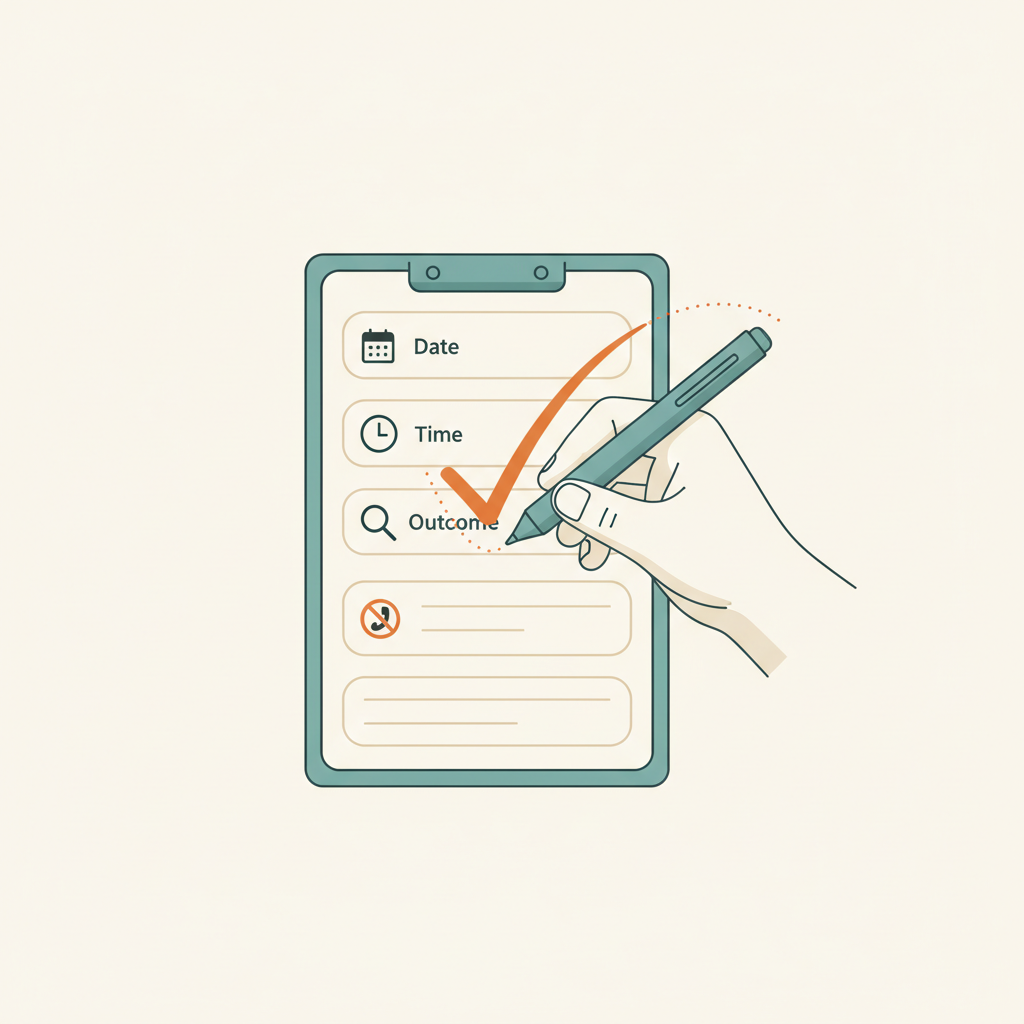
Voicemail is not a dead end, but only if you document it properly. Every attempt must be logged with five fields: date, time, number dialed (independently verified), person reached or "voicemail," and outcome. "Independently verified" means you looked up the employer's phone number yourself rather than relying solely on the number the applicant provided.
Industry practice for background screening is three attempts over three business days before marking a verification as "unable to verify." For mortgage pre-closing VOE, the timeline compresses to same-day. Leave a voicemail that includes your callback number, the borrower or applicant name, and a brief statement of what you need confirmed.
Independently validating the phone number is a fraud-prevention step that auditors check. Look up the employer through a public directory, the company website, or a business database. If the number the applicant provided doesn't match, document the discrepancy.
Step 5: When the Employer Refuses or Says "We Don't Verify by Phone"
"We Use The Work Number"
This is the best possible refusal. Direct your request to theworknumber.com/verifiers or call 1-800-367-5690. No phone verification is needed because the data is available electronically, often with faster turnaround than a live call would have provided.
"We Only Verify in Writing"
Send a fax or email with a signed release form and the verification request. Many employers who decline phone calls will respond to a written request within 24 to 48 hours. Include a fax coversheet that clearly states the employee's name, the data points you need confirmed, and your return fax number or email.
"We Don't Give Out That Information"
Escalate to the borrower or applicant and ask them to contact their employer directly to facilitate the verification. Document the refusal with the date, time, name of the person who refused (if provided), and the exact language they used. If phone and written requests both fail, alternative documentation may be required: recent pay stubs, W-2s, a signed employer letter, or IRS tax transcripts.
Step 6: The Pre-Closing Reverification Scenario (Mortgage)
Fannie Mae and Freddie Mac require a verbal verification of employment (VVOE) within 10 business days of closing. Some lenders tighten this to same-day or day-before. If you're handling a pre-closing reverification, the timeline is compressed and there is no room for the standard three-attempt-over-three-day cadence.
Same-day urgency tactics work best in sequence. Call the employer's HR line at 8 AM local time (their local time, not yours). If you get voicemail, leave a message noting the closing deadline, then immediately send an email to any HR contact on file. If you have no response by noon, escalate to the borrower and ask them to call their HR department or manager directly.
The VVOE must confirm three things: the borrower is still employed, the job title matches the application, and employment is still active. If the borrower is on leave, you need to determine whether the leave is paid or unpaid, because unpaid leave can affect qualifying income and may require the loan to be restructured.

What to Document on Every Attempt
Whether the call connects, goes to voicemail, or results in a refusal, log these five fields every time:
- Date of the attempt
- Time of the attempt
- Number dialed, independently verified through a public source
- Person reached (name and title) or notation of "voicemail left"
- Outcome: verified, unable to verify, callback pending, or refusal with explanation
These five fields satisfy FCRA compliance requirements for background screeners and GSE audit trail standards for mortgage processors. Skipping any one of them creates a gap an auditor will flag. Keep the log in your LOS or screening platform, not on a sticky note.
Frequently Asked Questions
Can payroll verify employment instead of HR?
Yes. Payroll departments have direct access to employment dates, job titles, and compensation data. At mid-size companies where HR is unresponsive, payroll is often the faster path to getting verification completed.
What if the employer won't verify employment by phone?
Send a written request (fax or email) with the signed release form attached. If written requests also go unanswered, escalate to the applicant and ask them to facilitate contact with their employer. Document every refusal with the date, time, and the specific reason given.
How many times should I attempt to reach an employer before escalating?
Background screening industry standard is three attempts over three business days. For mortgage pre-closing VOE, same-day resolution is expected, so escalate to the borrower or try alternate contacts (payroll, direct supervisor) if HR doesn't respond within a few hours.
Does the lender call HR directly for mortgage verification?
The lender's processor or a third-party verification vendor handles the call, not the loan officer. The call goes to HR or a dedicated verification line, and for large employers, the request is often routed to an automated system like The Work Number instead of a live HR representative.
When Manual Outreach Breaks Down
If you've been through the cycle of calling, leaving voicemails, faxing, and waiting on hold, you already know where the time goes. Superunit automates that outreach using AI agents that initiate simultaneous phone, email, and fax contact the moment a file is assigned. Every attempt is timestamped, and every call is recorded and transcribed, which covers the five-field documentation requirement without processor involvement.
Superunit's contact research spans roughly 100 million businesses worldwide, which helps with small employers and staffing agencies that don't appear in standard directories. The agents run parallel outreach across all three channels until the employer responds, rather than waiting through sequential voicemail cycles.
On turnaround: active customers see 65% of verifications complete within 24 hours and 80% within 48 hours, with an average completion time of 0.82 business days. For anyone spending significant time calling HR departments for employment verifications, those numbers are worth benchmarking against your current workflow.
Pricing is pay-on-success. If the employer never responds and the verification fails, there is no charge. The call recordings and transcripts feed directly into the compliance trail that auditors and underwriters require.