Education verification checks an applicant's claimed education against records from the school, an authorized records custodian, or a verification service acting for the institution. It can confirm a degree or diploma, attendance dates, and other available credential details. Employers use it to determine whether applicants meet a role's education requirements and whether their applications accurately describe their qualifications.
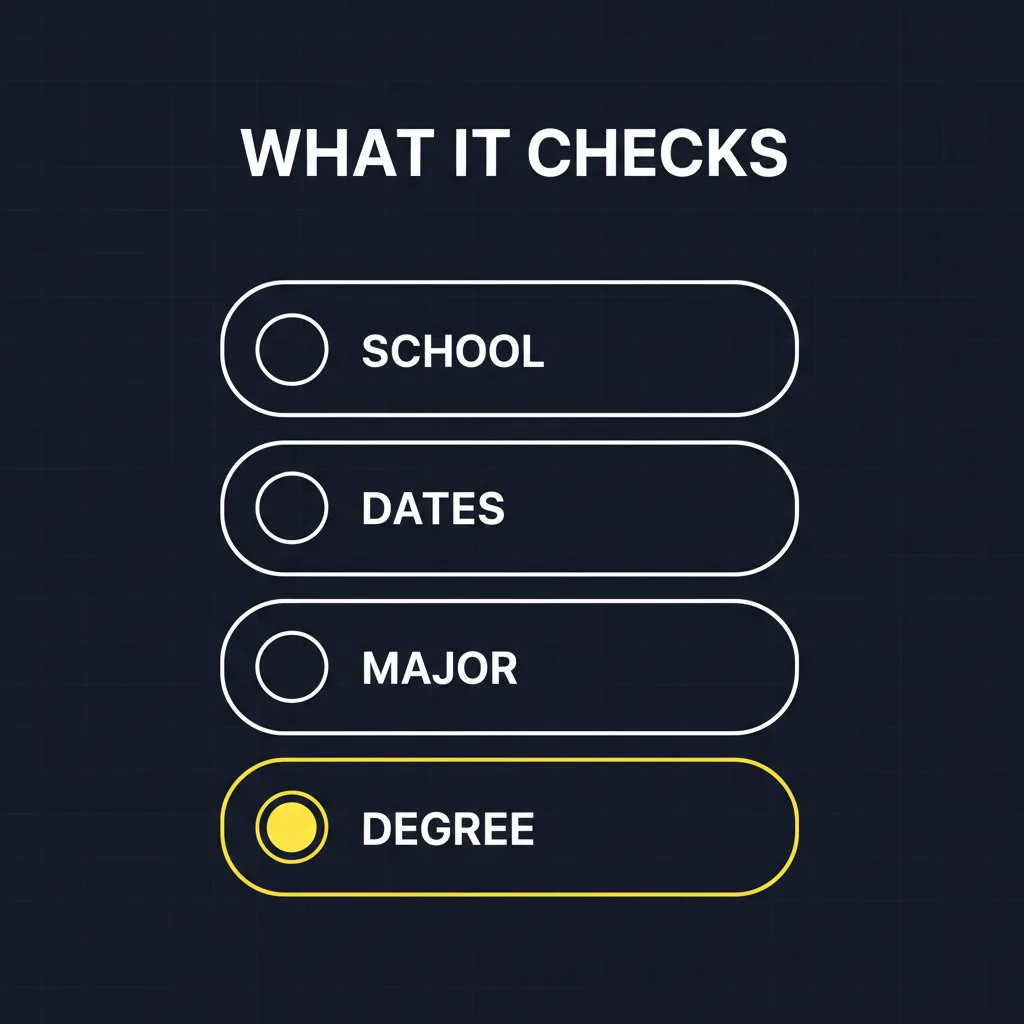
The scope matters. Confirming that someone attended a university does not establish that they graduated. Confirming that a school issued a certificate does not establish that the person holds a professional license. A useful verification report states exactly what was checked and what the source confirmed.
What does education verification check?
The information available depends on the institution, the service, and the authority to release the records. A routine employment check may cover:
| Item | What the check establishes | Important distinction |
|---|---|---|
| Institution | The school associated with the applicant's record | Similar school names can refer to different institutions |
| Attendance | Whether and when the person attended | Attendance does not prove completion |
| Degree or diploma | Whether the credential was awarded | Coursework toward a degree is not an awarded degree |
| Conferral or completion date | When the institution awarded the credential or recorded completion | This may differ from a ceremony date |
| Field of study | The major or program, when available | The institution's official wording may differ from the resume |
| Enrollment status | Whether the person is currently enrolled, when that service is available | Enrollment does not confirm an expected future graduation |
A standard verification is narrower than a transcript request. The National Student Clearinghouse distinguishes verification from a transcript: its verification services confirm information such as enrollment, attendance, and completion, while transcripts may contain courses, grades, and GPA. Verification does not provide a copy of the diploma or degree.
If a position requires particular coursework or a minimum GPA, define that requirement separately and obtain the appropriate record through the institution's authorized process.
How do employers verify education?
Employers generally use a service connected to institutional records or contact the institution's designated records office. A background screening company can coordinate either route. An applicant's documents help identify the right record, but the issuer or its authorized representative is the source of confirmation.
Check an authorized verification service
For participating institutions, a service such as the National Student Clearinghouse can return education records without a separate call to the school. The Clearinghouse offers college degree and attendance checks, current enrollment verification, and high-school diploma verification.
Participation varies. Before ordering, check whether the specific school and credential are covered. An institution appearing in one service does not mean every record or credential will be available through every service.
The Clearinghouse says most verification results are available immediately when a record is found at a participating institution. Requests without a result can require manual review by the school.
Contact the school or records custodian
When the relevant record is unavailable through a service, contact the registrar, district records office, or other designated custodian. Some schools route all requests through a third-party portal; others require a release and a completed form.

Find that contact through the institution's official website or another independently verified channel. A phone number or email address supplied with an applicant's documents should not be the sole basis for authenticating the source.
Direct outreach is also relevant for vocational programs, certificates, older records, and schools with their own verification procedures. It still depends on the institution's participation and willingness or authority to disclose the information.
Handle international qualifications separately
For an international credential, define whether the employer needs confirmation that the credential was awarded, an assessment of its U.S. equivalence, or both.
Those are different questions. Authenticating an award does not by itself establish the comparable U.S. degree level. The U.S. Department of Education explains that employers decide how to recognize foreign qualifications for employment, while state licensing boards govern recognition for professional licensure. Employers may request an evaluation from a private credential evaluation service.
The Department does not evaluate foreign degrees or endorse an individual evaluation service. Agree on the employer's requirements before the applicant purchases an evaluation or translation.
What information do you need to start?
Collect the applicant's name as it appeared in the school record, the institution and campus, the claimed credential, and approximate attendance and completion dates. Name changes and former institutional names can affect matching.
Obtain additional identifiers only when required by the verification process, and collect them through an appropriate secure channel. A school may need a student identifier, date of birth, or a specific authorization form. Avoid routinely collecting more sensitive information than the check needs.
The verification order should identify what the employer actually needs confirmed. "Bachelor's degree awarded" is a different request from "attended between 2018 and 2022." An ambiguous order can produce an accurate answer that still leaves the hiring requirement unresolved.
What does the education verification process look like?
- Define the requirement. Identify the credential, institution, and fields relevant to the role. Decide whether additional records or licensing checks are needed.
- Complete the required disclosures and authorizations. Follow the applicable background-reporting requirements and the institution's release process.
- Choose the source. Check the authorized service's participation and use the school's designated route when the record is unavailable there.
- Match the applicant to the record. Resolve differences in names, campuses, and dates before treating an unmatched search as a discrepancy.
- Document the response. Record the source, date, fields confirmed, and limitations. Separate a school response from an applicant-supplied document.
- Review unresolved information. Give missing records and material differences an appropriate review, including required dispute and adverse-action procedures when a consumer report informs the decision.
Keep the source response distinct from the employer's decision. A school confirms records; the employer determines whether those facts meet the position's requirements.
How long does education verification take?
Some checks return immediately. Others depend on school review, consent forms, archives, or communication with a records custodian.
There is no single completion time that applies to every education check. The Clearinghouse's published guidance distinguishes immediate results for available records from requests requiring manual school review.
When comparing providers, ask how they report timing. An average that combines instant matches with manual cases can conceal how long the unresolved orders take. Ask when an order is considered complete, what triggers escalation, and whether "unable to verify" counts toward the quoted completion rate.
How much does education verification cost?
The National Student Clearinghouse's public ordering page lists the following prices:
| Verification type | Listed price |
|---|---|
| College degrees and attendance | $19.95 per confirmed verification, plus any school surcharge |
| High-school diploma | $19.95 per confirmed verification, plus any school surcharge |
| Current college enrollment | $4.95 per confirmed verification |
These are the Clearinghouse's published prices, not an industry-wide price schedule. It also offers business volume discounts and reduced self-verification rates. School surcharges, when applicable, appear during ordering.
A screening provider may quote a different total that includes its service fees. Ask whether institution charges, manual follow-up, translations, or evaluation fees are included. Also establish what is billed when no record can be confirmed.
Do not assume a lower database price means a lower total operating cost. Requests needing another release, a new source, or repeated follow-up add work beyond the initial lookup.
What do FCRA and FERPA require?
Two separate frameworks can matter in a U.S. employment education check: rules governing employment background reports and rules governing the school's disclosure of student records.
Employment background reports and the FCRA
The FTC and EEOC's employer guidance explains that using a company in the business of compiling background information triggers Fair Credit Reporting Act requirements. These include a written stand-alone disclosure, written permission, and the employer's required certification to the reporting company.
If the employer may take adverse action based on the report, the pre-adverse-action process includes providing the report and the Summary of Rights so the person has an opportunity to review and explain the information. A final adverse-action notice has additional requirements, including identifying the reporting company and explaining dispute rights.
Apply nondiscrimination requirements regardless of where the information came from. State and local rules may impose additional obligations. The process should be reviewed for the employer's jurisdictions and specific screening arrangement.
Student-record disclosure and FERPA
At institutions covered by FERPA, personally identifiable education records generally require consent unless an exception applies. The Department of Education's FERPA regulations describe both the consent requirements and the conditions for disclosing properly designated directory information.
Directory information can include attendance dates and degrees awarded. Its disclosure still depends on the school's policy and applicable conditions, including valid opt-outs and any restrictions on recipients or purposes. Do not assume that every school can release every graduation record without authorization.
An employer's background-check authorization and a school's records-release requirements serve different functions. Confirm that the documents satisfy the process actually being used.
What happens if education cannot be verified?
An unsuccessful lookup is not proof that the applicant lied. It may reflect missing identifiers, a record under a former name, an institution outside the service's coverage, or a request that needs school review.
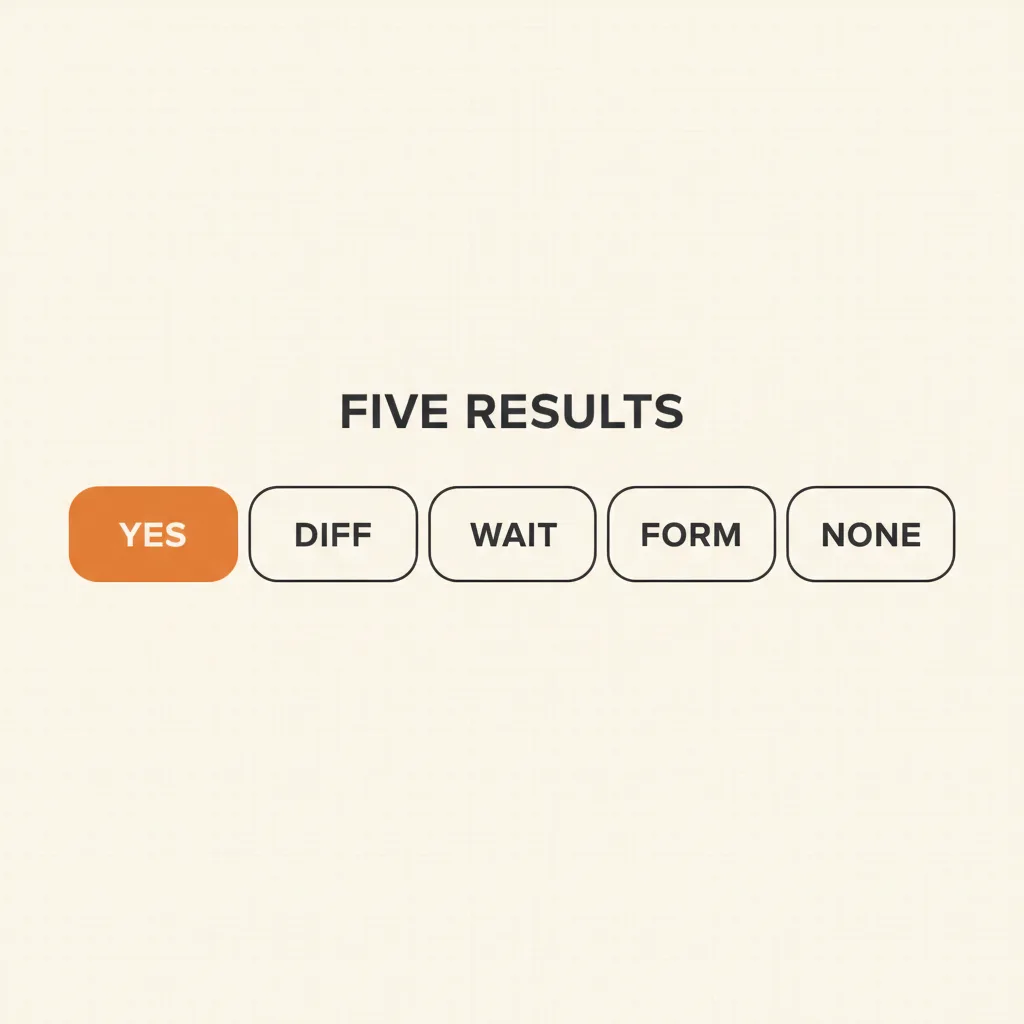
Preserve the reason for the result:
| Result | What it means |
|---|---|
| Confirmed | The source verified specified information |
| Confirmed with a discrepancy | The source's record differs from a claimed detail |
| Pending | The source has not completed the response |
| Authorization needed | The source requires additional permission or documentation |
| Unable to verify | The process did not establish the requested facts |
Before making a decision, check the match details and the source's exact response. If necessary, obtain the correct authorization or use the designated records custodian. Follow the applicable consumer-report dispute and adverse-action process when relevant.
A report that says "attended, no degree awarded" is materially different from one that says "school did not respond." They should not produce the same automated conclusion.
Can a real school confirm a diploma-mill credential?
Confirming that an organization issued a credential addresses issuance. It does not establish that the institution or program meets the employer's accreditation, licensing, or educational requirements.
Check the institution's status separately when that status is relevant to the role. The Department of Education's guidance on diploma mills and accreditation explains how recognized accreditation works. It also cautions that absence from its accreditation database does not automatically establish that an institution provides poor education or is a diploma mill.
Likewise, the Department does not itself accredit colleges. Recognized accrediting agencies perform that function. International institutions require review within their own recognition systems; a U.S. database alone cannot settle their legitimacy.
Where does direct school outreach fit?
A database check is useful when the institution participates and the relevant record is available. A complete screening process also needs a defined route for cases requiring contact with the school.
Superunit's education verification service uses AI agents to identify the required school contact or verification process and conduct outreach through phone, email, fax, and documents. Its stated coverage focuses on high schools, trade and vocational schools, and other records unavailable through an instant lookup. Superunit also automates high school education verification through platforms like Parchment and ScribOrder by having AI agents handle the submission through those platforms and automatically transmit the results back. The result includes the available source response and supporting outreach trail.
When evaluating any outreach provider, ask how it follows school-specific procedures, documents authorization requirements, and distinguishes no response from a confirmed discrepancy. For diploma-specific workflows, see how employers verify a high-school diploma.
Frequently asked questions
Do all background checks include education verification?
No. Education verification is a specific screening component. Check the employer's order and screening policy to determine which institutions or credentials are being checked.
Can employers verify high-school diplomas?
Yes. The National Student Clearinghouse offers diploma verification for participating high schools. For other records, the school or district may have its own verification procedure.
Does education verification show GPA?
A standard degree or attendance confirmation does not generally include GPA or course-level grades. If those details are necessary, use the institution's authorized transcript or records process and obtain any required consent.
Is a photo of a diploma enough?
A photo can help identify the credential being claimed, but it does not independently confirm issuance or authenticity. Obtain confirmation through the institution or its authorized representative.
Can education be verified if the school has closed?
It may still be possible if a successor institution, state agency, or designated custodian holds the records. Establish who maintains them and use that custodian's process. Do not treat closure alone as evidence that the credential is invalid.
Does education verification confirm professional licensure?
No. An academic credential and a current professional license are separate qualifications. Check the relevant licensing authority when the role requires a license.