
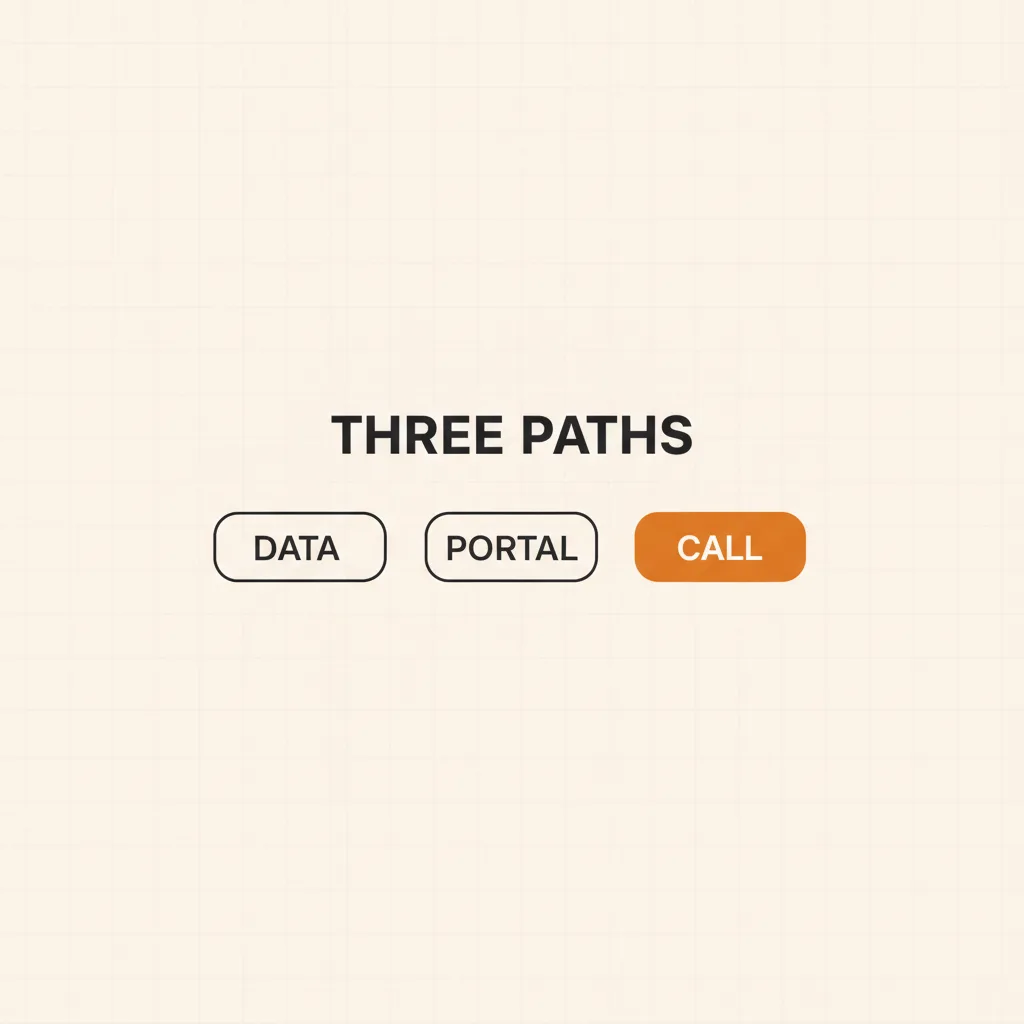
Employers verify a high school diploma one of three ways: an instant lookup in a credential database, a records request submitted to the school district, or a phone call to the registrar's office. Which one you get depends on whether the candidate's school reports its graduates to a national database. Most schools don't.
That single fact explains why one education check clears the same day and the next one takes two weeks.
TL;DR
Employers have three ways to verify a high school diploma. The National Student Clearinghouse's DiplomaVerify returns an instant answer for participating schools, and it covers over 9,000 high schools across 47 states, with 17 states submitting every public high school graduate. About a third of American high schools take part. Because the participating states submit every graduate, though, a much higher share of candidates than of schools will come back with a hit. When the school isn't in the network, verification falls to a district records request, often through a portal like ScribOrder or Parchment, or to a direct call to the registrar. Both run on school-office hours and school-office staffing. GED, homeschool, and trade school credentials sit outside all three and follow their own routes. Budget days, not seconds, for anything outside the database.
The Three Paths, Side by Side
| Path | How it works | Typical turnaround | When it applies |
|---|---|---|---|
| Credential database | Automated lookup against submitted graduate records | Seconds to minutes | School participates in DiplomaVerify |
| District records portal | Online request with signed release, fulfilled by district staff | 2–10 business days | District uses ScribOrder, Parchment, or similar |
| Direct registrar contact | Phone or fax to the school or district office | 1–15 business days | Small, private, rural, closed, or non-participating schools |
The second and third rows are where education verification actually lives for a large share of candidates. Vendors rarely quantify that half, and it's what determines your real turnaround.
Can a Company Look Up Your High School Diploma?
Sometimes instantly, and more often than people assume.
The National Student Clearinghouse operates DiplomaVerify, a high school equivalent of the DegreeVerify service it has run for colleges for decades. Participating schools and state agencies submit graduate records to the Clearinghouse, and an authorized requester with a permissible purpose can query that file and get an answer back immediately, 24 hours a day, without anyone at the school lifting a finger.
The coverage is real. As of May 2026 the Clearinghouse reports over 9,000 participating high schools across 47 states, 17 states submitting all public high school graduates, and more than 25 million diplomas available for immediate verification.
Now put that next to the size of the system. The National Center for Education Statistics counted 23,519 public secondary and high schools in 2020–21, alongside a further 5,003 public schools classified as other or ungraded, the combined K–12 schools common in small and rural districts, which award diplomas too. Add roughly 3,600 private high schools and the national total lands near 32,000.
So 9,000-plus participating schools is about a third of American high schools, not a half. And the true public-school share is lower still, because the Clearinghouse's 9,000 counts participating high schools of every kind — some of them private — so fewer than 9,000 public schools sit inside that number.
One honest caveat, in the other direction. That ratio counts schools, not candidates, and the two are not the same. The 17 states that submit every public graduate contribute their large urban and suburban schools, which produce disproportionately many graduates; the schools outside the network skew small, rural, private, and alternative. So a given candidate is meaningfully more likely to return a database hit than the one-in-three school figure suggests. The 25 million diplomas on file, several years of national graduate output, point the same way.
The practical read: a third of schools, but a better-than-a-third chance on any individual check, and no way to know which case you have until you run it. If your candidate graduated from a public high school in one of the 17 all-graduate states, the check is close to instant. If they graduated from a small private school in a state with patchy participation, nothing about the process is automated, and no amount of software changes that.
What Happens When the School Isn't in the Database
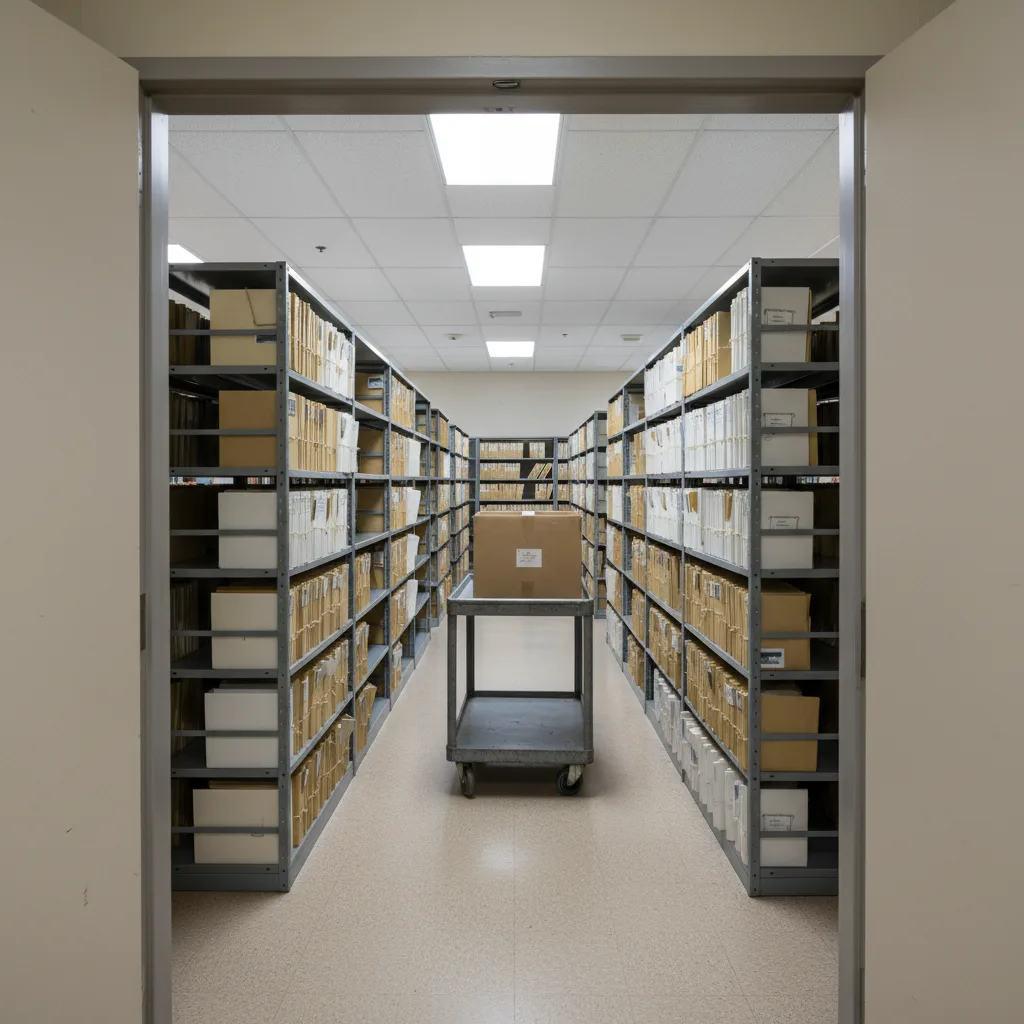
The request goes to the district, and it usually goes with paperwork.
The law and the practice differ here, and the gap is worth knowing. The Family Educational Rights and Privacy Act protects student education records, but it carves out directory information. 34 CFR § 99.3 names "dates of attendance" and "degrees, honors, and awards received" as examples of it. Where a school has designated those items as directory information and given the required public notice, § 99.37 permits disclosure without consent. Confirming that someone graduated is close to the textbook case, and plenty of registrars will do it on a phone call.
What actually drives the paperwork is district policy and the FCRA. Many districts choose to require a signed release regardless of what FERPA permits, and a background check run by a consumer reporting agency needs the candidate's authorization either way. So a signed release travels with the request in practice, and requests that arrive without one get bounced back after a delay rather than answered. Treat that as the district's rule and the FCRA's rule, not as something FERPA compels.
Most districts of any size now route this through a records portal rather than a person. Two names come up most often:
ScribOrder, from Scribbles Software, is an online records-request and payment system built specifically for K–12 districts. It lets students, alumni, families, and third parties submit record requests electronically, with identity authentication and FERPA controls built in, so records staff can retrieve and release a transcript without hunting through a filing system. Districts run it on their own subdomain, which is why you'll find yourself on addresses like bpsma.scriborder.com or washoeschoolsnv.scriborder.com rather than a single national site.
Parchment, acquired by Instructure in 2024, does the same job at larger scale and spans both K–12 and higher education. It was an early mover in electronic high school–to–college transcript delivery, and Instructure puts the combined network at over 13,000 districts.
Both are ordering systems rather than verification APIs. They exist so a former student can request their own transcript, and so district staff can fulfill that request quickly. A third-party employer can use them, but you're entering a queue a human being works through, and what comes back is a transcript you then have to read, not a yes-or-no answer to "did this person graduate."
That distinction is why education verification resists automation more stubbornly than employment verification does. There's no single counterparty to call, no standard format, and no shared network covering most schools.
Can a Background Check See If You Graduated High School?
Yes, when the employer orders that specific check.
Education verification is a separate line item on a background screening order, not something bundled automatically into a criminal search — the distinction between these check types is covered in reference check vs background check vs employment verification. An employer who wants it has to request it, and a consumer reporting agency running it under the Fair Credit Reporting Act needs a permissible purpose and the candidate's authorization. If you're evaluating vendors on this, our FCRA permissible purpose checklist covers what to confirm before you sign.
What the CRA does next is exactly what an in-house team would do: query the database if the school participates, and fall back to district outreach if it doesn't. The difference is that a screening firm has done it 10,000 times, knows which districts answer the phone and which only take portal requests, and absorbs the follow-up. It doesn't have access to a secret database, because there isn't one.
GED and High School Equivalency
A GED isn't a high school diploma, and it isn't verified through the same channel.
High school equivalency credentials — GED, HiSET, and state-specific variants — are issued by state agencies, and each state decides how third parties confirm them. Several states outsource this to DiplomaSender, which holds the official records and has a dedicated path for third-party requesters. Massachusetts, for instance, directs employers and schools to DiplomaSender for GED and HiSET verification, with records going back to 1968.
The consequence: you need to know which state issued the credential before you can verify it. A candidate who says "I have a GED" has told you almost nothing actionable. A candidate who says "I earned my GED in Georgia in 2019" has told you where to send the request.
How to Verify a Homeschool Diploma
This is the case that breaks most screening workflows, and the one most often mistaken for fraud.
For homeschool graduates in most states, the parent or guardian is the school administrator. There's no registrar, no district file, and no accrediting body that issued the credential. A homeschool diploma is typically self-issued, and a homeschool transcript is typically parent-prepared. Neither fact makes it illegitimate. It's how the law works in much of the country.
What you can actually verify:
- The umbrella or cover school, if there was one. Many homeschool families enroll through an umbrella program or a distance-learning academy that does keep records and will confirm completion.
- State registration, where the state requires homeschoolers to file a notice of intent. Some state education agencies can confirm a student was registered for the relevant years.
- Standardized test records, such as SAT or ACT scores, which establish the student existed academically in that period even when no institution issued the diploma.
- The transcript itself, reviewed for internal consistency: course sequences, credit totals, and dates that hold together.
If your screening policy treats an unverifiable homeschool credential as a disqualifying discrepancy, you will reject legitimate candidates. The right move is a documented alternative-evidence path, decided before you need it.
Trade Schools, Vocational Programs, and Closed Schools
Trade and vocational schools sit in the same gap as small private high schools. Some participate in Clearinghouse services, many don't, and the ones that don't are verified by calling the school directly.
Closed schools are a harder problem and a common one. When a high school or trade school shuts down, its records go somewhere: usually the district that absorbed it, the state education agency, or for closed private institutions, a designated custodian. Finding that custodian is the work. There's no directory that maps every closed American school to whoever holds its transcripts, so this becomes research: the state DOE, the county office, the successor district, in that order.
Consolidations create a quieter version of the same issue. A candidate names a high school that merged into another one in 2011; the name on the diploma no longer exists, the records live under a different name, and an automated check returns nothing. That's not a red flag. It's a records-custody problem that looks like one, which is exactly the kind of false positive that makes people distrust screening results.
How Can You Tell If a High School Diploma Is Real or Fake?
You verify it with the issuing institution, using contact details you sourced yourself.
One rule matters more than the rest: never use a phone number, email address, or verification link supplied by the candidate. Diploma mills routinely operate their own verification lines, staffed to confirm whatever the buyer claims. A call that "checks out" against a number from the candidate's paperwork has verified nothing at all.
Beyond that, the usual signals apply. Credentials issued in days or weeks with no coursework. Institution names engineered to resemble a real school. A school with no verifiable physical address, no state registration, and no accreditation from a recognized body. For high schools, accreditation runs through regional accreditors and state education agencies rather than the federal postsecondary databases, so the check is state-level: does this state recognize this school as having operated?
A document that looks convincing tells you very little either way. Diploma templates are cheap and have been for years, and generative tools have made a plausible-looking credential cheaper still, the same dynamic behind AI resume fraud. So the verification target is the institution's record, not the artifact in the candidate's hand. For how education misrepresentation sits alongside the other four types, see what is candidate fraud.
How Long Does Education Verification Take?
It depends entirely on which of the three paths the check lands on.
| Scenario | Realistic range |
|---|---|
| Participating school, database hit | Same day, often immediate |
| District portal request with release in hand | 2–10 business days |
| Direct registrar outreach | 1–15 business days |
| Summer, winter break, or start of term | Add a week or more |
| Closed or consolidated school | Highly variable; custodian research first |
The seasonal effect is larger than most hiring teams plan for. School administrative offices thin out or close entirely over summer and winter break, and the first weeks of a term are the worst time to ask a registrar for a favor. An education check that clears in three days in October can take three weeks in July.
What to Do When Education Verification Fails
A failed education verification usually means one of four things, and only one of them is fraud:
- The school has no record under that name. Maiden names, legal name changes, and misspellings account for a large share of non-hits. Re-run with alternates before escalating.
- The record exists but the custodian doesn't answer. Understaffed office, closed school, consolidated district. This is a persistence problem, not a candidate problem.
- The candidate misremembered. Graduation year off by one, or a transfer in senior year meaning the diploma came from a different school than the one they attended longest. Common and innocent.
- The credential doesn't exist. The actual fraud case, and the least frequent of the four.
Under the FCRA, if a report contains adverse information the employer intends to act on, the candidate gets a pre-adverse action notice and an opportunity to dispute. Treating a non-response as a confirmed negative, rather than as an unresolved check, is where employers create legal exposure and lose good candidates at the same time. Distinguish "we could not verify" from "we verified this is false," in your report and in your policy.
How Superunit Verifies High School and Trade School Credentials
Superunit handles education verifications for schools that aren't in automated databases and require manual follow-up. Our AI agents submit requests through portals like Parchment and ScribOrder, or call registrars and district offices directly. When calling, they navigate phone menus and schedule callbacks if no one answers the first time. Instead of closing a file after one failed attempt, we keep it open until we get an answer or confirm it can't be resolved. Every action is logged with a timestamp in case the verification is questioned later.
What Superunit Covers
We focus specifically on high schools and trade schools because those usually require manual outreach. We don't handle college degrees since the Clearinghouse already verifies those instantly, and there is no need to replace a system that already works.
FAQ
Do employers actually verify high school diplomas, or just ask? It varies by role and industry. Positions with a hard diploma requirement, regulated roles, and roles involving vulnerable populations are verified far more consistently than general office hiring. Many employers ask on the application and verify only for finalists.
How do jobs verify a high school diploma if the school closed? Records transfer to a custodian, usually the successor district, the county office, or the state education agency. Locating that custodian is the first step, and it's the reason closed-school checks take longer than any other category.
Can an employer verify a diploma without the candidate's permission? Not in practice, though the reason is narrower than people assume. FERPA treats dates of attendance and degrees received as directory information, which a school may disclose without consent once it has designated them and given public notice. But a background check run by a consumer reporting agency requires the candidate's authorization under the FCRA, and many districts require a signed release as a matter of policy. So a release travels with the request either way.
Will an employer find out if someone didn't actually graduate? If they order the check, usually yes, either immediately through the database or eventually through the school. The more common outcome is an unresolved check: the school never responds, and the employer has to decide what to do with a blank. That ambiguity is why the four failure modes above matter more than the fraud case.
Is a GED treated the same as a diploma? Legally and for most employer requirements, a high school equivalency credential satisfies a diploma requirement, but it's verified through the issuing state agency rather than a school, so the process is different.
What if the candidate went to high school outside the United States? International education verification is a separate workflow involving the institution directly or a credential evaluation service, and it typically takes longer than domestic checks.
Does a background check show a GPA or courses? Usually no. Standard education verification confirms attendance dates, graduation, and credential awarded. A full transcript with grades requires a separate request and the candidate's consent.
Build the Timeline Around the Slow Path
The question has a clean answer and a messy one. A national database exists and returns results instantly, and it reaches about a third of American high schools. For everyone else the process still comes down to getting a school records office on the phone and waiting for a human to respond.
Build your hiring timeline around the second case. Order education checks early rather than at offer stage, get the release signed up front, capture the graduation year and exact school name at application, and set a policy for unverifiable-but-legitimate credentials before a homeschool graduate reaches your final round. The teams that handle education verification well are the ones who planned for the schools that aren't in the database, rather than being surprised by them.