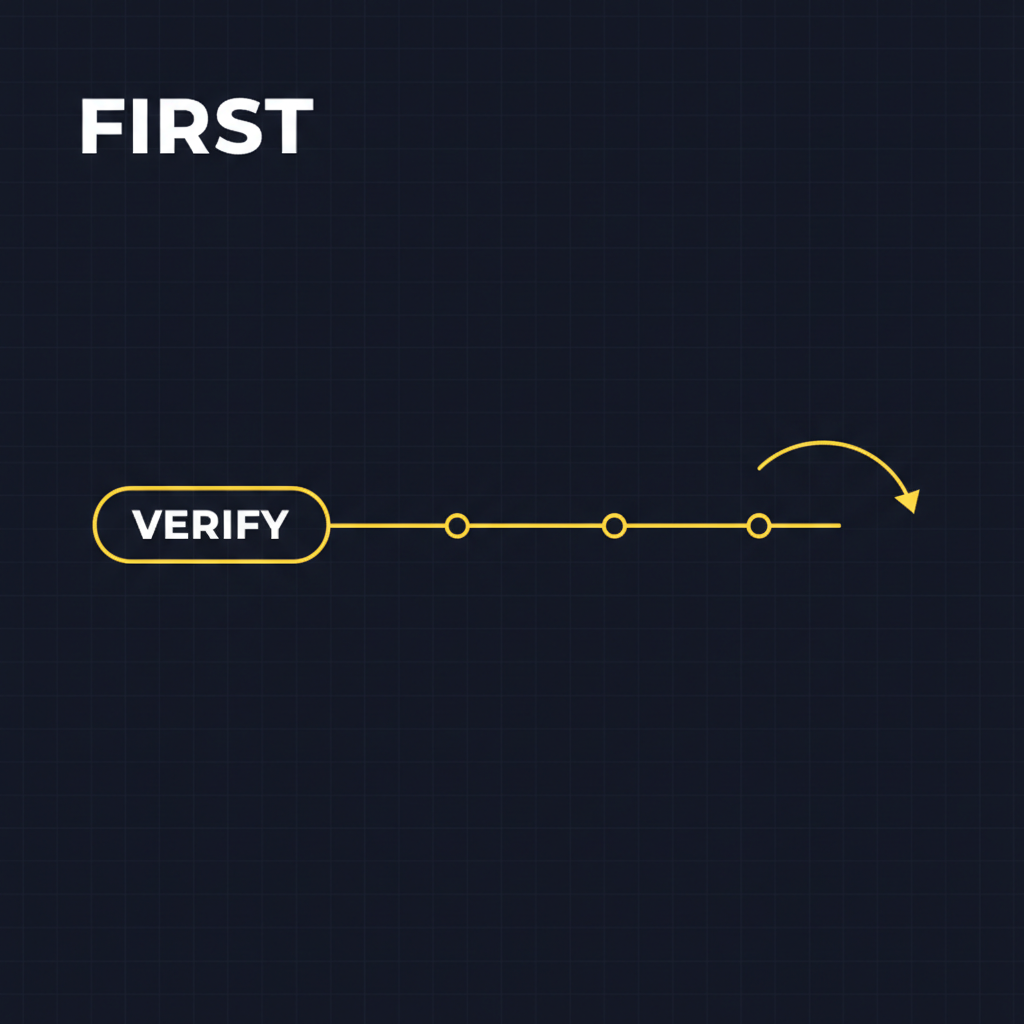
The Standard Verification Timeline Has a Structural Problem
Most companies run employment verification after extending an offer, which creates a fundamental process design flaw. This means your entire hiring funnel — phone screens, panel interviews, reference calls, salary negotiations — operates on unverified employment claims.
When a verification finally surfaces resume fraud, you've already invested dozens of hours across multiple employees in a candidate who should have been disqualified weeks earlier. The hiring manager has formed opinions, interviewers have debated fit, and someone has likely started mentally planning the new hire's onboarding.
This isn't a vendor problem or a compliance issue — it's a structural inefficiency built into how most organizations sequence their hiring activities. The traditional timeline treats verification as a final gate rather than an early filter, which maximizes the cost of discovering problems you could have caught with minimal investment.
What Fraud Actually Looks Like at the Resume Stage
Candidates fabricate employment history, education credentials, and job titles more than any other resume fields. A software engineer might claim three years at Google when they worked six months at a Google contractor. An MBA candidate might list Harvard Business School when they completed an online certificate program. A sales director might inflate their title from account manager to regional VP.
AI writing tools make these fabrications trivially easy to execute convincingly. ChatGPT can generate plausible employment histories complete with realistic company names, job descriptions, and achievement metrics that align perfectly with target role requirements. The fabricated experience reads authentically because AI models trained on millions of real resumes know exactly how legitimate experience should sound.
The problem accelerates as AI tools become more sophisticated and accessible. What once required careful manual deception now takes a few prompts and minor editing. Candidates can generate entirely fictional work histories that pass initial resume screens because the content quality matches or exceeds legitimate applications.
The Cost of Catching It Too Late
A fraudulent candidate who makes it to panel interviews burns 6-12 hours of interviewer time across a typical hiring committee. Add reference checks (2-3 hours of coordination and calls), salary negotiation rounds, and offer preparation, and you're looking at 10-15 hours of collective effort before the verification step reveals the fraud.

When that happens, the entire process resets with the next candidate in your pipeline. The hiring manager repeats the panel schedule, HR restarts reference conversations, and leadership re-enters salary discussions. That's not just the original 10-15 hours lost — it's another 10-15 hours to get the next viable candidate through the same gates.
For senior roles where panel interviews involve C-suite executives or specialized technical leads, the hourly cost multiplies rapidly. A fraudulent engineering director candidate who burns four hours of a CTO's time, plus three hours from senior engineers, plus HR coordination time represents thousands of dollars in opportunity cost before you factor in the delay to filling a critical role.
The math becomes starker when you consider hiring volume. An organization processing 500 hires annually that catches employment fraud in just 2% of final candidates still faces 20 complete process resets. At 15 hours per reset, that's 300 hours of preventable waste — equivalent to nearly two months of full-time hiring capacity.
Old Process vs. New Process
| Stage | Traditional Timeline | Early-Verification Timeline |
|---|---|---|
| 1 | Application received | Application received |
| 2 | Phone screen | Phone screen |
| 3 | Panel interviews (3-5 hours) | Employment verification |
| 4 | Reference calls | Panel interviews (3-5 hours) |
| 5 | Offer extended | Reference calls |
| 6 | Employment verification | Offer extended |
| Cost of disqualifying finding | Full hiring investment lost | Phone screen time only |
The traditional process invests maximum effort before confirming basic facts. Panel interviews consume multiple employees' time, reference calls require coordination with external contacts, and salary negotiations create momentum toward hiring a specific candidate.
Early verification flips this logic. You confirm employment history, education credentials, and identity after the phone screen demonstrates genuine interest, but before the expensive human investment begins. A disqualifying finding costs one phone screen instead of the entire hiring funnel.
What Early Verification Actually Covers
Early verification targets the three data points most frequently fabricated on resumes: employment history, education credentials, and identity confirmation. Employment history verification confirms dates of employment, job titles, and employer names — the exact fabrication surface that AI resume tools exploit most effectively. Education verification validates degree completion, institution attendance, and graduation dates.

Identity confirmation ensures the person sitting in your interview room matches the application. This prevents the surprisingly common practice of using a qualified proxy for phone screens while planning to substitute an unqualified candidate for the actual role — a pattern explored in depth in why you can't trust the video interview anymore.
This focused approach deliberately excludes comprehensive background elements like criminal history or credit checks. Those broader checks belong in the post-offer phase where they've always resided. Early verification concentrates solely on resume accuracy — the information your interview process assumes is truthful but rarely validates until it's too late.
The verification covers employment spanning the previous seven years and education claims within the last fifteen years. Modern providers complete this targeted check within one business day, making it practical to insert between phone screens and panel interviews without extending your overall timeline.
The Objection: "Won't This Slow Down Hiring?"
The most immediate pushback to early verification is obvious: adding a step must slow the process down. This treats verification as pure overhead rather than smart process design.
Early verification eliminates dead-end investment, not creates it. A one-day verification that catches a fabricated employment history before panel interviews saves significantly more time than it consumes. The alternative is discovering the fraud after burning six interviewer hours, two reference calls, and a salary negotiation cycle.
Superunit's verification process averages one business day turnaround, which means the "delay" is negligible compared to typical interview scheduling lag. Most hiring managers already wait 3-5 days between phone screen and panel interviews for calendar coordination.
The real speed question isn't whether verification adds time — it's whether you want to invest that time upfront or waste multiples of it later. A fraud candidate who makes it through panel interviews costs 10-15x more time to replace than one caught after the phone screen.
Modern verification speed makes this a false tradeoff. The process either runs efficiently by design, or inefficiently by accident.
Where to Insert Verification in Your Hiring Process
Run verification immediately after your phone screen confirms basic candidate fit, but before any panel interviews begin. This timing captures candidates when you have reasonable confidence in their potential but before you invest significant interviewer hours.
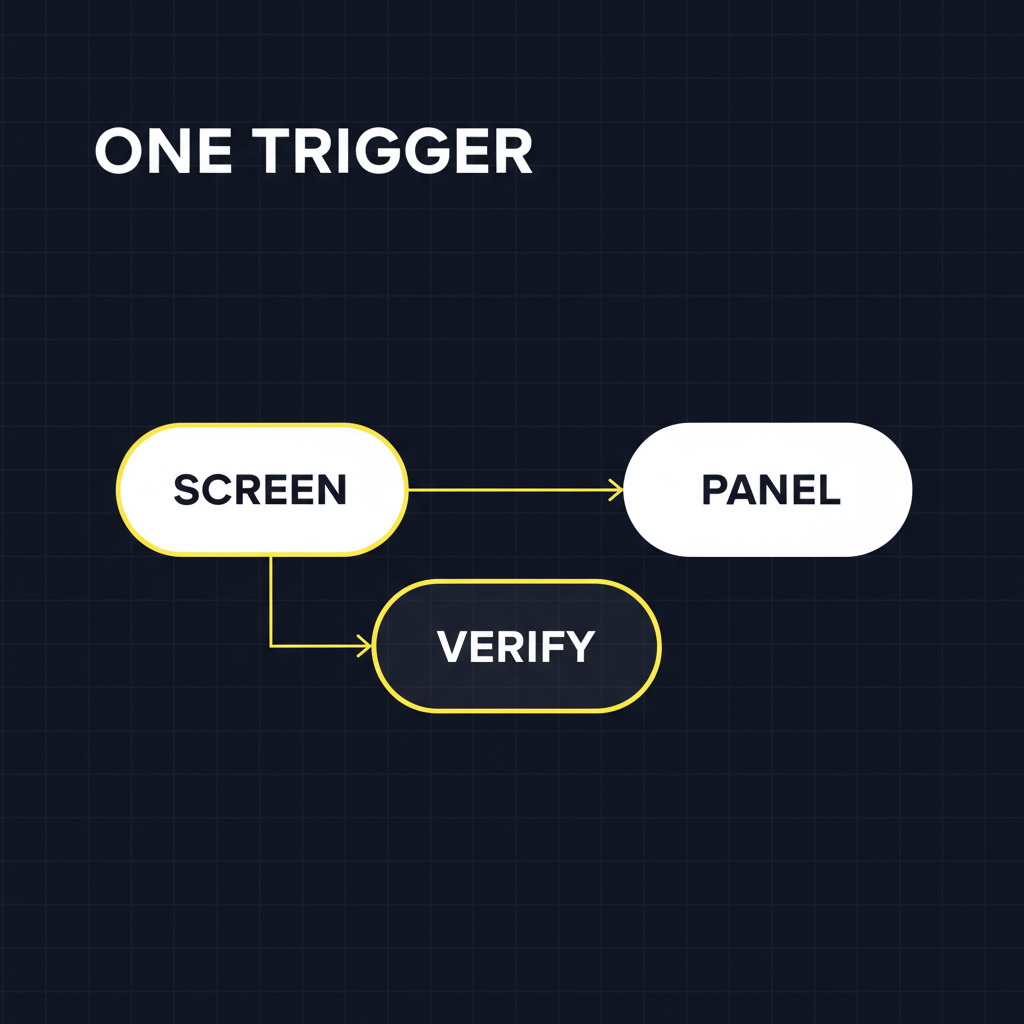
Trigger verification requests at the same moment you schedule panel interviews, not sequentially afterward. Most verification platforms return results within 1-2 business days, which aligns perfectly with typical interview scheduling lead times. Your panel interviews proceed as planned if verification clears; if discrepancies surface, you cancel the interviews and move to your next candidate.
The decision rule is straightforward: a phone screen pass triggers two parallel actions — interview scheduling and verification request. This eliminates the false choice between speed and accuracy that sequential processes create.
For high-volume hiring, consider batching verification requests to optimize vendor rates while maintaining this timing. The key principle remains constant: verify before your organization makes its largest time investment in a candidate. Panel interviews represent the highest-cost phase of your funnel — protect that investment with verification that happens early enough to matter.
Conclusion
Moving employment verification earlier in your hiring cycle is a process efficiency decision, not just a compliance one. You eliminate wasted investment on fraudulent candidates before your expensive interview panels and reference calls begin.
Superunit delivers employment verification in under one business day, making early-cycle verification operationally viable without slowing your hiring timeline. Teams that need verification fast enough to fit after phone screens but before panel interviews rely on our speed to redesign their process around efficiency, not tradition.
Ready to calculate the exact savings for your hiring volume? See our ROI framework and cost analysis to quantify what catching fraud earlier means for your budget. Or explore our buyer's guide to employment verification platforms to understand what capabilities enable sub-24-hour turnaround at enterprise scale.