The Numbers That Should Make You Uncomfortable
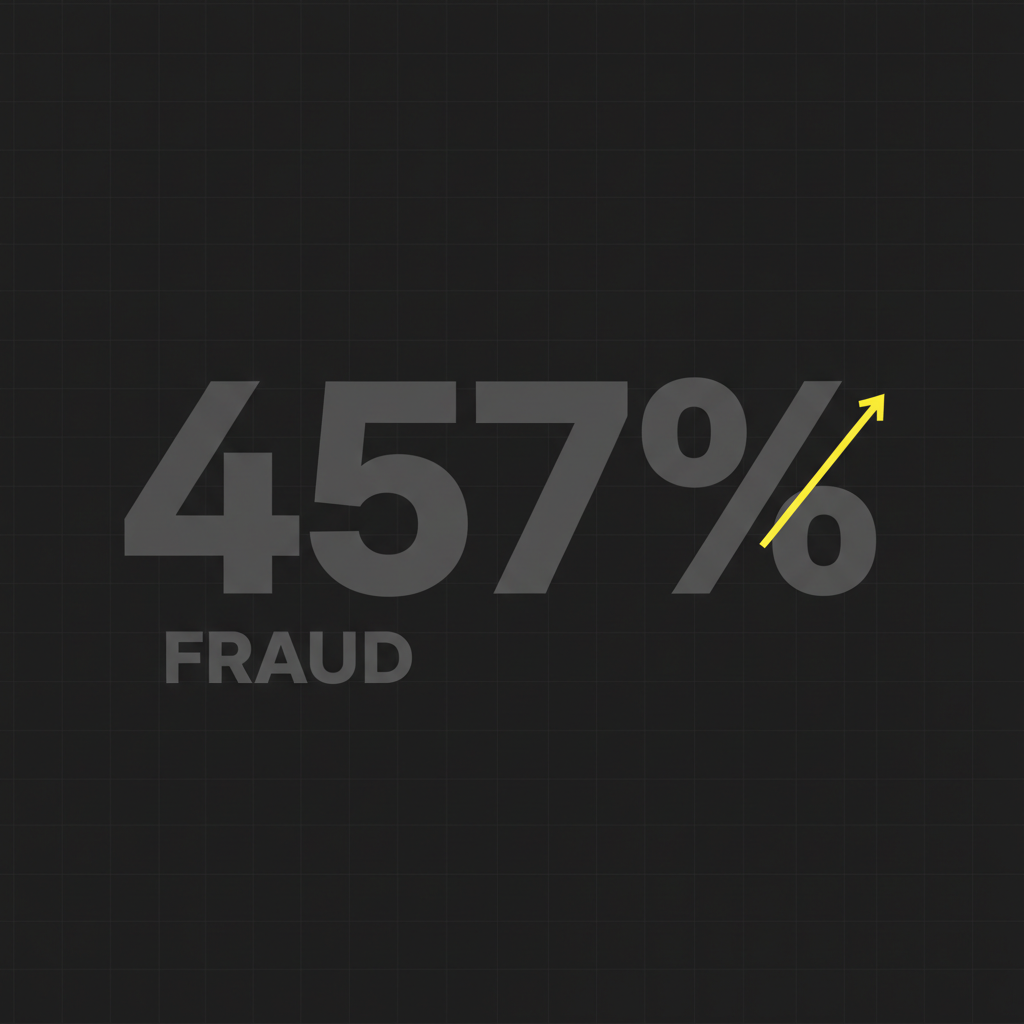
Job fraud losses jumped 457% in four years, but most enterprise hiring teams are running the same verification process they used in 2015. The mismatch isn't subtle.
44% of job applicants admitted to lying during the hiring process in Resume Builder's January 2025 survey. Gartner predicts 1 in 4 candidate profiles worldwide will be fake by 2028. Meanwhile, only 19% of hiring managers trust their own process to catch fraud.
The structural problem is clear: attackers gained AI-powered volume and quality capabilities, while defenders kept the same post-offer verification timing. Resume fraud now costs US businesses $600 billion annually, but that figure understates the operational damage. Every panel interview conducted on a fabricated candidate is wasted recruiter time that could have been avoided with earlier authentication.
This isn't a detection problem you can solve with better attention to detail. It's a process architecture problem where verification happens after significant hiring investment has already been made.
What AI Actually Changed About Resume Fraud
AI transformed resume fraud from a craft practiced by individual bad actors into an industrial operation. The shift isn't just about better-written lies — it's about capabilities that didn't exist at scale before 2023.
Volume became unlimited. A single fraudster with ChatGPT can now generate hundreds of tailored, polished applications in an afternoon. Resume fraud is no longer constrained by effort or writing skill. Where fabricating a convincing professional history once required hours per application, AI tools produce polished, keyword-optimized resumes in minutes.
Fabrication quality surpassed human-written resumes. AI-generated resumes read better than most authentic ones. They feature perfect formatting, industry-appropriate terminology, and strategically vague achievements that sound impressive without being verifiable. Experienced recruiters cannot reliably detect AI content — the quality differential between authentic and fabricated resumes has disappeared.
Credential forgery industrialized. Education verification was once a reliable backstop against fraud. Now candidates leverage diploma mills, AI-created fake transcripts, and hackers who add names to university databases. Traditional education verification processes weren't designed to authenticate against coordinated digital forgery operations.
Reference manufacturing became systematic. Fifteen percent of applicants have already provided fake references, including fictional characters and coordinated fraud networks where multiple fake personas vouch for each other's claims. These aren't random fake phone numbers — they're orchestrated reference ecosystems designed to pass standard verification calls.
The fundamental change: fraud is no longer limited by human effort or expertise. Your hiring process is still running verification checks designed for a world where convincing professional deception required real work.
The Specific Things Candidates Are Faking
Four resume elements now carry the highest fraud risk, and the data shows these aren't outlier cases — they represent the majority of the fraud surface area.
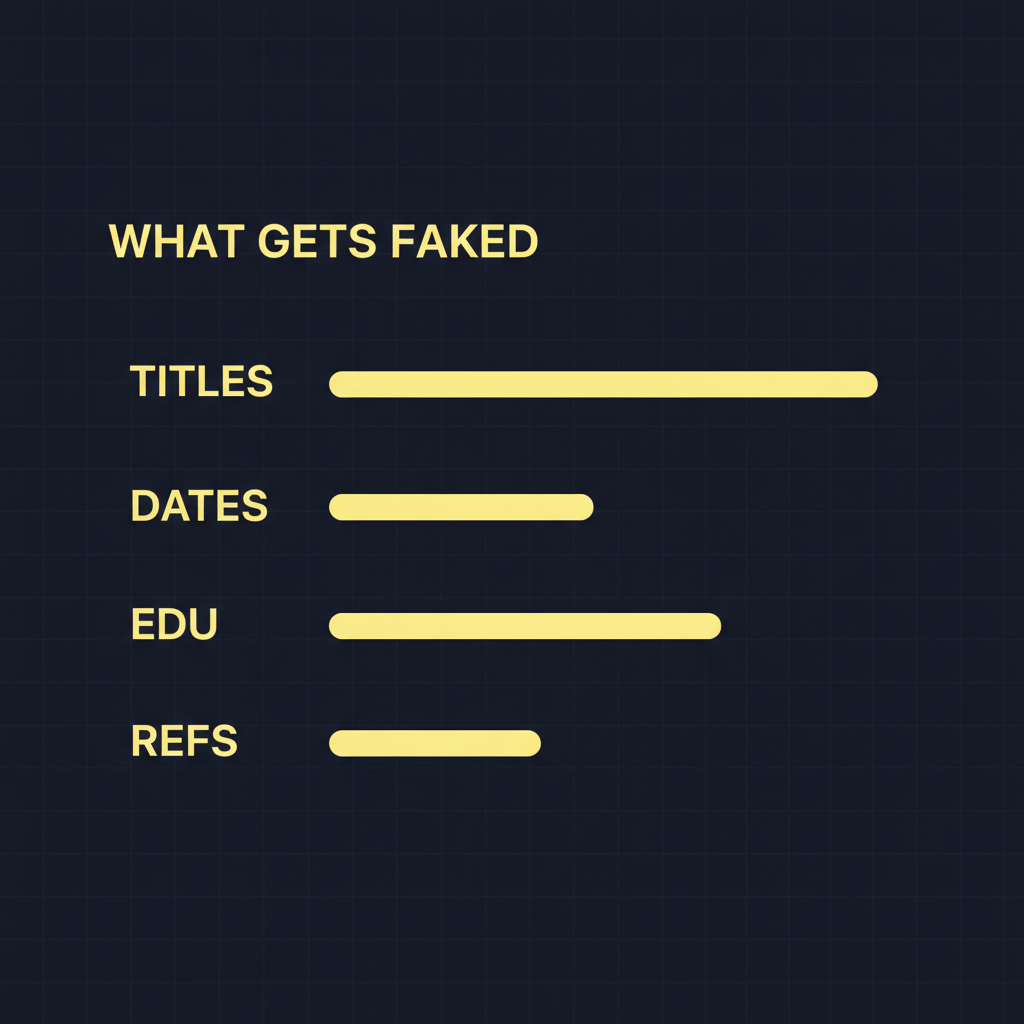
Job titles are the most manipulated element. Nearly 40% of candidates have altered their previous job titles, inflating seniority or changing roles entirely to match target positions. A "Marketing Coordinator" becomes a "Marketing Manager." An "Associate" becomes a "Senior Associate" or simply drops the junior qualifier.
Employment dates get manipulated by roughly 30% of candidates to hide gaps or extend tenure. AI makes it trivial to calculate believable overlaps and generate plausible explanations for any timeline. The stigma around career gaps — layoffs, parental leave, health issues — incentivizes candidates to fabricate continuous employment.
Education credentials face systematic attack through diploma mills, AI-generated transcripts, and hackers adding names directly to university databases. The verification infrastructure that worked for paper transcripts breaks down when fraudsters can manufacture digital records that pass initial screening.
References represent the most coordinated fraud vector. 15% of applicants have provided fake references, including fictional characters and organized networks where multiple fake personas vouch for each other's fabricated work history.
These four categories aren't edge cases requiring sophisticated detection — they're the standard toolkit that AI democratized for any motivated candidate.
Why Your Hiring Process Wasn't Designed for This
Enterprise hiring processes were built for a world where fabricating a convincing professional history required real effort and coordination. That friction is gone, but the process hasn't adapted.
Your ATS keyword matching now works against you. AI-optimized resumes hit every required term with surgical precision, while authentic candidates with career gaps or non-linear paths get filtered out. The "perfect" profiles advancing to interviews are increasingly the fake ones.
The interview stage relies on subjective performance signals that candidates can now game with AI assistance. Deepfakes and real-time AI audio overlays are already appearing in 18% of video interviews, turning what used to be reliable authenticity markers into theater.
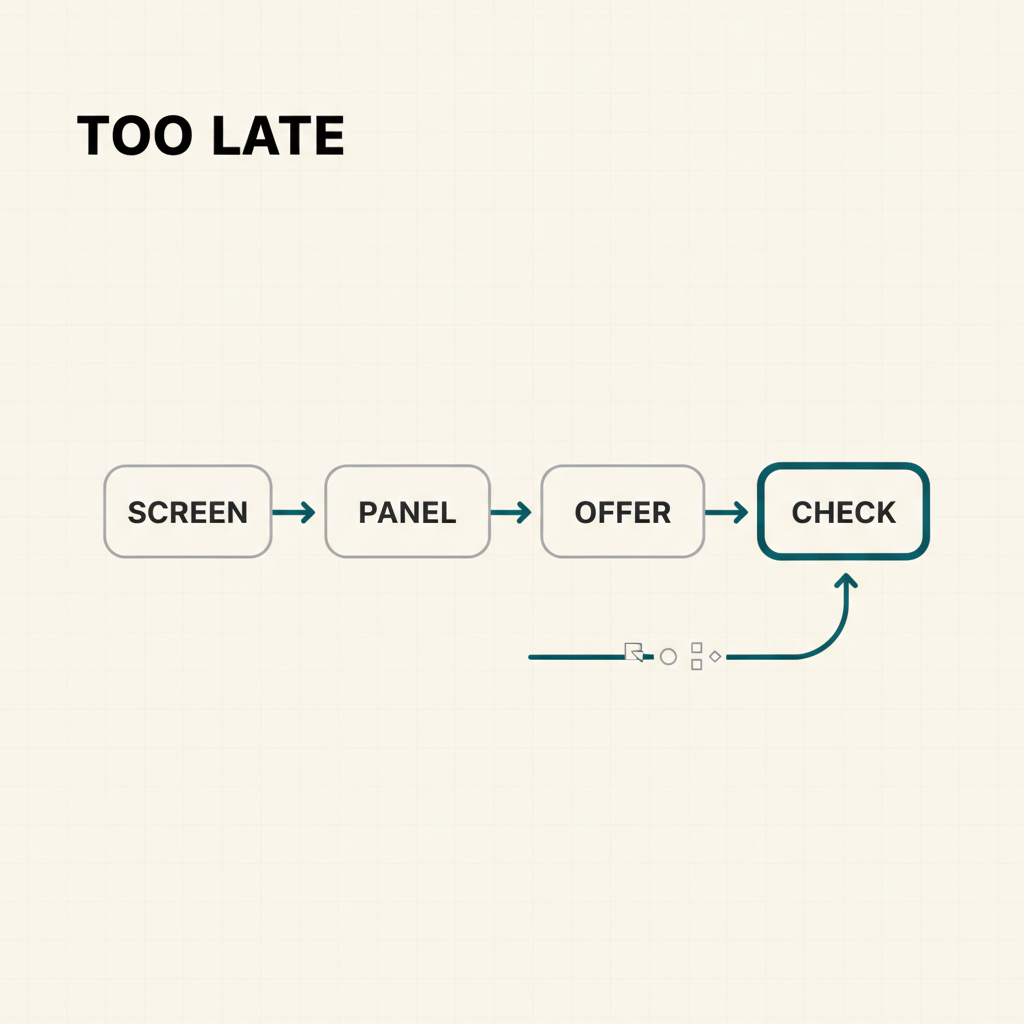
Your background check timing creates a structural blind spot. Verification typically happens post-offer — after panel interviews, reference calls, and salary negotiation. You've already invested heavily in the candidate before discovering their employment history was fabricated. Only 19% of hiring managers trust their own process to catch fraud.
The core problem isn't that your team lacks attention to detail. The process was designed to evaluate candidates, not authenticate them. Those are now different problems requiring different solutions. Your hiring workflow assumes the candidate sitting across from you is who they claim to be — an assumption that no longer holds at scale.
What the Process Gap Actually Costs
The $600 billion annual cost figure gets headlines, but the more immediate damage is wasted hiring cycles. Every panel interview conducted on a fraudulent candidate burns recruiter time and hiring manager bandwidth that could have advanced real candidates.

Every reference call made to a fabricated contact wastes your team's effort. Post-offer discovery means restarting your time-to-fill clock from zero — after you've already invested weeks in screening, interviewing, and negotiating with someone who was never qualified.
The "too late" problem defines why most organizations struggle with fraud detection. Catching fabricated credentials at the offer stage doesn't prevent the process waste — it just ends the charade after maximum resource burn. Your background check vendor may flag the fake employment history, but that happens after your senior engineers spent four hours in technical panels with a candidate whose entire work history was AI-generated.
Only 19% of hiring managers trust their own process to catch fraud before making offers. The verification step that could save the cycle happens after the cycle is essentially complete.
Comparison Table: 2015 Hiring Process vs. 2025 AI Fraud Capabilities
| Hiring Stage | What the Process Was Designed to Handle | What AI Fraud Can Now Do |
|---|---|---|
| Resume screening | Manually crafted resumes; embellishments were limited by writing skill | AI generates polished, tailored, keyword-optimized resumes at volume in minutes |
| Education verification | Diploma fraud was rare and expensive | AI-created transcripts, diploma mills, hacked university databases |
| Reference checks | Fake references were hard to coordinate | Coordinated fake reference networks with multiple supporting personas |
| Employment history | Falsifying dates/titles required forged documents | AI fabricates plausible histories; 40% alter titles, 30% manipulate dates |
| Interview performance | In-person or video signals were reliable authenticity proxies | Deepfakes, real-time AI audio overlays, proxy interviewers |
| Background check | Post-offer check caught most fraud before day one | Fraud is caught too late — after significant process investment has already been made |
The mismatch is structural. Your hiring process assumes fraud requires effort; AI removed that constraint entirely.
The Two Problems This Creates Downstream
The interview is no longer a reliable signal. If a candidate can fabricate a convincing resume with AI assistance, they can fake an interview the same way. Deepfakes now appear in 18% of video interviews, and real-time AI audio overlays let fraudsters impersonate technical competencies they don't possess.
Verification at offer stage is structurally too late. By the time a background check runs, your organization has already invested heavily in panel interviews, reference calls, and salary negotiations. Moving verification earlier in the cycle changes the cost-benefit math entirely — catching fabricated employment history before the interview process prevents waste rather than just ending it.
The process fix isn't harder screening — it's earlier authentication.
FAQ
How common is AI resume fraud in 2025? Resume Builder found that 44% of applicants admitted to lying during the hiring process in January 2025. Gartner predicts 1 in 4 candidate profiles worldwide will be fake by 2028. The trajectory is clear: fraud is becoming the default, not the exception.
What parts of a resume are most commonly faked? Job titles lead the pack at roughly 40% of fraudulent applications, followed by employment dates at 30%. Education credentials and references round out the major categories, with 15% of applicants providing fake references including fictional characters and coordinated fraud networks.
Can ATS systems or resume screening tools detect AI-generated resumes? No. AI-generated resumes are specifically optimized to pass keyword-based screening systems. Experienced recruiters cannot reliably distinguish AI content from authentic writing, and automated screening rewards "perfect" AI-optimized profiles over authentic candidates with career gaps.
What is the best way to catch resume fraud before making a hire? Move employment history verification earlier in the hiring cycle — before panel interviews rather than after an offer. This catches fabricated credentials before significant recruiter time and process investment has been wasted.