What You Need to Know
Video interviews no longer prove that the person you're talking to is the candidate who will show up to work. Real-time AI tools can generate convincing responses, deepfake technology can replace faces entirely, and proxy interviewers can take calls on behalf of candidates who lack the required skills. What feels like a successful interview may be completely manufactured.
Employment verification can't wait until after you've made an offer. The candidate who aced your technical questions may have never worked at the company their resume claims — and what they demonstrated on camera doesn't prove otherwise.
The Interview Was Never Foolproof — Now It's Actively Gamed
Interviews were always imperfect. Candidates rehearsed answers, googled companies beforehand, and put on their best performance for 45 minutes. The signal was noisy, but it was at least authentic noise — the candidate's own preparation, personality, and skills under pressure.
2025 changed the fundamental assumption underlying video interviews. AI tools can now manufacture competence in real time. A candidate can appear to solve coding problems they've never seen, answer behavioral questions with perfect structure, and demonstrate expertise in technologies they've never touched.
The performance you're evaluating may not belong to the person you're hiring. Audio overlay tools whisper answers into candidates' ears. Deepfake software replaces their face with someone else's. Proxy interviewers take the call entirely, presenting as the candidate while the actual hire-to-be sits somewhere else.
This isn't theoretical. These tools exist, they're accessible, and candidates are using them. The interview has become a theater where you can't tell who's really on stage.
The AI Cheating Toolkit: What Candidates Are Actually Using
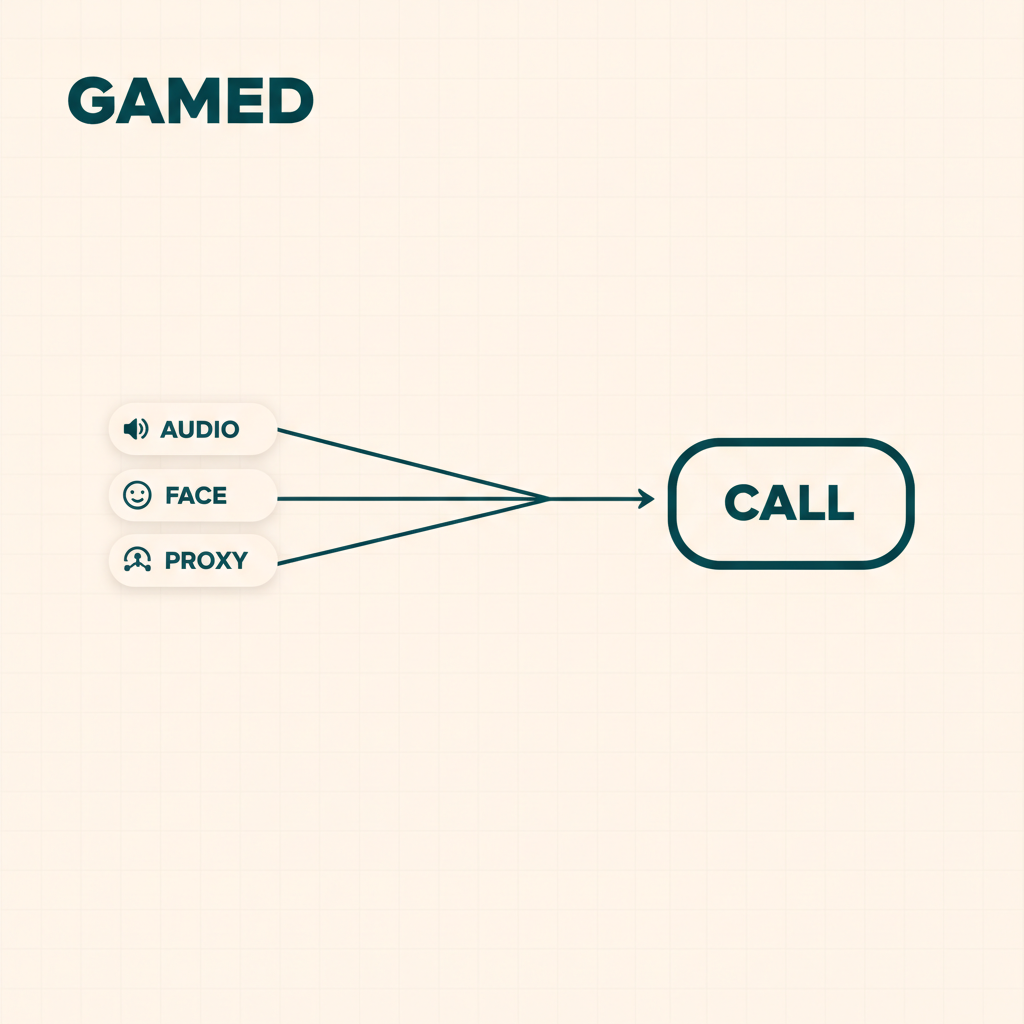
Three primary fraud vectors dominate the 2025 interview landscape. Each operates differently, but all share the same goal: manufacturing competence in real time.
Real-Time Audio Overlay Tools
Tools like Cluely and Beyz AI listen to interview questions through the candidate's microphone and generate answers delivered as an on-screen overlay or whispered through an earpiece. The candidate parrots the responses with minimal delay. Catching it means noticing micro-pauses before answers, or responses to hard technical questions that arrive too polished and too fast to be spontaneous.
Deepfake Video
Real-time face-replacement software lets a proxy appear as the actual candidate. HeyGen's avatar technology and open-source tools like DeepFaceLive map a face and its expressions onto a substitute's live video feed with minimal setup, and voice cloning adds another layer that makes the swap hard to catch. Detection requires frame-by-frame analysis that most hiring managers lack the tools or training to perform during a standard 30-minute interview.
Proxy Interviewers
The most brazen vector involves hiring someone else to take the interview entirely. Professional interview proxies are coordinated through Telegram channels and underground marketplaces, and the practice has matured into a commercialized service. Offerings range from off-screen coaching — where the proxy sits out of frame feeding answers — to full impersonation using deepfake overlays, so the proxy's responses arrive through the candidate's face on camera. Pricing scales with role complexity, from a few hundred dollars for coaching to a couple thousand for a full deepfake-backed technical interview. Detection requires comparing the interviewee's voice patterns, speech cadence, and technical-knowledge depth against resume claims and any earlier phone screens.
Behavioral Signals That Suggest AI Assistance
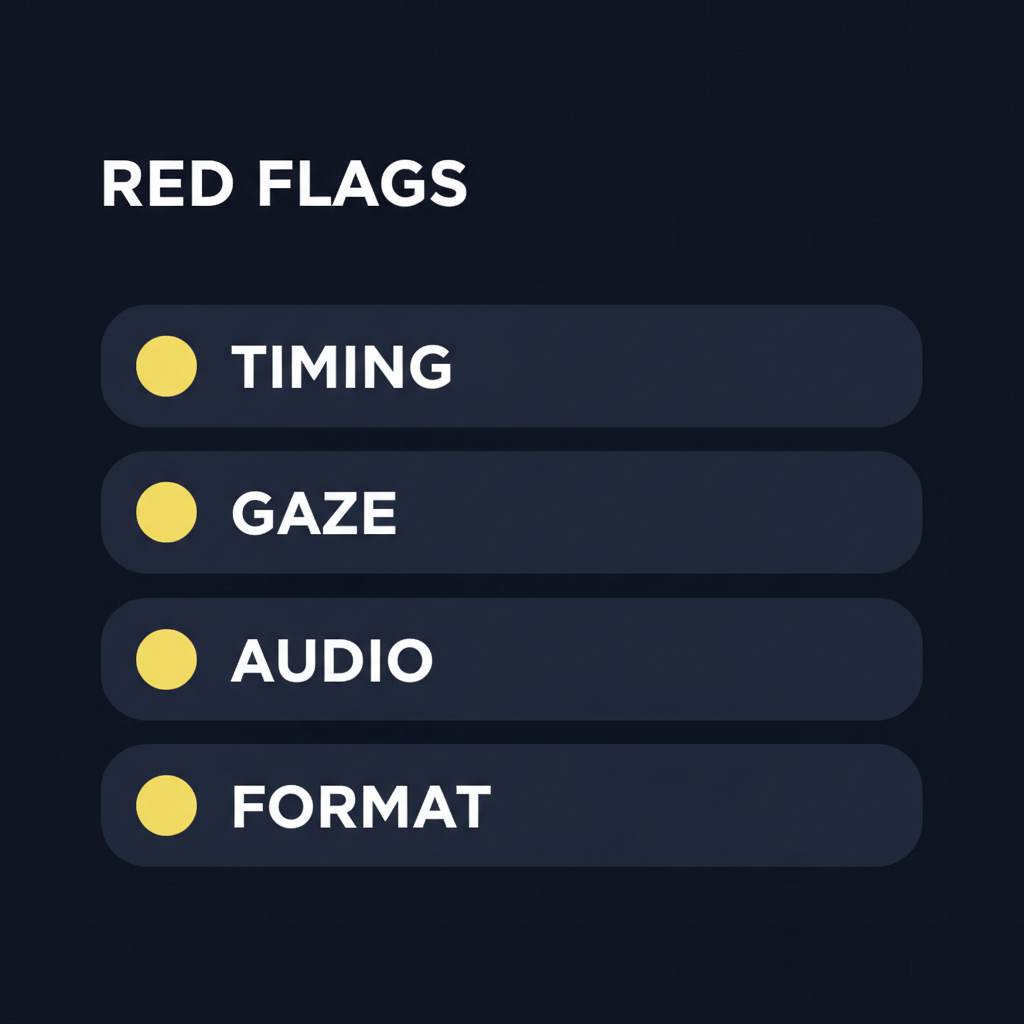
Unnatural response timing creates the first red flag. Candidates using real-time AI assistance often display a 2-3 second delay before complex answers, followed by unusually polished delivery that doesn't match their natural speaking cadence. Watch for answers that sound scripted despite being delivered conversationally.
Eye movement patterns reveal cognitive disconnect. Authentic candidates look up or away while thinking, then return eye contact during delivery. AI-assisted candidates often maintain steady eye contact during thinking phases because they're reading responses from overlays or listening to audio prompts through earpieces.
Audio artifacts betray technical assistance. Listen for slight echoes, background hum, or compression artifacts that suggest audio processing. Candidates using voice-replacement tools may exhibit slight lip-sync delays, particularly during rapid speech or when switching between prepared and spontaneous responses.
Answer structure becomes suspiciously consistent. AI-generated responses follow predictable frameworks: situation-action-result patterns for every question, regardless of context. Authentic candidates vary their answer structure and include natural hesitations, corrections, and tangential thoughts.
Follow-up questions expose the gap between AI capability and human knowledge. Ask detailed technical questions about specific projects mentioned in responses. AI tools excel at generating plausible first-level answers but struggle with deep technical follow-ups that require genuine experience.
Behavioral baseline shifts signal external assistance. Notice when candidates suddenly become more articulate during technical portions, or when their confidence level dramatically increases for specific question types. These inconsistencies suggest they're receiving help rather than drawing from personal expertise.
Why Detection Alone Is Not a Strategy
Behavioral detection puts hiring teams in a permanent arms race they cannot win. Every detection technique spawns countermeasures: if you watch for unnatural eye movements, deepfake tools add realistic gaze tracking. If you listen for audio artifacts, real-time voice synthesis improves its compression.
The detection playbook also assumes consistent interviewer skill across your organization. In practice, one manager spots the telltale pause patterns of AI assistance while another interprets the same behavior as thoughtful consideration. Your newest hiring manager won't catch what your most experienced one flags immediately.
Counter-detection improves faster than detection. On real-world footage, established deepfake detectors lose 45–50% of their lab accuracy, and the generation tools keep moving — every signal you learn to spot is one the next release is built to hide.
The fundamental problem is asymmetric: a candidate needs to fool one interviewer for one hour, while your organization needs near-perfect detection across hundreds of conversations with varying interviewer expertise. That math doesn't work in your favor.
Effective fraud prevention requires shifting from reactive detection to proactive verification — confirming candidate identity and employment history before the interview begins, not after you've already invested time in a potentially fraudulent conversation.
The Structural Fix: Verification as a Parallel Signal, Not a Sequential One
The standard hiring sequence — interview first, verify later — assumes the person you're evaluating will be the person you hire. That assumption is broken. When candidates can manufacture interview performance through AI assistance or proxy representation, waiting until after an offer to verify employment history creates a massive blind spot. The case for running verification earlier is laid out in detail in employment verification before the offer letter.
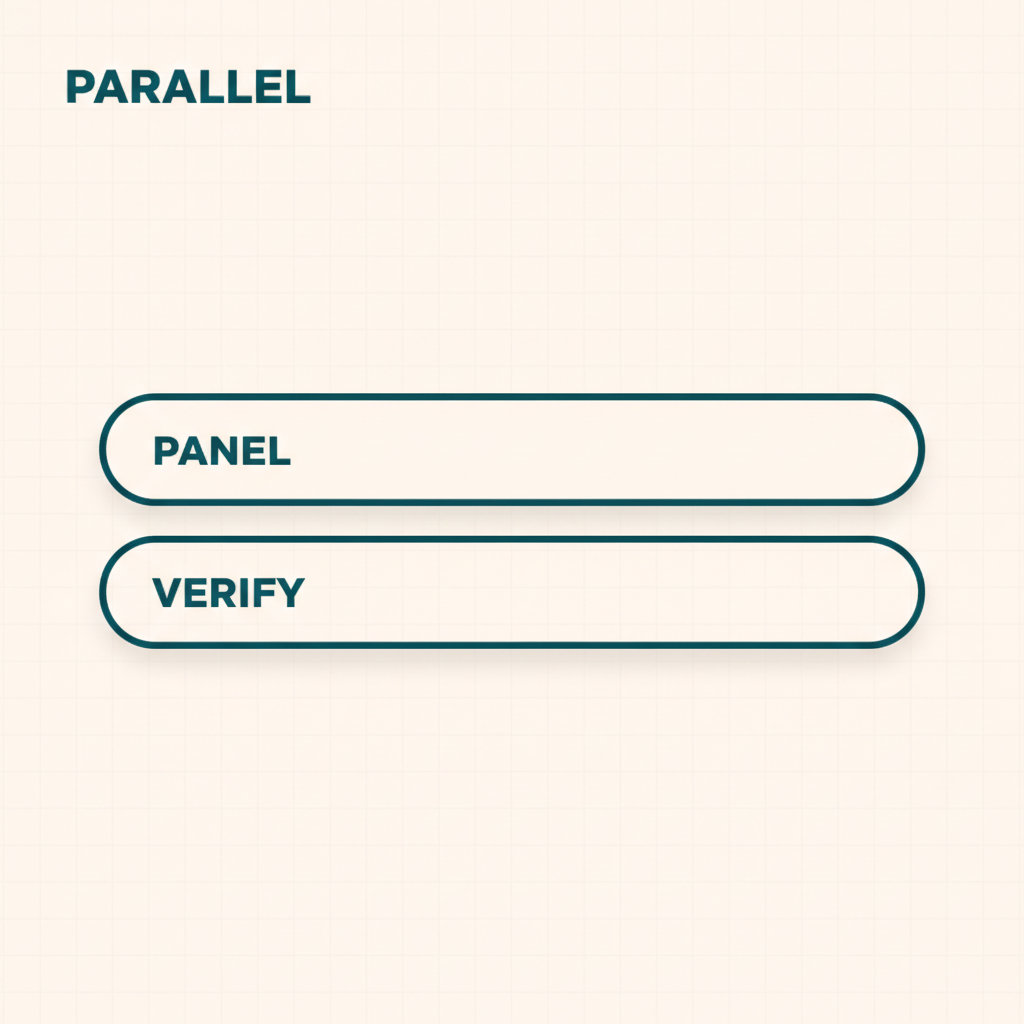
Employment verification must run parallel to the interview process, not after it. This isn't about speeding up background checks — it's about establishing candidate authenticity before you invest in evaluation. If someone's employment history doesn't match their resume before the interview happens, their interview performance is irrelevant regardless of how impressive it appears.
The operational challenge is that traditional verification takes 5-7 business days per candidate. Most hiring managers won't delay interviews for a week while verification completes. Superunit's employment verification solves this timing problem by delivering employment verification in under 24 hours, making parallel verification operationally feasible.
The data structure changes everything. Instead of asking "How well did they interview?" followed by "Are they who they claim to be?", you ask both questions simultaneously. Candidates whose employment history doesn't verify get removed from consideration regardless of interview performance. Candidates who pass verification but show behavioral signals during interviews get flagged for deeper evaluation.
This parallel approach eliminates the most expensive fraud scenario: discovering after an offer that your top candidate was a proxy, or that their resume was fabricated. The cost of early verification is negligible compared to the cost of restarting a hiring process after extending an offer to someone who doesn't exist.
FAQ
What AI tools are candidates using to cheat in video interviews? Three primary categories: real-time audio overlay tools like Cluely that feed answers during interviews, deepfake video software like HeyGen for face replacement, and proxy-for-hire services coordinated through Telegram and dark-web marketplaces where someone else takes the interview entirely.
Can deepfake detection software reliably catch interview fraud? No. Detection tools lag behind creation tools, and accuracy drops sharply in real-world conditions. On real-world benchmarks, established detectors lose roughly 45–50% of their lab accuracy — far short of what high-stakes hiring decisions require, and well behind the pace at which generation tools improve.
Is it legal to use AI assistance during a job interview? It's a legally gray area. No federal prohibition exists, but it constitutes fraud if the candidate misrepresents their identity or capabilities. Companies can set explicit policies prohibiting AI assistance, making violations grounds for rescinding an offer or termination.
How does early employment verification reduce interview fraud risk? Parallel verification creates a second authentication layer that AI tools cannot manipulate. If the candidate's work history doesn't verify independently, their interview performance becomes irrelevant regardless of how convincing it appeared.
What is a proxy interviewer and how common is it? A third party who impersonates the candidate during video interviews. The practice is now openly advertised on Telegram and in underground channels, and it targets remote technical roles where there's no in-person step to blow the cover. Some recruiters estimate that in hot remote-tech markets, a meaningful share of interviews already involve third-party assistance or outright impersonation.