Employment verification is a throughput problem. Every order that sits in a queue waiting for an employer callback costs you margin, slows your client's hiring process, and creates compliance exposure. Yet most CRAs still run verifications the same way they did a decade ago: a specialist picks up the phone, dials a number, gets voicemail, leaves a message, and waits. The volume of background checks continues to climb (the global employment screening market is projected to grow from $7.78B in 2026 to $13.71B by 2034, according to Fortune Business Insights), and the operational strain on verification teams is growing with it.
This guide treats employment verification as what it is for CRA operations: an engineering problem with measurable inputs, outputs, and failure modes. The goal is to give you a framework for evaluating your current verification operation against concrete benchmarks, understanding where completions fail, and deciding whether to build, outsource, or automate.
What Employment Verification Actually Involves
For CRAs, employment verification means outbound outreach to prior employers to confirm a candidate's job title, dates of employment, and sometimes salary or reason for leaving. The request originates from your client (the employer or staffing firm ordering the background check), and you are responsible for independently contacting each listed employer, documenting the interaction, and returning a result.
The operational complexity is hidden in the details. You are not just confirming data; you are locating the right contact at the right organization, reaching them through a channel they will respond to, documenting every step for FCRA compliance, and doing all of it fast enough to meet your client's SLA. A single verification order can require three to five contact attempts across multiple channels before it resolves, or it may never resolve at all.
The Standard Verification Workflow
The end-to-end process for a single employment verification order has five distinct stages, each with its own failure points.
Step 1: Order Intake and Candidate Data
A verification order arrives with the candidate's self-reported employment history: company name, job title, dates of employment, and sometimes a supervisor's name or HR contact. The quality of this data varies enormously. Candidates misspell company names, provide outdated phone numbers, list companies that have been acquired or shut down, and occasionally fabricate employers entirely.
Your intake process needs to flag obvious gaps. Missing phone numbers, company names that don't match any known entity, and overlapping employment dates are all signals that the verification will require extra research before outreach even begins.
Step 2: Employer Contact Research
Never call the number the candidate provided without independent validation. Using a candidate-supplied phone number creates fraud risk: the number could route to a friend or a fake employer. Independent validation means cross-referencing the employer's contact information against business directories, state filings, or your own internal database of verified employer contacts.
Knowing which department to call for employment verification is a surprisingly large factor in completion rates. Some companies route all verification requests through HR; others require you to go through a third-party verification service like The Work Number. Small businesses may only respond if you reach the owner directly. Getting this wrong on the first attempt adds a full day or more to turnaround.
Step 3: Outbound Outreach Across Channels
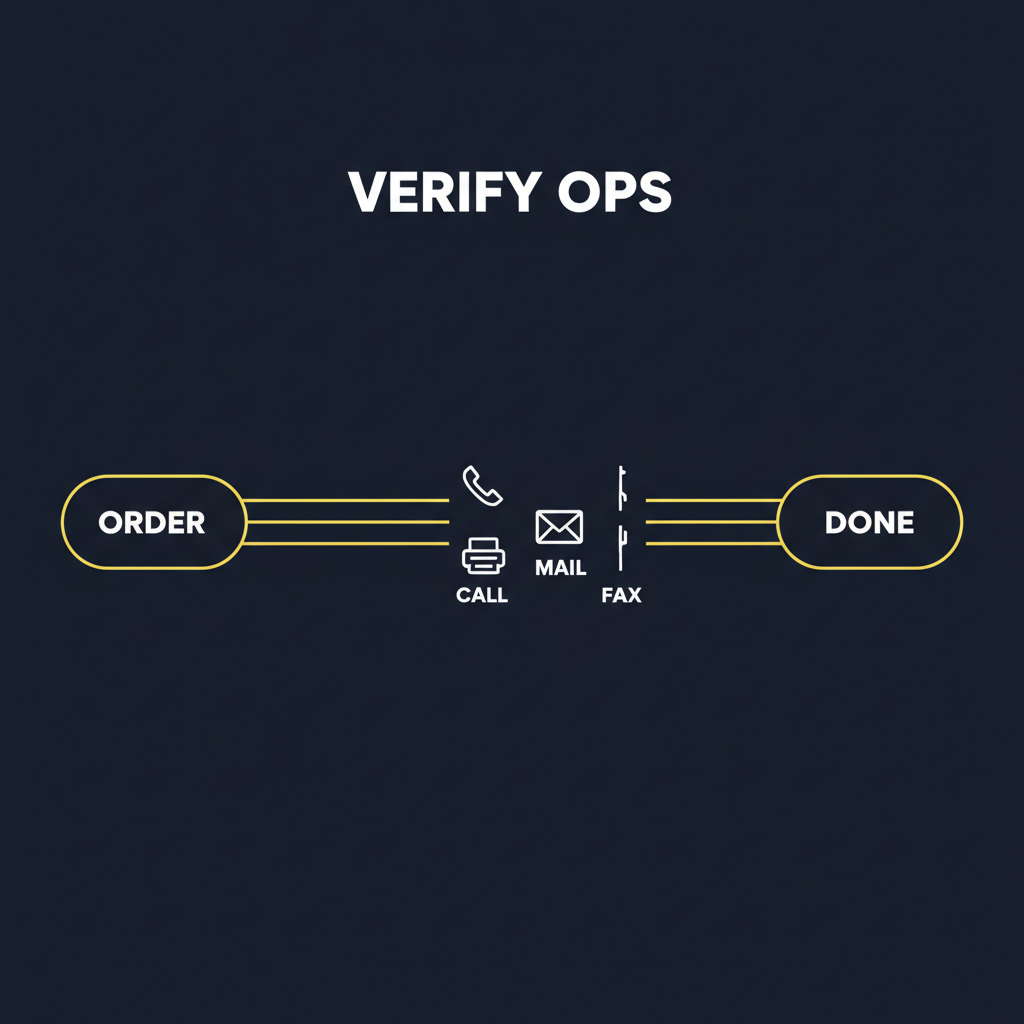
Phone, email, and fax are the three standard outreach channels. The critical operational decision here is whether to use them sequentially or simultaneously.
Sequential outreach (call first, wait a day, then email, wait another day, then fax) is the default for most manual verification teams. It is also the slowest possible approach. Simultaneous outreach across all three channels on the first attempt compresses the timeline significantly, because you are not waiting for one channel to fail before trying the next.
Fax remains surprisingly common. Certain industries (healthcare, government, manufacturing) still have employers who only respond to fax-based verification requests. If your outreach workflow skips fax, you are leaving completions on the table.
Step 4: Follow-Up Cadence
Most verifications that will complete do so within the first 48 hours. Across 70,000+ verifications, Superunit's data shows 80% of successful verifications close within 48 hours, and 65% close within 24 hours. The implication is clear: aggressive follow-up in the first two business days has a disproportionate impact on completion rates.
A common mistake is spacing follow-ups too far apart. If your team waits 48 hours between attempts, you have already missed the window where most completions happen. The first follow-up should occur within hours of the initial outreach, not the next business day.
After 48 hours with no response, the probability of completion drops sharply. At that point, the verification enters hard-to-reach territory, and the approach needs to shift (more on that below).
Step 5: Documentation and Result Delivery
Every verification produces one of three outcomes: confirmed, unable to verify, or discrepancy found. Regardless of outcome, the documentation must be complete enough to satisfy an FCRA audit.
A compliant verification record includes the date and time of each contact attempt, the channel used (phone, email, fax), the name and title of the person who responded, the specific information confirmed or denied, and the final outcome. If the verification was unsuccessful, the record must show the good-faith attempts made before returning an "unable to verify" result.

The Hard-to-Reach Employer Problem
Hard-to-reach employers are where most verification operations break down. These are the cases that drag down your completion rate, inflate your turnaround time, and consume a disproportionate share of your team's labor hours.
Small businesses with no HR department. A five-person plumbing company does not have an HR inbox or a verification request process. Reaching the owner during business hours, explaining what you need, and getting them to confirm employment data can take multiple attempts over several days.
Fax-only employers. Healthcare systems, school districts, and government agencies frequently require verification requests to be submitted by fax. If your workflow does not include fax as a first-attempt channel, these verifications stall until someone manually escalates them.
Defunct or acquired companies. When the employer no longer exists, there may be no one to call. If the company was acquired, verification requests need to be routed to the acquiring entity's HR or records department, which requires research to identify.
Unresponsive contacts. Some employers simply do not prioritize responding to verification requests. Even with a valid phone number and a live receptionist, the HR contact may never return your call. Multiple follow-up attempts across channels are required before you can defensibly mark the verification as unable to verify.
When a verification cannot be completed, the standard procedure is to request alternative documentation from the candidate (W-2s, pay stubs, offer letters), document all good-faith contact attempts, and return the result as "unable to verify" with the full attempt trail attached.
FCRA Compliance: What CRAs Must Document
The FCRA requires CRAs to establish and follow "reasonable procedures to assure maximum possible accuracy" of information in consumer reports. For employment verifications, that standard translates into specific documentation requirements at every stage of the process.
What Goes in a Compliant Verification Record
Every verification file should contain the following, regardless of outcome:
- Date and time of each contact attempt
- Channel used (phone, email, fax)
- Contact person's name and title (if reached)
- Specific information confirmed, denied, or disputed
- Final outcome and disposition
- Any candidate-provided alternative documentation
The "good faith" attempt standard means you need to show multiple contact attempts across different channels, each timestamped, with a clear notation when the verification could not be completed. Regulators and client auditors look for exactly this kind of trail when reviewing CRA operations. A single phone call with no follow-up does not meet the standard.
The Audit Trail Advantage of Automated Verification
Manual verification teams document their work in CRM notes, spreadsheet entries, or case management fields. These records depend on the verifier remembering to log each attempt accurately and completely. In practice, notes are often sparse, inconsistently formatted, and entered after the fact.
AI-generated verification records solve the documentation problem structurally. Every call is recorded and transcribed. Every email and fax is timestamped with delivery confirmation. The chain of custody for each piece of information is logged automatically. These records are immutable, meaning they cannot be altered after the fact, which is exactly what auditors want to see. For a deeper look at how AI-generated audit trails work in employment verification, including examples of what chain-of-custody documentation looks like in practice, Superunit has published a detailed breakdown.
The compliance argument for automation is straightforward: a system that records everything by default produces a more complete and defensible audit trail than a system that relies on humans to log their own work.
Performance Benchmarks: What Good Looks Like
If you cannot measure your verification operation, you cannot improve it. Three metrics define performance: completion rate, turnaround time, and cost per successful verification.
Completion Rate
Completion rate is the percentage of verification orders that result in a confirmed employer response. It is the single most important metric in a verification operation because every incomplete verification still costs labor (or vendor fees) but generates no revenue.
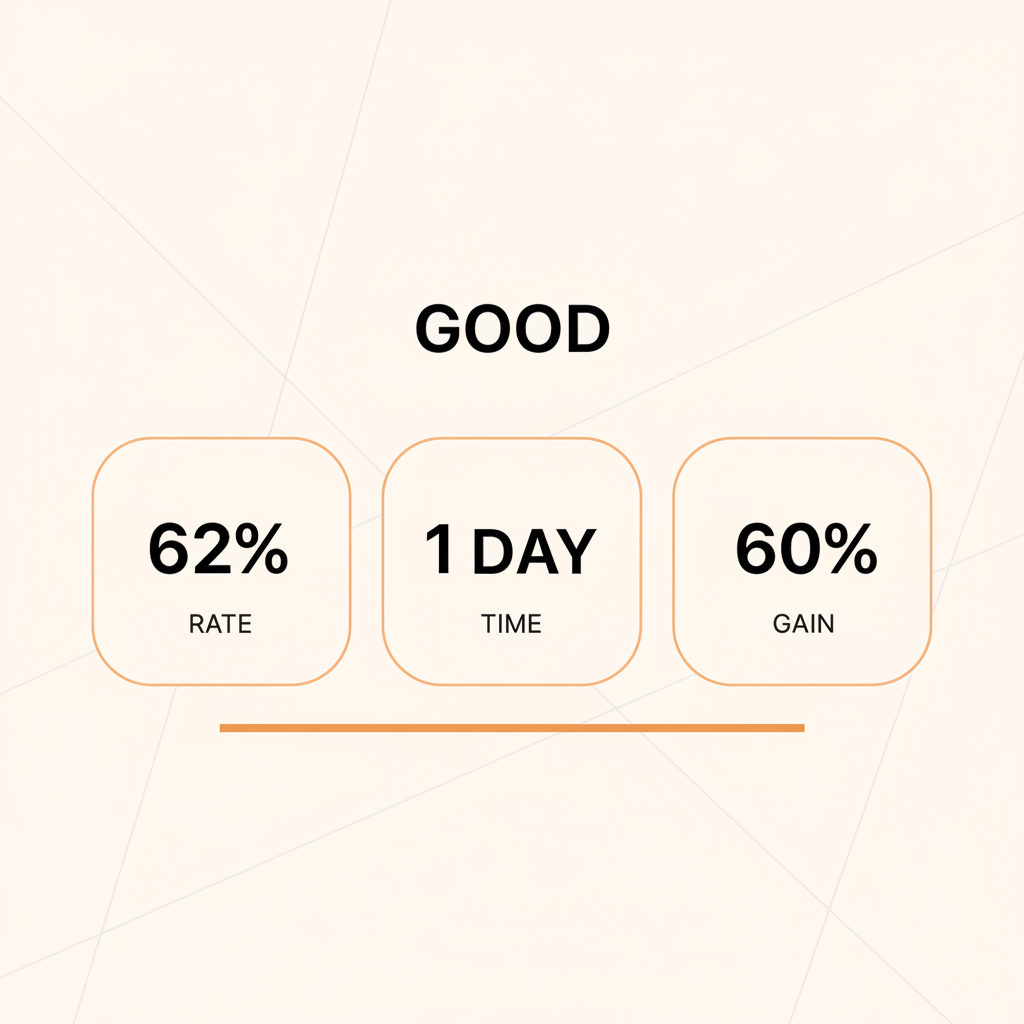
Across 70,000+ verifications, Superunit reports a 62% overall completion rate. That number accounts for all verification types, including hard-to-reach employers, small businesses, and unresponsive contacts. There are no widely published industry benchmarks for employment verification completion rates, which makes it difficult for CRAs to evaluate their own performance. If your operation is completing fewer than half of all verification orders, there is significant room to improve.
The factors that drive completion rate are employer reachability, channel coverage (whether you include fax and email alongside phone), follow-up cadence, and the quality of your initial contact research.
Turnaround Time
SHRM research shows that speed has risen to the top priority for employers choosing a background screening provider. Your clients are under pressure to close offers quickly, and every day a verification sits open is a day the candidate might accept another offer.
Superunit's average turnaround across all verifications is 0.82 business days, with 65% of verifications closing within 24 hours. That sub-one-day average is the benchmark to measure against. If your operation averages three to five business days per verification, you are at a significant competitive disadvantage, particularly as your clients' expectations continue to tighten.
Speed and completion rate are linked. Faster first-attempt outreach and tighter follow-up cadences produce both faster results and higher completion rates, because you are reaching employers before the request gets buried in their queue.
Cost Per Successful Verification
Cost per successful verification is the metric that determines your margin. It is calculated by dividing your total verification costs (labor, vendor fees, technology) by the number of successfully completed verifications.
A low completion rate inflates this number dramatically. If you spend $15 per verification attempt but only complete 40% of them, your true cost per successful verification is $37.50. At a 62% completion rate, the same $15 per attempt yields a cost of $24.19 per completion. The math gets worse when you factor in manual labor costs for follow-up, re-attempts, and documentation on failed verifications.
Superunit customers have seen margins improve from negative 15% to approximately 60%, largely because pay-on-success pricing eliminates the cost of failed verification attempts entirely.
Build vs. Outsource vs. Automate: A Decision Framework
Every CRA operations lead faces the same structural question: how should we fulfill verification volume? The three options each carry distinct tradeoffs in cost structure, scalability, and performance ceiling.
Build In-House
Running verification in-house means hiring, training, and managing a team of verification specialists. You get full control over workflow, quality, and client communication.
The risk is headcount dependency. Verification volume is inherently lumpy. Hiring surges from your clients create backlogs your team cannot absorb without overstaffing during normal periods. Employee turnover in verification teams is high because the work is repetitive, and training new hires takes weeks before they reach full productivity.
In-house works best when your volume is high, stable, and predictable. If you are processing thousands of verifications per month with minimal seasonal variation, the fixed-cost model can make economic sense.
Outsource to a Manual Provider
Traditional outsourcing shifts the staffing burden to a vendor. You send orders to a third-party verification provider, and their human verifiers handle outreach and documentation. The cost structure is variable, which protects you during volume dips.
The ceiling on performance is the constraint. Human verifiers work one channel at a time, one employer at a time. Completion rates and turnaround times are bounded by human capacity. Documentation quality varies by individual verifier. Margins compress because you are paying the vendor's markup on top of their labor cost, and you still absorb the cost of incomplete verifications in most pricing models. For CRAs evaluating whether outsourcing employment verifications can reduce staffing costs, the decision often comes down to whether the trade-off between cost savings and speed constraints is acceptable for your client base.
Automate with AI Agents
AI-powered verification changes the operational model fundamentally. Instead of a human verifier making one call at a time, AI agents initiate phone, email, and fax outreach simultaneously on every order. Superunit's system, for example, conducts outreach across all three channels from the moment an order is placed, with automated follow-up cadences built in.
The performance data from Superunit across 70,000+ verifications: 62% completion rate, 0.82 business day average turnaround, 80% of verifications completed within 48 hours. Every interaction is automatically recorded, transcribed, and timestamped, producing the kind of audit trail that manual teams rarely achieve consistently. Superunit supports outreach in 30 languages with contact research across approximately 100 million businesses worldwide.
The pricing model is pay-on-success, meaning you only incur cost on completed verifications. That single structural change is what drives the margin improvement from negative 15% to approximately 60% that Superunit customers report. There is no cost for failed attempts, no cost for follow-up cadences, and no cost for documentation, because it is all generated automatically.
Superunit currently serves 45 customers including Data Facts, InformData, TruView BSI, and CIC Screening. The 98% pilot-to-full-time conversion rate suggests that once CRAs see the performance data from their own orders, they stay.
What AI automation does not solve: verifying self-employment, confirming employment at businesses that are fully defunct with no acquiring entity, and edge cases that require subjective human judgment.
How to Choose
The decision framework is simpler than it appears.
If your clients tolerate multi-day turnaround times and your volume is steady, manual outsourcing works. If turnaround time is a competitive differentiator for your business, or if you need to protect margins while handling volume spikes, automation is the stronger choice. Building in-house only makes sense at high, stable volumes where you have the management capacity to absorb turnover and training costs.
| Approach | Best For | Turnaround | Scalability | Margin Impact |
|---|---|---|---|---|
| In-house | Stable, high volume | 2-5 days typical | Limited by headcount | Fixed cost, moderate margins |
| Manual outsource | Variable volume, speed not critical | 3-7 days typical | Vendor-dependent | Compressed margins |
| AI automation (Superunit) | Speed-sensitive, margin-focused | 0.82 days average | Unlimited | -15% to ~60% improvement |

What to Look for in a Verification Provider
Whether you are evaluating an outsourced vendor or an automated solution, the evaluation criteria are the same. Most providers will tell you they are fast and accurate. The difference is in the data they can show you.
Completion Rate and Turnaround Data
Ask for actual performance data from their production environment, not cherry-picked case studies. What is their overall completion rate across all orders, including hard-to-reach employers? What is their average turnaround time, and what percentage of verifications close within 24 and 48 hours?
The benchmark to measure against: 62% completion rate and sub-one-day average turnaround. If a provider cannot share this level of detail, or if their numbers are significantly below these marks, you should understand why before committing.
Documentation and Compliance Standards
Require call recordings, email/fax delivery confirmations, and timestamped chain-of-custody documentation for every verification, whether completed or not. Ask to see a sample verification record from a completed order and from an "unable to verify" order. The unable-to-verify record is where documentation quality shows most clearly, because it needs to demonstrate the good-faith attempt standard.
Pricing Model
Pay-on-success pricing is the correct model for verification outsourcing. You should only pay for verifications that result in a confirmed employer response. Per-attempt pricing models charge you for every call, email, and fax regardless of outcome, which means you absorb the cost of every failed verification.
Per-attempt pricing also creates a misaligned incentive: the provider generates revenue whether or not they complete the verification. Pay-on-success pricing aligns the provider's incentive with yours, because they only get paid when you get a result.
Hard-to-Reach Employer Coverage
Ask specifically how the provider handles small businesses without HR departments, fax-only employers, and defunct or acquired companies. These are the cases that separate a high-performing verification operation from an average one. A provider that only works well on large employers with established HR departments is leaving your hardest (and most expensive) verifications unresolved.
Conclusion
The CRAs gaining ground on turnaround time and margin are the ones that treat verification as an operations engineering problem. They measure completion rate, turnaround time, and cost per successful verification. They build their compliance documentation into the workflow rather than bolting it on after the fact. And they choose their fulfillment model based on data, not habit.
The benchmarks exist: 62% completion, sub-one-day turnaround, margins in the 60% range. Whether you hit those numbers through internal optimization, a vendor switch, or automation, the starting point is the same: measure where you are, identify where completions fail, and fix the bottleneck.