Most DOT compliance content stops at 49 CFR 391.23 — the three-year safety performance history investigation, the 30-day response window, the drug and alcohol testing inquiry. That regulation is well covered, including in our own guide to executing FMCSA-compliant previous employment verification.
What gets far less attention is everything §391.23 doesn't reach. A CDL applicant hands you an employment application covering ten years. Some of those employers are DOT-regulated motor carriers. Many are not — a warehouse, a construction outfit, two years driving a delivery van for a florist, eighteen months of self-employment, a gap the applicant describes as "helping with family business."
None of that lives in the Drug and Alcohol Clearinghouse. None of it shows up in PSP. Most of it isn't in a commercial verification database either. It still has to be verified, and the only way to verify it is to pick up the phone.
This is the workflow for that.
The Two Clocks Most DQ Files Confuse
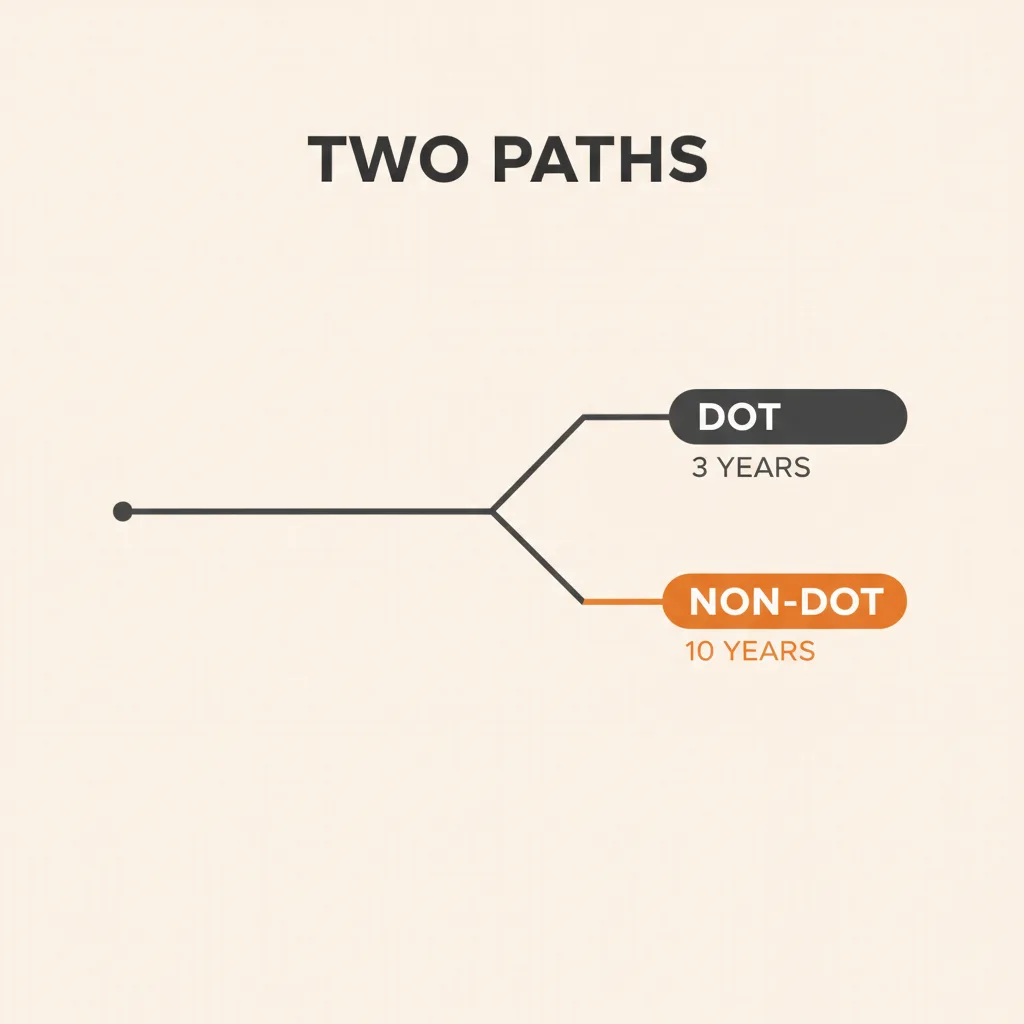
The single most common source of confusion in driver qualification files is treating "employment history" as one requirement with one lookback period. It's two requirements with two different scopes.
Clock one — the application. Under 49 CFR 391.21(b)(11), the employment application must capture the applicant's employment history. For drivers subject to CDL requirements, FMCSA's guidance and the companion notification rule at 49 CFR 383.35 push that history out to ten years of commercial motor vehicle employment. For non-CDL drivers, the application requirement is three years.
Clock two — the investigation. Under 49 CFR 391.23, the prospective employer must conduct a safety performance history investigation of the applicant's DOT-regulated employers during the preceding three years. That investigation has specific content requirements: general employment verification, accident history, and — where the applicant held a safety-sensitive position — drug and alcohol testing history.
The gap between those two clocks is where files fail. Years four through ten are on the application but outside the §391.23 investigation. Non-DOT employers inside the three-year window are on the application but outside the §391.23 investigation. In both cases the entry is on the form, the auditor can see it, and nothing in the file shows anyone ever confirmed it was true.
§391.23 tells you which employers you must investigate under a specific protocol. It does not tell you that the rest of the application can go unverified.

What Counts as Non-DOT Employment
An employer falls outside §391.23's mandated investigation when the applicant's position there was not a safety-sensitive function for a DOT-regulated entity. In practice, on real applications, this means:
- Non-transportation jobs entirely — warehouse, retail, food service, construction, manufacturing, landscaping
- Driving jobs below CDL thresholds — box trucks under 26,001 lbs, delivery vans, courier work for non-regulated employers
- Employers outside the three-year window — a DOT-regulated carrier the applicant left four years ago is on the ten-year application but outside the §391.23 investigation
- Self-employment and owner-operator periods where the applicant was not leased to a regulated carrier
- Gaps — unemployment, education, incarceration, caregiving, military service
That last category deserves its own note. A gap is not an absence of information; it is a claim. "Unemployed, March 2023 to January 2024" is an assertion about the applicant's history, and a defensible file documents what you did to test it.
Why Databases Can't Touch This
The verification tooling built for DOT compliance is scoped to DOT data. That's the point of it, and it's also its limit.
The Drug and Alcohol Clearinghouse contains violation and testing records for CDL holders in safety-sensitive positions. PSP returns FMCSA crash and inspection data for regulated carriers. Neither system has any record of the eight months an applicant spent on a warehouse floor.
Commercial instant-verification databases have a different problem: coverage skew. Their records come from payroll processors and large employer contributions, which means they cover big national employers well and small regional ones poorly. The non-DOT entries on a driver's application are disproportionately small employers — a two-truck landscaping company, a regional food distributor, a family construction business. Those are precisely the records the databases don't hold.
The result is that the harder half of a driver's employment history is also the half no automated system will resolve. Someone has to call.
The Manual Non-DOT Verification Workflow
This is the sequence that produces a file an auditor can follow. It runs in parallel with your §391.23 requests, not after them — waiting for the DOT investigations to close before starting the non-DOT work is how carriers blow their onboarding timelines.
1. Segment the application on intake. Before any outreach, mark every employer entry as DOT-regulated in-window, DOT-regulated out-of-window, non-DOT, self-employment, or gap. Each segment gets a different protocol. Doing this at intake rather than midstream is what keeps the two clocks from blurring.
2. Confirm the employer exists and find the right contact. For small employers this is the actual work. Business registration lookups, the state secretary of state database, and a plain web search will usually establish whether the company is still operating and produce a current number. Record what you searched and what you found, including dead ends.
3. Call, with a specific ask. Non-DOT verification is narrower than a §391.23 inquiry. You are confirming dates of employment, position held, and — where the employer will provide it and your permissible purpose supports it — reason for separation. You are not asking for drug and alcohol testing records, because the employer has no DOT obligation to hold or release them.
4. Escalate through channels, not through repetition. A second and third call to the same unanswered line is not a good-faith effort; it's the same effort three times. Move to email, then to a written request, then to a documented alternate contact. Our guidance on how CRAs handle the long tail of unresponsive employers covers the escalation ladder in detail.
5. Document the negative outcomes too. A verification you could not complete is a fact about the file. "Employer defunct — confirmed dissolved with state registry on 2026-07-14, registry screenshot attached" is a defensible entry. A blank line is not.
6. Reconcile gaps against adjacent employers. When an applicant claims a gap between two jobs, the end date from the prior employer and the start date from the next one should bracket it cleanly. Overlaps and mismatches are the signal worth chasing.
What Auditors Actually Look For on Non-DOT Entries
FMCSA compliance reviews focus on §391.23 because that's the mandated investigation, and incomplete pre-employment screening is a perennial top finding. But the file gets read as a whole, and reviewers notice patterns.
The findings that recur on the non-DOT side:
- Unexplained blanks. An application entry with no corresponding verification record and no documentation of attempts.
- Timeline holes. Ten years of required history with fourteen months unaccounted for and nothing in the file acknowledging it.
- Undated notes. "Called, no answer" without a date, time, number dialed, or the name of the person who called.
- Verification by applicant. Using a phone number the applicant supplied, reaching someone who confirms everything, and never independently establishing that the number belongs to the employer.
That last one is worth dwelling on. A verification is only as good as the independence of the contact path. If the applicant provides the number and the applicant's friend answers it, the file contains a confirmation and no verification. For the broader picture of what reviewers request and how they probe, see what FMCSA audit reviewers look for in CDL employment verification.
How Superunit Completes the Non-DOT Long Tail
Superunit was built for exactly the segment that databases skip. Our model is that automated outreach handles the sequence — dialing, navigating phone trees, holding, re-attempting across business hours and time zones, escalating to fax and email on schedule — while human specialists handle the exceptions that need judgment.
That split matters most on non-DOT entries, because non-DOT employers are where the exceptions concentrate. A two-person landscaping company has no HR department, no verification line, and no process. Getting a real answer out of it means reaching a specific person at a specific hour and asking a question they've never been asked before.
Superunit has completed more than 200,000 verifications, and the model was built for this hard segment specifically — the cases that arrive because a database already returned nothing.
What Superunit Logs on Every Non-DOT Verification
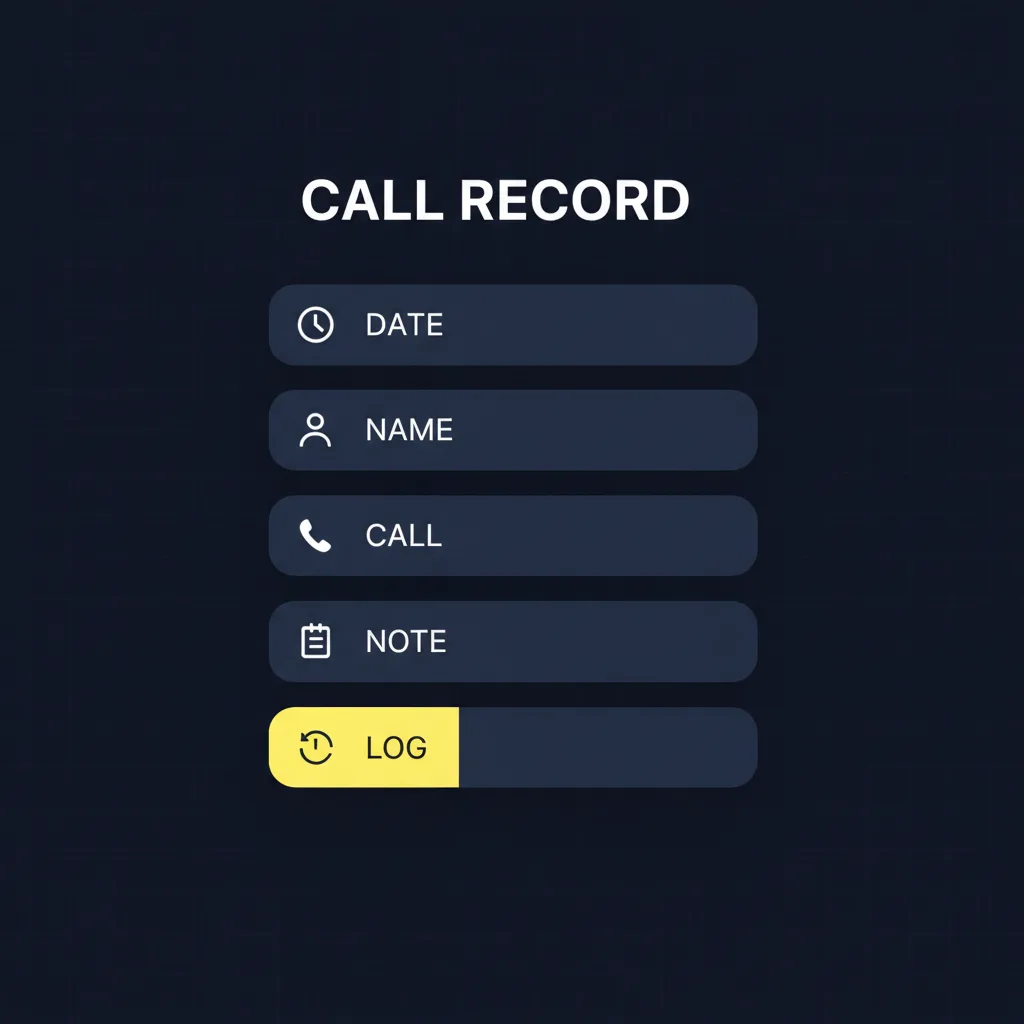
What comes back only matters if it survives a compliance review. Every Superunit verification produces a structured record built for the DQ file rather than for a dashboard:
| Field | What it captures |
|---|---|
| Contact path | The number or address used, and how it was independently sourced |
| Attempt log | Every attempt with date, time, channel, and outcome |
| Respondent | Name and role of the person who provided the information |
| Data returned | Dates of employment, position, separation reason where provided |
| Discrepancies | Any conflict with the applicant's stated history, flagged |
| Terminal status | Verified, refused, defunct, or unreachable — with supporting evidence |
The distinction that matters at audit is between "we couldn't verify this" and "here is the documented sequence of attempts that establishes we tried in good faith and here is what we found." The second is a defensible file. For how this documentation chain fits the broader qualification file, see building a DOT driver qualification file audit trail.
Frequently Asked Questions
Is manual verification of non-DOT employment legally required? §391.23's mandated safety performance history investigation applies to DOT-regulated employers in the preceding three years. Non-DOT entries fall outside that specific requirement. However, the application itself must be complete and accurate under §391.21, and carriers carry independent negligent-hiring exposure for unverified history. Most compliance programs verify the full application as a matter of policy. Confirm your own obligations with counsel.
How far back should we verify non-DOT employment? Match the application requirement. For CDL applicants that is generally ten years; for non-CDL drivers, three. Verifying less than what the application captures leaves visible unverified entries in the file.
What if a non-DOT employer refuses to release anything? Document the refusal with date, contact name, and stated reason. A documented refusal is a complete record. Many small employers have blanket no-verification policies, and that fact belongs in the file rather than being retried indefinitely.
Can we accept W-2s or pay stubs instead of employer contact? Applicant-supplied documents can support a verification but shouldn't replace independent employer contact, because they share the same weakness as an applicant-supplied phone number. Where they're the only available evidence, note that explicitly.
Does the 30-day response window apply to non-DOT employers? No. The 30-day obligation in §391.23 binds DOT-regulated previous employers responding to a safety performance history request. A non-DOT employer has no federal obligation to respond at all, which is why the escalation ladder and good-faith documentation carry more weight on these entries.
The Entries No System Will Close for You
The DOT compliance stack is genuinely good at the part of a driver's history it was designed for. Clearinghouse queries, PSP reports, and §391.23 request workflows handle regulated employers inside the three-year window efficiently.
Everything else on the application — the small employers, the non-transportation jobs, years four through ten, the gaps — is a manual outreach problem, and it will stay one. The question isn't whether to work it. It's whether the work produces a record an auditor can follow.
If your team is spending its week on hold with employers that were never going to be in a database, see how Superunit handles outreach-required verification.