TL;DR
An employment verification waterfall runs each applicant through sources in order of speed and cost until one returns a result: an instant database first, a borrower-permissioned payroll link second, and direct outreach to the employer last. Every lender and screener we talk to runs some version of it, whether through an aggregator, inside the loan origination system, or as a person working a queue. The first two tiers are fast and cover a lot of files. The third tier is where completion rate, turnaround, and cost per verification are actually decided, because everything the databases miss lands there. What happens when the Work Number can't verify covers the sequence for a single file that falls through. This post is about designing the stack itself: how the tiers work, where each one fails, the decisions that set your numbers, and how Superunit runs the fallback tier.
Why No Single Source Verifies Everyone
The Work Number holds payroll records for the employers that contribute to it, which skews heavily toward large employers; small employers are much less likely to contribute. Payroll-link products like Truv and Argyle can reach anyone on a supported payroll platform, but only if the borrower clicks the link and logs in. The long tail of small employers, nonprofits, school districts, and anyone whose payroll isn't connected to either is reachable one way: someone contacts the employer and asks.
A lender's or screener's applicant mix determines how much lands in each bucket. A consumer lender with an older borrower base told us its customers "are not as trustworthy with, let me click on this link and give you information about me," so its payroll tier converts poorly and more files fall through. A bank told us that even when the Work Number returns a record, it isn't always sufficient for some employee populations, healthcare staff in particular, and the file goes to a person anyway. A closing team pointed out that database records are only as current as the employer's last upload, so a borrower whose employer contributes monthly can show a pay date outside the window the file needs.
These are coverage gaps rather than vendor failures, and the waterfall exists to route around them.
The Three Tiers
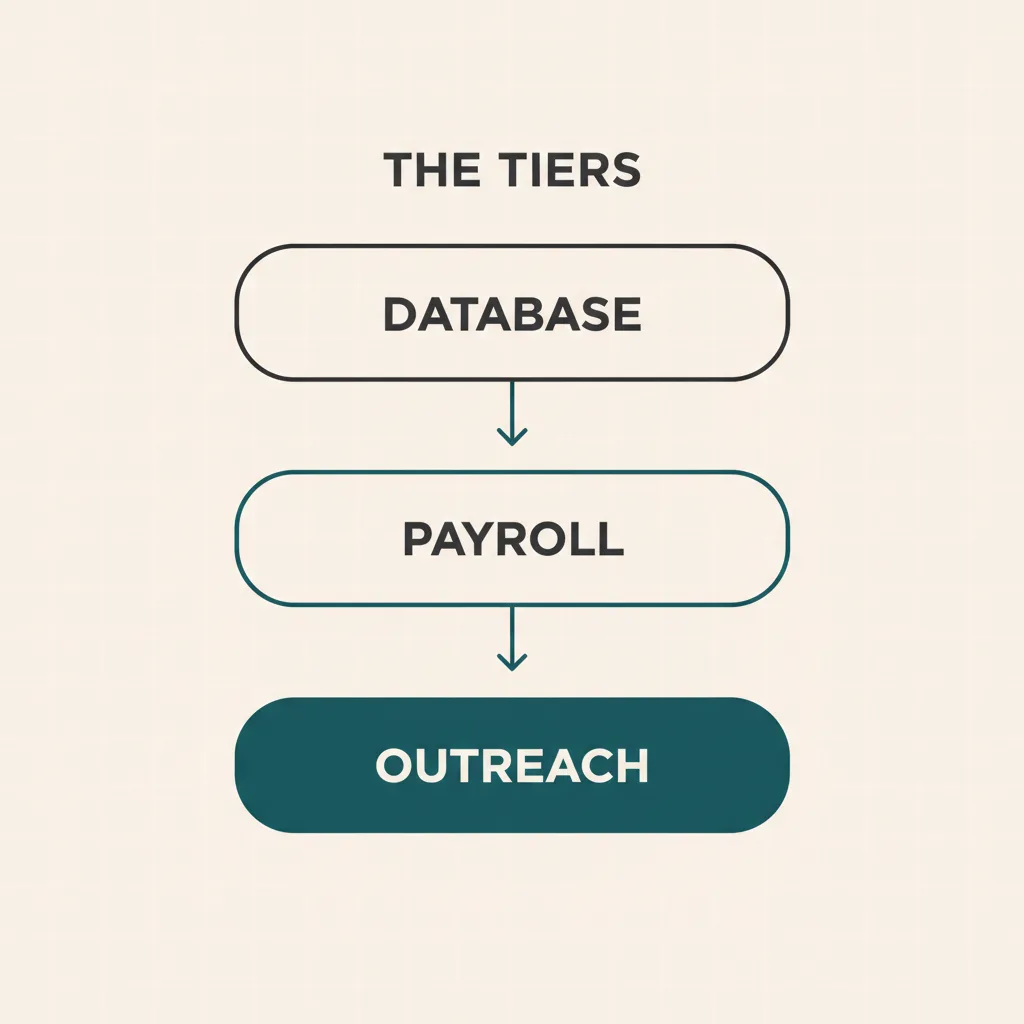
| Tier | What it is | Time | Cost shape | Fails when |
|---|---|---|---|---|
| 1. Database | Instant lookup against contributed payroll records (The Work Number is the largest; Experian Verify also offers an instant tier) | Seconds | Per hit, on every file you run | Employer doesn't contribute; record stale; populations the record doesn't describe well |
| 2. Payroll link | Borrower logs into their payroll provider through a consented link (Truv, Argyle) | Minutes to days, gated on the borrower | Per completed connection | Borrower doesn't click, can't connect, or isn't on a supported platform |
| 3. Outreach | Someone contacts the employer by phone, email, or fax and documents the answer | Hours to days | Per attempt or per result, plus labor | Nobody answers, employer redirects to a third party, verifier needs a release |
A few operations add a tier zero: ask the applicant for a pay stub or a completed VOE form first. One regional bank recently adopted that policy, specifically to stop loan officers defaulting to the Work Number on every file. A CRA building its waterfall from scratch put income products at tier one, outreach at tier two, and the Work Number at tier three, with the stated goal of reaching the third tier only when a client requires it.
Who Runs the Waterfall
Three patterns show up:
- An aggregator. A single vendor sits in front of the tiers, routes each order, and sends one bill. One lender described its aggregator starting at the payroll link, waiting a day for the borrower, then falling through two databases before a manual team. The convenience is real, and so is the bill: the manual step carried a per-file surcharge on top of the pass-through cost of whichever source finally answered.
- The LOS. Database and payroll tiers fire automatically from Encompass or a similar system, and whatever comes back empty drops into a queue. One lender's closing team described a funding assistant "working out of that pipeline view and working on those VOEs one by one," sourcing the employer's phone number, calling HR, leaving voicemails, and emailing the borrower's authorization when a verifier won't do a verbal.
- A person. Smaller lenders and credit reporting agencies skip the tooling and run tier 3 by hand, or send it to a vendor's manual research service and wait.
In every pattern, the manual tier is the expensive one, the slow one, and the one nobody wants to own. One credit reporting agency executive told us he turns down verbal VOE work unless a client insists.
The Design Decisions
Order. Cheapest and fastest first is the default, but it isn't always right. If the database charges per hit and your mix has a lot of small employers, you pay for misses. Some operations put a document request (pay stub, signed VOE form) ahead of the database for that reason. For DOT employment history and reference checks there is no database tier; outreach is the only tier.
Timeouts. The payroll tier is gated on a human clicking a link. The aggregator above waited 24 hours. A closing team objected to anything longer, since 48 hours before learning a tier failed is a lot inside a 10-day pre-closing window. Set the timeout by your own deadline.
What counts as done. A database hit can still leave the file incomplete. If the record is stale relative to the funding date, or the population isn't well represented, the file still goes to tier 3. Define "done" as sufficient for the file.
The last two decisions are about the outreach tier itself.
Attempt rules at tier 3. The teams that run outreach well set an explicit cadence and a close-out. One CRA standardized on three attempts over three days and finalizing on the third day, for every service, for consistency. Without a rule, files sit open and nobody knows when to stop.
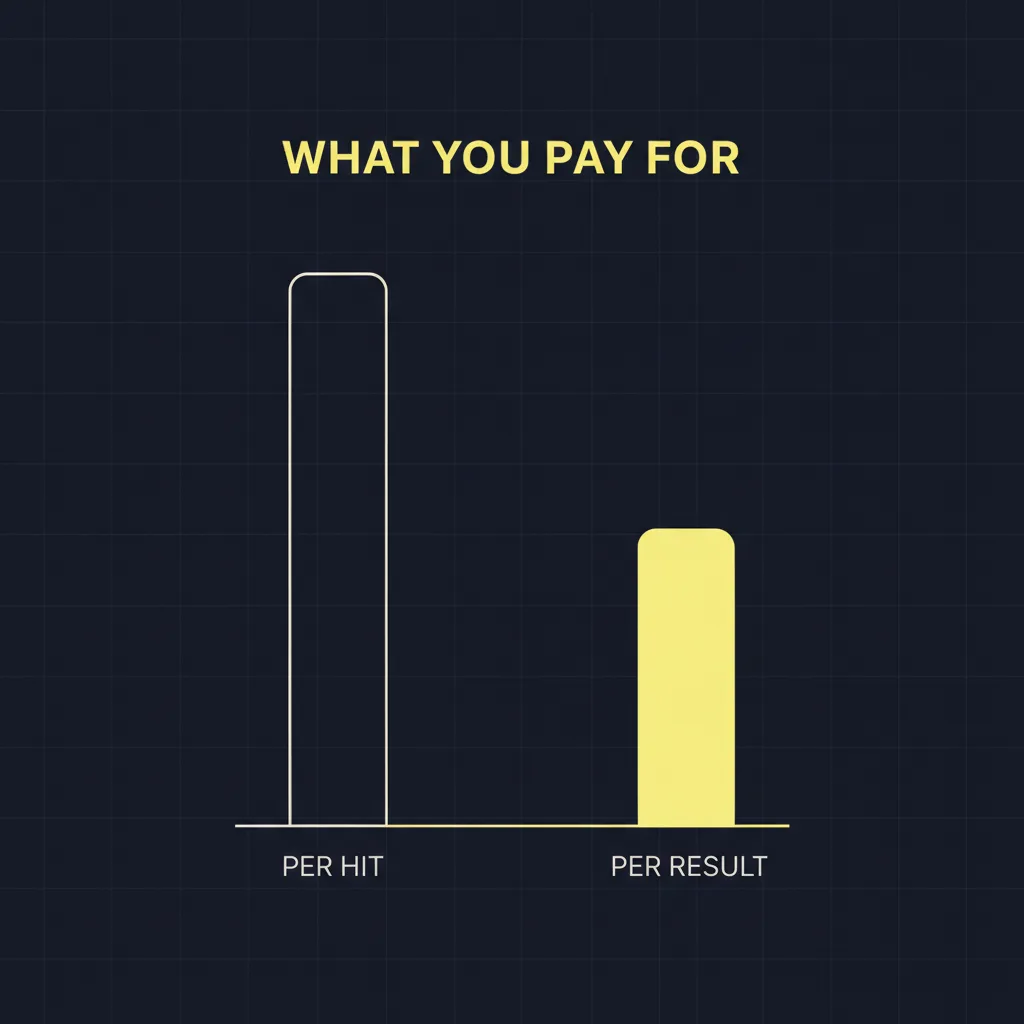
Billing basis. Tier 1 typically charges per hit. Tier 3 vendors charge per attempt, per file, or per result. Per result is the basis that ties the vendor's revenue most directly to your outcome.

Where the Waterfall Breaks
The failure modes we hear about are consistent across lenders and screeners:
- Paying tier 1 for hits you don't need. When loan officers run the database on every file, the bill scales with volume. The bank that changed its policy described the spend as the reason.
- The manual surcharge. Aggregators that route to a manual team charge for it on top of the source fee, so the hardest files are also the most expensive ones.
- The queue. When tier 3 is a person, turnaround is whatever the queue allows, and the queue grows exactly when volume does, which one closing team described as a different game entirely in a busy month.
- The 48-hour silence. A tier that fails quietly after two days has cost you two days you can't get back inside a closing window.
- Re-keying. Results from three tiers land in three formats and someone reconciles them against the LOS by hand. One lender's first question about any new tier was whether its notes would land in the conversation log or need custom fields.
- Sourcing. For a verbal VOE the file needs more than the answer: who was spoken to, the phone number, how the number was sourced, the date, and the verifier's signature. A tier-3 process that doesn't capture that by default produces results an underwriter can't use.
What a Thousand Files Look Like
The math is simple once you know your fall-through rate. Suppose 1,000 files a month, and that a third get no usable result from tiers 1 and 2. That's roughly 330 that reach tier 3. If tier 3 is a person, and you assume a verification cleared every 20 to 30 minutes including callbacks (a planning figure; measure your own), that's 110 to 165 hours a month, which is two-thirds to all of one full-time employee doing nothing else, with turnaround set by their backlog. If tier 3 is a vendor's manual research service or an aggregator's manual team, assume a per-file fee in the tens of dollars on top of the pass-through, and turnaround you don't control.
Now hold the fall-through rate constant and change only the tier-3 completion rate. At 50%, you close 165 of those files and 165 go back to the borrower for documents. At 70%, you close 231 and 99 go back, with nothing upstream changed. The fallback tier moved your overall completion rate by more than six points on its own.
How Superunit Runs the Fallback Tier
Superunit is built to be tier 3. The order comes in by API, portal, or bulk upload, after your database and payroll tiers have come back empty, and AI agents contact the employer by phone, email, and fax.
- Completion. Superunit's employment verifications close at a 70% completion rate with average turnaround under 24 hours. Files that can't be completed in three business days are closed out as unable to verify, so the file never sits open.
- Price on result. Employment verifications cost under $5 and are billed only when a result is returned. A miss costs nothing, so the bill tracks results rather than attempts.
- Redirects handled. When an employer sends the verifier to the Work Number or another third party, the result says so, with the employer's instructions, so the file routes without a person re-discovering it.
- The record the file needs. Every result carries the contact used, how it was sourced, who answered, the date and time, and the transcript or message, in one format regardless of channel. That's what makes a tier-3 result usable for a verbal VOE form or an audit.
- No database tier required. Some operations run Superunit as tier 1 for employment status and dates and reserve the database for income. Either way, the result format is the same one behind Superunit's 200,000+ verifications.
The Work Number cost post covers the per-hit model in detail, and what happens when the Work Number can't verify covers the moment a file falls through. For how the sources compare head to head, see Argyle vs. Truework vs. The Work Number vs. Superunit.
Frequently Asked Questions
Do I still need the Work Number if I have a good fallback tier? For income verification on conventional loans, often yes, because GSE rep-and-warrant relief programs such as Day 1 Certainty and AIM only accept data from their approved verification vendors, which include the database and several payroll-link providers; a verbal result from the fallback tier doesn't qualify. For employment status and dates, a fallback tier with a documented result does the job, and some operations have moved the database to the last position for exactly that reason.
Can the outreach tier be the first tier? Yes, when the file needs employment confirmation rather than income, or when the applicant mix is heavy on employers the databases don't cover. DOT employment history and reference checks have no database tier at all.
How long should I wait on the payroll-link tier before escalating? Set it by your deadline. 24 hours is common. If you're inside the 10-day pre-closing window, shorter. What waiting costs you is a day off your close.
How does a verbal VOE from the fallback tier get into the file? The result needs the fields the form needs: employer name, person spoken to, phone number and how it was sourced, title, hire date, verifier, and date. A tier-3 provider that returns those by default saves the re-keying; one that returns a yes/no doesn't.
Does a waterfall work for background screening the way it does for mortgage? The tiers are the same, but screeners have been slower to adopt the payroll link, so most run database then outreach. The fallback tier carries more of the volume as a result.
Pulling It Together: Where Superunit Fits in the Waterfall
The first two tiers are largely standardized: fast, priced per hit or per connection, and similar from one operation to the next. The third tier is where operations differ, because it absorbs every file the first two missed and sets the completion rate, turnaround, and cost of the whole process. Treat it as the tier you design on purpose, with a completion rate you measure, a close-out rule, a billing basis that only charges for results, and a record format the file can use. Superunit is built to be that tier, at 70% completion and under 24 hours average turnaround, under $5 and billed only on result.