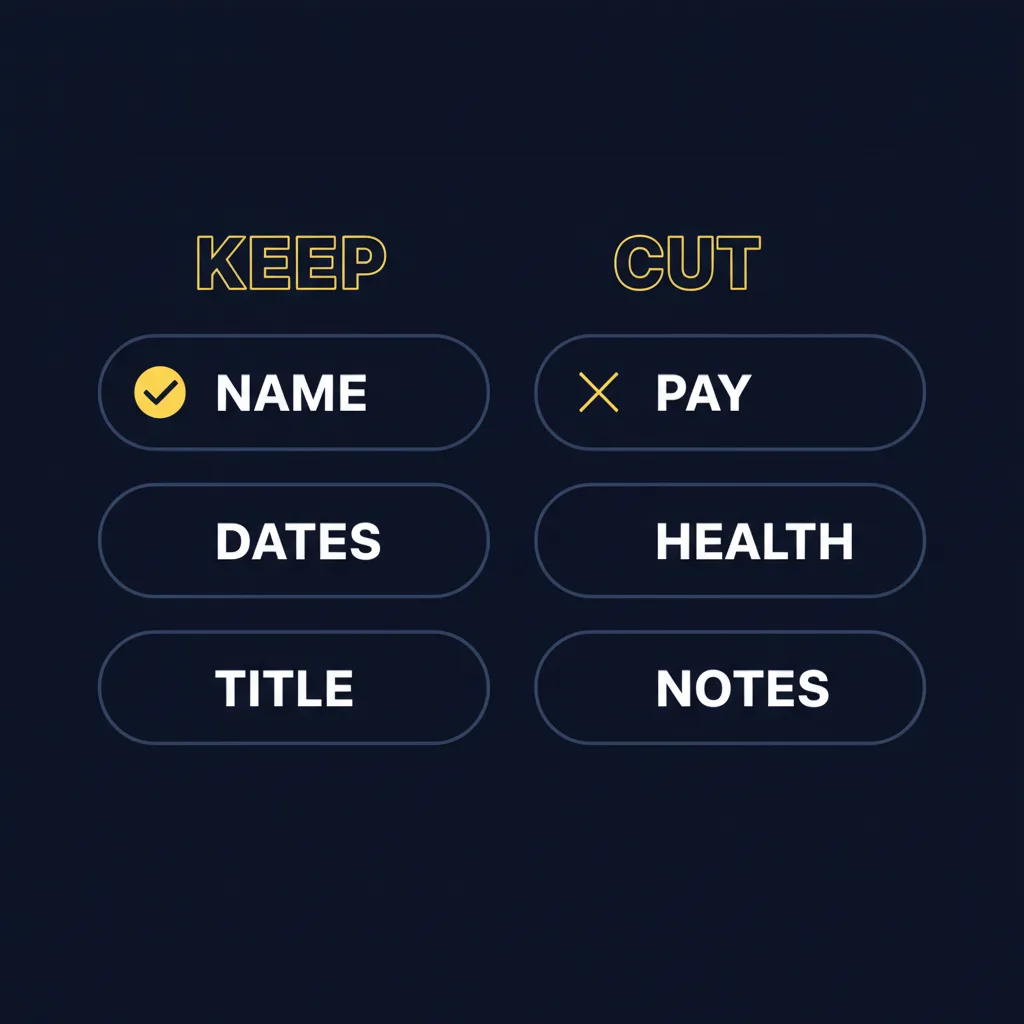
An employment verification letter is a short document on company letterhead that confirms an employee's job title, dates of employment, and employment status — plus income, when the employee has authorized that disclosure in writing. This page gives you three free copy-paste employment verification letter templates, one for each requester you'll actually hear from: a standard third-party letter, a proof of income letter for landlords, and a mortgage-ready VOE letter built around Fannie Mae Form 1005.
TL;DR
An employment verification letter is a signed statement from an employer confirming that someone works or worked there, typically covering job title, employment dates, and status. Lenders, landlords, background screeners, and government agencies all request one, and each expects slightly different fields.
Below are three copy-paste templates, each built for a specific requester:
- Standard third-party letter for agencies, other employers, and government requesters who need job title, dates, and status confirmed.
- Proof of income letter for landlords and property managers screening a tenant, where salary or income confirmation is the point.
- Verification of employment letter for mortgage and lending underwriters, who expect letterhead, base salary, and a direct verifier contact.
Two errors invalidate more letters than anything else. Missing or unverifiable employer contact information kills the callback step, and disclosing salary without written authorization exposes you to a compliance problem.
If you handle these requests at volume, a section further down covers outsourcing the outreach directly rather than drafting each letter by hand.
What is an employment verification letter, and when do you need one?
An employment verification letter confirms a few narrow facts about a person's employment for a third party who needs to trust them. It states that someone works or worked for you, their job title, and their dates of employment, sometimes with income if the employee has authorized that disclosure. A reference letter, by contrast, offers opinions about performance and fit, and a background check report pulls together criminal, credit, and other records from outside sources. The verification letter stays factual and stays inside what your own records can prove.
Three requests account for nearly all the letters HR teams write. A third party such as a staffing agency, another employer, or a government office asks for basic confirmation of employment. A landlord or property manager asks for proof that a rental applicant earns enough to cover rent. A mortgage lender or underwriter asks for detailed employment and income facts to approve a loan. The three templates below map directly to those requests.
Who signs the letter matters as much as what it says. Most verifiers expect an HR representative, a direct manager, or a designated verifier whose contact information they can call back to confirm the letter is real. Authorization matters just as much. You should have the employee's written consent before releasing anything beyond title and dates, since salary and other sensitive fields can trigger state disclosure and salary-history restrictions if you share them without permission.
What should an employment verification letter include — and leave out?
| Letter type | Confirms | Typical requester |
|---|---|---|
| Standard third-party | Job title, dates, employment status | Staffing agencies, other employers, government offices |
| Tenant screening | Job title, dates, and income (with authorization) | Landlords, property managers |
| Mortgage/lending | Job title, dates, base salary, employment type, continuance | Loan officers, underwriters |
Four fields belong in every verification letter regardless of who asks. State the employee's job title, their dates of employment, whether they are currently active or separated, and a way for the verifier to reach your company directly. A verifier reads those four items to confirm the person worked where they claim, for as long as they claim, in the role they claim. Leave one out and the letter bounces back with a follow-up question, which restarts the clock.

Salary and reason for leaving are conditional. Do not include either unless the employee has authorized it or the request itself carries proper authorization. Several states restrict how salary history gets disclosed, so releasing pay figures without written consent creates exposure you do not want. When a landlord or lender needs income, confirm you have the authorization in hand before typing a number, not after.
Formatting is what separates a letter a verifier trusts from one they treat as suspect. Put the letter on company letterhead, date it, and sign it with a real name and title rather than a generic signature block. Include a direct callback number that reaches a person who can confirm the details, not a general switchboard. Verifiers almost always call to confirm, and a letter that routes them to a dead-end line reads as unverifiable even when every fact in it is correct.
Keep the dates consistent with what your payroll and HR systems show. A start date on the letter that disagrees with the record a background screener pulls independently triggers a follow-up call at minimum, and can put the whole letter under closer scrutiny. Pull the numbers straight from your system of record before you draft, so nothing in the letter contradicts what a verifier finds when they check.
Standard third-party employment verification letter template
Most verification requests you field are the generic kind. A staffing agency, another employer running a pre-hire check, or a government office confirming eligibility for benefits sends a request, and all they need is confirmation that the person worked for you, in what role, and for how long. No salary, no income figures, no separate authorization required unless the requester specifically asks and the employee has consented. This is the letter to reach for when someone just wants proof the employment relationship existed.
Because it omits income, this version carries the least compliance risk of the three. You can send it on a standard confirmation of job title, dates, and current status without triggering salary-history restrictions that vary by state. Keep it short. A verifier scanning dozens of these a day wants the facts and a callback number, not a narrative.
Requests like this one are exactly what Superunit's verification service handles directly for employers, so you can send this template yourself for a one-off request, or route repeat requests to Superunit once the volume stops being occasional.
Copy the template below and replace the bracketed fields.
[Company Letterhead]
[Date]
To Whom It May Concern,
This letter confirms the employment of [Employee Full Name] with [Company Name].
Job Title: [Current or Most Recent Job Title]
Employment Status: [Full-time / Part-time / Contract]
Dates of Employment: [Start Date] to [End Date or "Present"][Employee Full Name] remains employed with our organization as of the date of this letter. / [Employee Full Name] was employed with our organization for the dates listed above.
If you require further verification, please contact me directly using the information below. We can only release additional details, including compensation, with the employee's written authorization.
Sincerely,
[Verifier Name]
[Title]
[Company Name]
[Direct Phone Number]
[Email Address]
The direct phone number does the real work here. It lets the requester close the loop by callback, which most third parties treat as the actual confirmation step, more than anything printed above it. The authorization line backs that up by making clear that salary and other sensitive details stay locked until the employee signs off. Keep both even when the current request looks simple, since the same requester often comes back asking for more.
Prefer a formatted file? The download mirrors the plain text above, with a letterhead band you can swap for your own and a before-sending checklist to delete once the fields are filled.
Download the standard letter template (.docx)
Proof of income letter for tenant screening requests
Landlords and property managers ask for income confirmation because most run applicants against an affordability rule of thumb, commonly rent at or below roughly a third of gross monthly income, though the exact ratio varies by landlord and market. A generic verification letter that only confirms job title and dates fails that test, because the reviewer cannot check the ratio without a salary figure. When you write for this audience, lead with the income detail they will actually calculate against.
State income as a specific number tied to a pay period, and match it to how the applicant reported it on the rental application. A screener comparing your letter to a paystub or the applicant's stated income will flag any gap, so confirm annual base salary or an hourly rate with typical scheduled hours rather than a vague "competitive compensation" phrase. If the applicant listed variable pay like commission or bonuses, note whether that income is regular or discretionary, since landlords weigh guaranteed income differently.
Disclosure authorization sets the boundary here. Some states and cities restrict what an employer can say about salary history, and you should confirm the applicant has signed a release covering income before you put a dollar figure in writing. When you have that release, name the field plainly. When you do not, confirm employment and status only, and note that salary can follow once written authorization is on file. That single line protects you from disclosing compensation the applicant never agreed to share.
Employment stability matters as much as the number. Landlords are underwriting a year or more of rent, so state whether the role is full-time, part-time, or seasonal, and confirm the employment start date so the reviewer can gauge tenure. If the position is at-will with no defined end, say so directly rather than implying permanence you cannot promise.
Plain-text template
Copy the block below and replace every bracketed field. Keep it on company letterhead with a dated signature and a direct callback number for the verifier.
[Company letterhead]
[Date]To Whom It May Concern,
This letter confirms that [Employee Full Name] is currently employed by [Company Name] as a [Job Title], with a start date of [Start Date]. Their employment status is [Full-Time / Part-Time / Seasonal].
With the employee's written authorization, we confirm gross compensation of [$Amount] per [year / hour], based on [Scheduled Hours, if hourly]. [Note any regular variable income here, or delete.]
Direct questions to [Verifier Name], [Title], at [Phone] or [Email].
Sincerely,
[Signature, Name, Title]
If you'd rather work from a formatted file, the same letter is available as a download. The plain-text block above stays the primary copy-paste artifact on this page.
Download the proof of income letter template (.docx)
Verification of employment letter for mortgage and lending underwriting
Mortgage underwriters read verification letters more closely than any other requester, and a letter that satisfies a landlord will often bounce back from a loan file. Underwriters have to defend every income figure they put into a debt-to-income calculation, so they want language that leaves no room for interpretation. A vague phrase like "earns a competitive salary" is useless to them. They need the exact base salary, the pay frequency, and whether the figure is guaranteed or variable.
Base salary draws the closest scrutiny, stated as an annual or hourly figure with the pay period spelled out, so the underwriter can convert it cleanly into monthly qualifying income. Employment type matters almost as much, since full-time, part-time, contract, and seasonal work all get treated differently in a debt-to-income calculation. Likelihood of continued employment sounds like a soft detail, but a letter that stays silent on it can trigger a follow-up call anyway, because underwriters want some signal that the borrower's income will persist through the life of the loan.
Because a lender may resell the loan, the letter usually needs to sit on company letterhead with a dated signature and a direct callback number for the person who signed it. A general HR line that routes to a queue slows the file down. Underwriters call to confirm, and they want to reach the named verifier without navigating a phone tree.
Many conventional lenders use or reference Fannie Mae Form 1005, the standard Verification of Employment form, as the format their underwriters expect. You do not have to complete the 1005 itself to satisfy a request, but a free-text letter should cover the same fields the form captures. If your letter includes current and past base pay, employment dates, position, hours, employment type, and a note on continuance, it can substitute cleanly in the loan file without a second request.
[Employee Name] has been employed with [Company Name] since [Start Date] in the position of [Job Title], on a [full-time / part-time] basis. Their current base salary is [$Amount] per [year / hour], paid [pay frequency]. Based on current business conditions, we have no reason to anticipate a change in their employment status. For verification, contact [Verifier Name] at [Direct Phone] or [Email]. Signed, [Verifier Name, Title], [Date].
The download below is a formatted version of this letter built to mirror the 1005 fields, so you can hand underwriters a document they recognize on sight.
Download the mortgage VOE letter template (.docx)
What mistakes delay or invalidate an employment verification letter?
Most rejected verification letters fail for the same handful of reasons, and each carries a real cost to the person waiting on it.
Missing or unverifiable employer contact information stalls letters more than any other defect. A verifier who cannot reach a live person to confirm the letter treats it as unverified, which means a mortgage file sits until the underwriter gets a callback and a rental application moves to the next candidate. Put a direct phone number that reaches someone who can confirm the details, not a general HR mailbox or a switchboard that dead-ends in voicemail.
Unauthorized salary disclosure creates the opposite problem. Instead of delaying the request, it exposes you. Many states and cities restrict how employers can share compensation, and some tie salary disclosure to written authorization from the employee. When a letter lists salary without that authorization on file, you have handed the requester grounds to challenge the process and the employee grounds to complain. Confirm you have signed authorization before any number goes in the letter, and leave salary out entirely when the request does not require it.
Inconsistent dates are the quiet failure. Your HR system, your payroll system, and the manager's memory often disagree by a few weeks on a hire or termination date. A landlord comparing your letter to a pay stub or a lender cross-checking against tax records will flag the mismatch and ask for a corrected letter, which restarts the clock. Pull dates from the system of record, usually payroll, and verify them against the request before you sign.
Each of these sends the requester back for a second letter. Auditing for all three before you send costs a few minutes and spares you the repeat request, the delayed closing, or the rejected application that follows a sloppy one.
After the letter is sent: what verifiers do next
Sending the letter rarely ends the request. Most verifiers on the receiving end will not accept a letter at face value. They call the number on the letterhead, confirm the details with a live person, and note the date and name of whoever answered. A phone call is harder to fake than a printed letter, so lenders and screeners treat that conversation as the real verification and the letter as supporting paper.

That callback is where your HR time actually goes. Drafting a template takes minutes. Fielding the follow-up calls, pulling up the employee's record again, and confirming dates and title on the spot pulls someone away from other work, and the calls arrive without warning.
The cost compounds for any employer with real headcount. A single former employee can generate a landlord check, a mortgage verification, and a CRA request inside the same month, each with its own callback. Multiply that across everyone who rents, buys, or changes jobs, and confirmation calls become a steady background load that no template removes.
When it's faster to let Superunit handle verification requests than draft them yourself
Once a single HR person is fielding verification requests for a few hundred employees, drafting letters by hand stops being a reasonable use of anyone's time. The letter itself takes ten minutes. The callback confirmation, the voicemail tag, the second request when the first letter had a stale end date, and the landlord who insists on speaking to a live verifier are what eat the afternoon. Superunit is an AI outreach service that runs employment and income verification for you across phone, email, and fax, as a direct vendor rather than a database or software subscription, so you stop being the phone line for every agency, landlord, and lender that asks.
The narrow-scope argument is the one worth making plainly. When a lender or property manager asks only for confirmation of employment and income, buying a full background-check package is the wrong tool. You do not need criminal records, credit pulls, or a bundled report priced for a hiring decision. You need one fact confirmed and documented. Superunit does verification-only outreach across phone, email, and fax, scoped to exactly what the request asks for and nothing more. The same approach applies whether you're fielding an inbound request from a CRA or lender or initiating verification yourself.
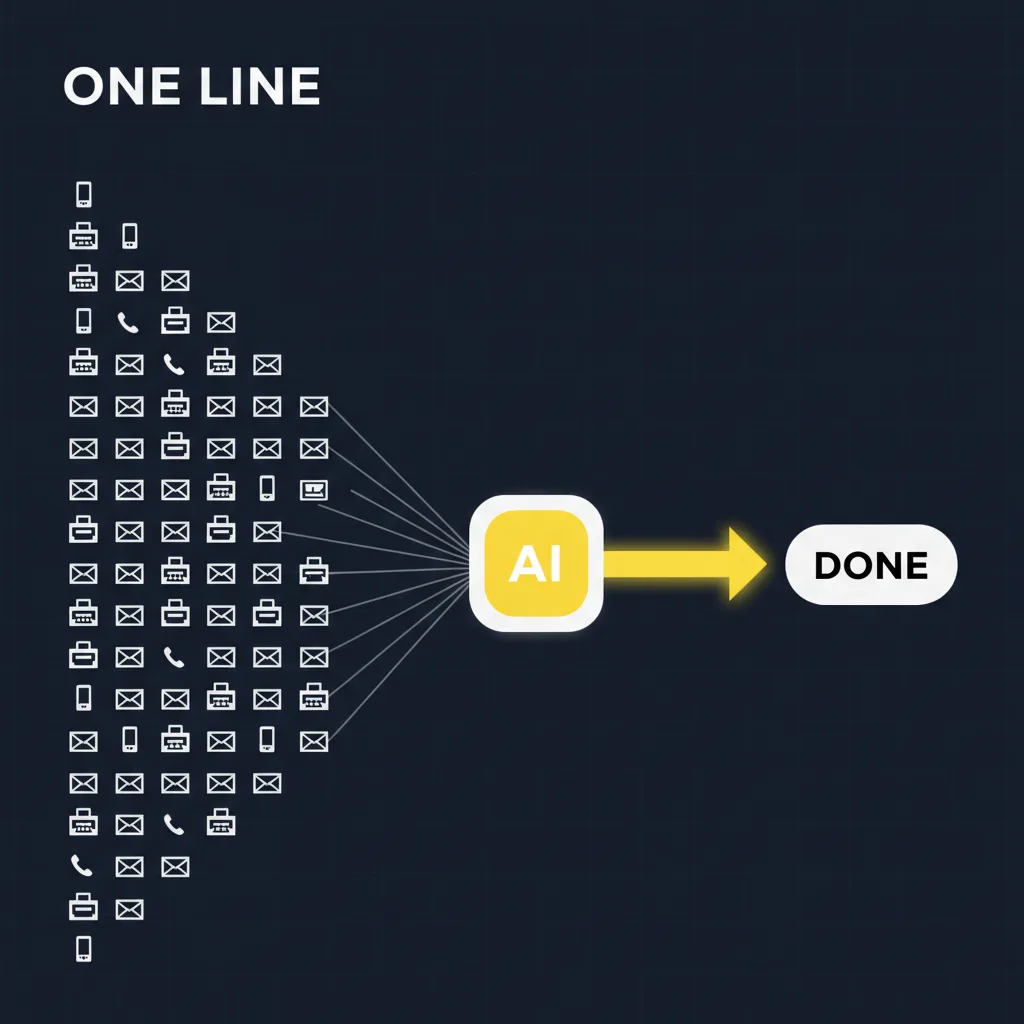
The mechanism is straightforward. You hand off the incoming request, Superunit's AI reaches the requester on whatever channel they prefer, confirms the authorized fields, and returns a documented result you can drop into the file. Because the outreach runs across all three channels at once, a mortgage underwriter who only accepts faxed confirmations and a landlord who wants a callback get handled the same day without you touching either. That documentation matters if a dispute ever surfaces. An audit trail showing who was contacted, on which channel, and what was confirmed is exactly what a screener or lender needs to defend the file under FCRA recordkeeping requirements.
This is not a free routing tool that forwards requests to a CRA. You hire Superunit to run the verification workflow itself, and the capacity does not depend on your headcount. When request volume spikes during leasing season or a refinancing wave, outsourced verification outreach absorbs it without you hiring a temp to answer the phone.
FAQ
Can an employer refuse to provide a verification letter? In most states, no law forces a private employer to issue a verification letter, so refusal is legally permitted in many cases. Employers responding to third-party requests still tend to comply because ignoring lender or landlord verifications strands their own current and former employees. Setting a consistent response policy avoids the appearance of retaliating against specific people.
Is salary required by law? Salary disclosure is not legally required, and several states restrict what you can share about prior compensation, so you should confirm the specific request against your state's salary-history rules. Include compensation only when the employee has authorized it or the requester has provided signed consent. When in doubt, verify employment dates and status alone.
How long should a verification letter take to process? A standard letter takes a few minutes to draft once you confirm the details against your HR records. Turnaround stretches when a verifier follows up by phone to confirm the letter, which is where volume slows HR teams down. Publishing a direct callback number on the letter cuts that lag.
Does the letter need to be notarized? Notarization is rarely required for routine employment or income verification. Lenders and landlords generally accept a dated letter on company letterhead with a signature and a working callback number. Confirm the specific requester's format expectations before sending.
Three templates for one-off letters, Superunit for volume
The three templates above cover almost every one-off request you'll get. Copy the standard version for agencies and other employers, the income variant for landlords, and the lender version when it needs to match a Fannie Mae Form 1005. Fill in the brackets, check the contact details and dates, and send.
The templates stop being enough when the requests stop being occasional. If CRAs, landlords, and lenders are hitting you across dozens of employees, drafting and confirming each one by hand turns into a standing job. At that point a defined process handles what templates can't, whether you build it in-house or hand the outreach to Superunit to run across phone, email, and fax.