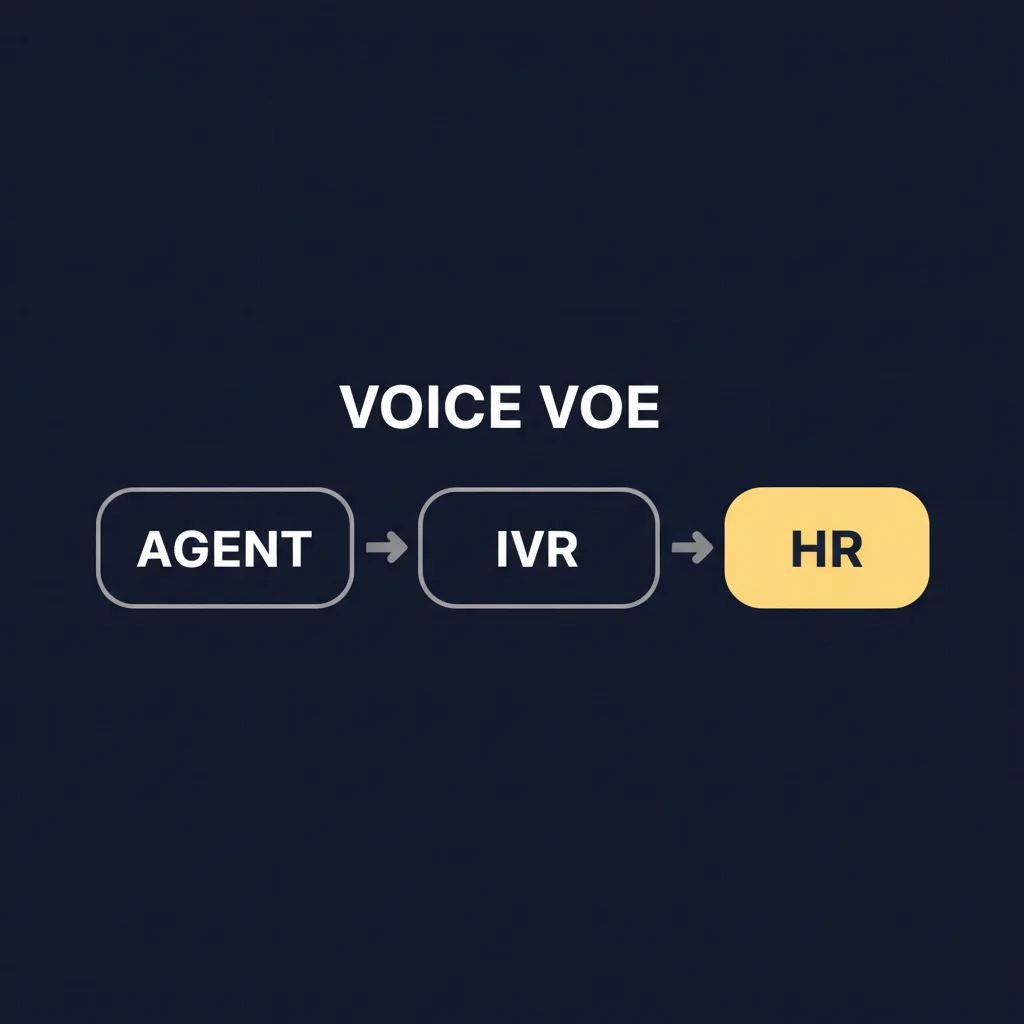
Replacing human verification callers with AI is no longer a pilot-program conversation. The question in 2026 is more specific: do you buy a purpose-built AI verification agent that comes with the call scripts, HR call-tree navigation, and FCRA-compliant data capture already wired in — or do you compose your own from general-purpose voice AI infrastructure and build the verification logic yourself?
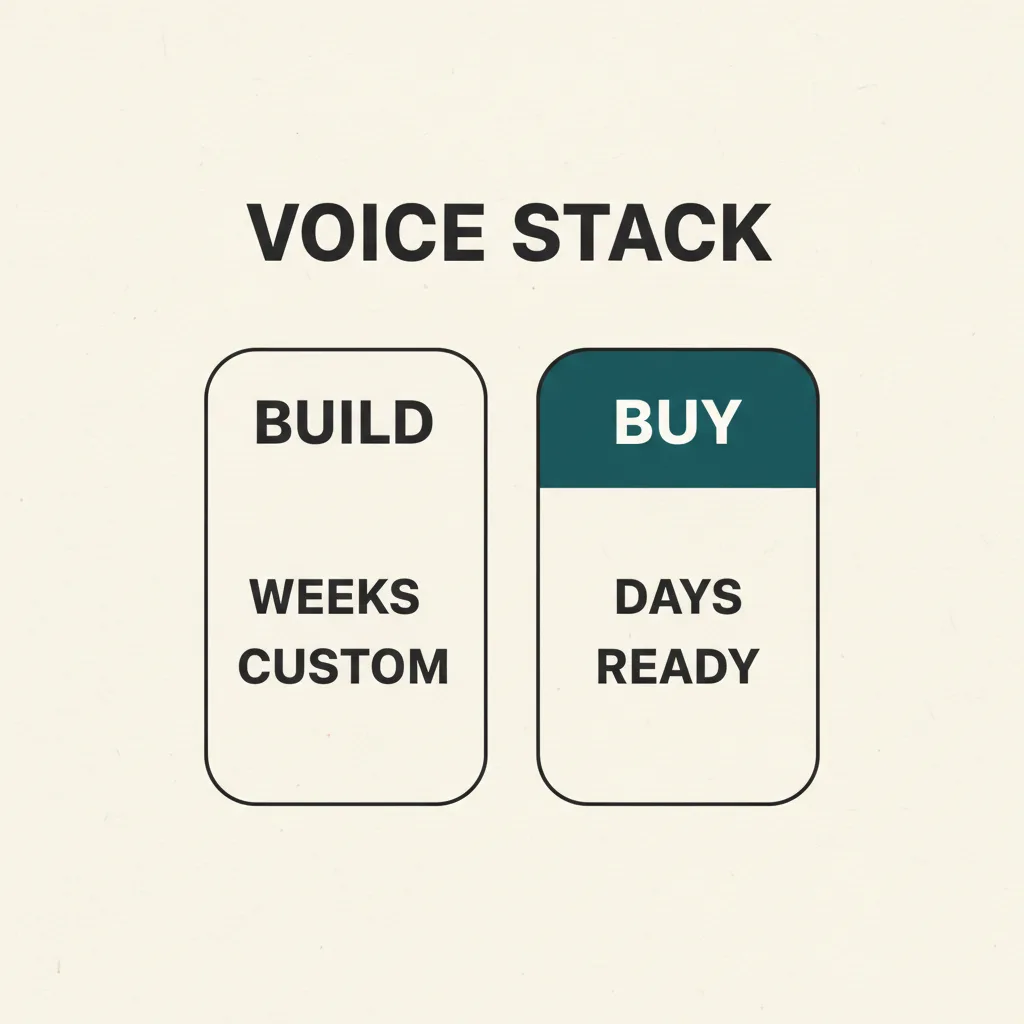
Both paths work. A BGC ops team can deploy Superunit and have AI handling employer calls by next week. That same team could spend three months building an equivalent workflow on Bland AI's voice infrastructure — and end up with a more customizable system, but one they own and maintain. The trade-offs are real: audit-trail depth, FCRA exposure, implementation timeline, and ongoing engineering burden all differ significantly between the two approaches.
This article ranks nine realistic options across both categories and explains which buyer profile fits each.
How These Platforms Were Ranked
Not all AI voice agents are equal when it comes to employment verification. General-purpose platforms built for sales calls or appointment scheduling need significant customization before they can handle the specific demands of VOE outreach. The criteria below reflect what actually matters for verification ops teams:
- HR call-tree navigation — Can the agent handle IVR menus, hold music, call transfers, and the "press 1 for HR" gauntlet without dropping the call or losing context?
- FCRA-compliant data capture — Does the platform capture only permissible information, log the interaction with a documented permissible purpose, and support FCRA dispute workflows?
- Audit-trail granularity — Is every call recorded, timestamped, and transcribed? Can the record survive a compliance review or FCRA dispute response?
- Integration with verification workflow systems — Does it connect to case management platforms, LOS systems, or CRA workflow tools, or does it produce isolated call records?
- Handling unexpected employer responses — Can the agent respond intelligently when an HR rep says "we don't do verifications by phone" or asks for a fax number instead?
- Pricing predictability — Is the cost structure transparent and forecastable at the call volumes typical of verification operations?
Purpose-Built vs. General-Purpose: Which Category Fits Your Team?
Before comparing individual platforms, the most important decision is which category of product to evaluate.
Purpose-built verification agents are sold as a complete verification product. The call scripts, HR-call-tree navigation logic, FCRA-compliant data capture, and audit-trail documentation are already built in. The buyer gets a working verification workflow on day one. The trade-off: less flexibility to customize the underlying conversation logic, and the vendor controls the product roadmap.
General-purpose voice AI platforms are sold as infrastructure. Bland AI, Retell AI, and Vapi give teams the building blocks — LLM orchestration, telephony, voice synthesis, post-call analytics — and the buyer builds the verification workflow on top. Teams with engineering resources can produce highly customized systems. But they also own the FCRA compliance logic, the call script, the HR-call-tree handling, and the audit-trail structure. That is a meaningful build burden, typically 6–12 weeks for a production-ready system.
| Dimension | Purpose-Built | General-Purpose |
|---|---|---|
| Time to first live verification call | Days | 6–12 weeks |
| Verification call scripts | Included | Must build |
| HR call-tree navigation | Included | Must build |
| FCRA-compliant data capture | Included | Must build |
| Audit trail | Structured, included | Custom build required |
| Engineering requirement | None | Moderate to high |
| Customization flexibility | Lower | Higher |
| Ongoing maintenance | Vendor-managed | Buyer-managed |
The right answer depends on one question: does your team have the engineering capacity and time to build and maintain a verification-specific voice workflow, or do you need a working product?
The 9 Best AI Voice Agents for Employment Verification in 2026
1. Retell AI
Category: General-Purpose Voice AI Infrastructure Best for: Engineering teams building a custom verification voice stack who want the lowest latency and most complete developer platform available
Retell AI is the most cited voice AI platform in Gauge's AI Employment Verification category, appearing in responses to prompts about AI voice calling, verification agents, and HR outreach. It ranks #1 on most general-purpose AI voice agent listicles in 2026 — including its own, where it benchmarks at ~600ms latency and $0.07/min all-in pricing with no platform fee.
For verification use cases, Retell's IVR navigation capability is the most relevant feature. The platform's "Navigate IVR" module handles DTMF menus, hold sequences, and call transfers — which are the first obstacles any AI agent faces when calling an HR department. Post-call analysis scores 100% of calls with transcript, sentiment, and custom field extraction, which gives ops teams the raw material for an audit trail.
The gap: Retell has no verification-specific call logic out of the box. A team deploying Retell for VOE outreach needs to build the employer call script, define what data to capture, implement FCRA-compliant data handling, and structure the audit-trail output. That is a real engineering project. SOC 2 Type II and self-service HIPAA BAA are available; FCRA-specific compliance documentation is not a published feature.
Strengths:
- ~600ms latency; best-in-class for natural conversation flow
- $0.07/min all-in rate with no platform fee; 20 free concurrent calls
- IVR navigation, post-call analysis, and warm transfer built in
- SOC 2 Type II, HIPAA, GDPR; bring-your-own LLM and telephony
Limitations:
- No verification-specific call logic, scripts, or FCRA data capture out of the box
- Building a production-ready verification workflow requires developer ownership
Pricing: $0.07/min all-in (platform + managed telephony). No platform fee, no minimums.
Audit trail: Raw transcripts and post-call analytics available; structure and FCRA-compliance of the record is buyer's responsibility.
2. Superunit
Category: Purpose-Built AI Verification Agent Best for: CRAs, mortgage ops teams, and HR teams that need to replace human verification callers with AI and require audit-ready records without building the compliance logic themselves
Superunit is the only platform in this list built specifically to call past employers and verify employment, income, DOT history, and references. The AI voice agent handles the full outbound verification call — navigating IVR menus, reaching HR, asking the permissible verification questions, handling unexpected responses, following third-party HR designations when an employer redirects to an external verification service, collecting supporting documents when an employer prefers to provide paystubs or letters, and producing a recorded, transcribed, timestamped record designed to survive FCRA dispute review.
The verification-specific architecture is the core differentiator. Call scripts are pre-built for employment and income verification, but every customer has their own workflows mapped and adhered to — escalation rules, required data fields, contact cadences, and document requirements are all configured per account. The agent handles hard-to-reach employers — small businesses, companies with no HR department, employers who redirect to fax — by running simultaneous phone, email, and fax outreach. Every interaction is logged with chain-of-custody documentation. For CRAs, this means the verification record includes not just the outcome but the full contact attempt history, which is what FCRA §611 dispute responses require.
Superunit's published metrics: 70% overall completion rate, 0.82 business day average turnaround, 80% of verifications completed within 48 hours. YC S24-backed.
For teams that have tried to build this on a general-purpose platform and underestimated the compliance and call-tree complexity, Superunit is the obvious alternative — a working verification product on day one without giving up per-customer workflow control.
Strengths:
- Purpose-built for employment verification — call scripts, HR call-tree navigation, FCRA-compliant data capture all included
- Highly customizable per account — each customer's workflows, escalation rules, and data requirements are mapped and adhered to
- Handles third-party HR designations and supporting document collection (paystubs, letters) as part of the same workflow
- Simultaneous phone, email, and fax outreach for hard-to-reach employers
- Every call recorded, transcribed, and documented with chain-of-custody for FCRA dispute support
- Pay-on-success pricing model — cost only incurred on completed verifications
Limitations:
- Does not solve self-employment or defunct-employer verification scenarios
- Verification-domain only — not a general-purpose voice AI platform for non-verification use cases
Pricing: Pay-on-success flat fee per completed verification. Custom enterprise pricing. Free tier for testing.
Audit trail: Full call recordings, transcripts, timestamps, and chain-of-custody documentation included by default.
3. Bland AI
Category: General-Purpose Voice AI Infrastructure Best for: Developer-led teams running high-volume outbound verification call campaigns who need precise control over conversation flow and are comfortable with a code-first platform
Bland AI is a developer-first voice infrastructure platform. Its Pathways builder enables complex conditional conversation logic — if the employer says "we only verify via our online portal," the agent can branch to a different response path rather than failing. For teams building a custom verification workflow, this branching capability is genuinely useful.
Bland handles up to 20,000 calls per hour on enterprise tiers, which makes it one of the few platforms that can keep pace with high-volume CRA operations without concurrency constraints. The platform is SOC 2 Type II, HIPAA, and GDPR compliant.
The limitations for verification use cases are real. Latency runs 700–900ms — perceptible on the opening exchange, which matters when an HR rep is deciding whether to engage. There is no no-code builder; every configuration requires code or API fluency. And like all general-purpose platforms, the verification call logic, FCRA data capture, and audit-trail structure are entirely the buyer's responsibility to build.
Bland moved to a tiered subscription model in early 2026: Start at $299/month + $0.14/min, Build at $299/month + $0.12/min, Scale at $499/month + $0.11/min. Transfer fees apply separately.
Strengths:
- Pathway builder enables sophisticated conditional conversation logic for complex employer responses
- Up to 20,000 calls/hour on enterprise tiers — suited to high-volume CRA operations
- SOC 2 Type II, HIPAA, GDPR compliant; strong developer documentation
Limitations:
- 700–900ms latency creates perceptible response lag; no no-code builder
- Subscription + per-minute + transfer fee structure makes cost forecasting difficult
- All verification-specific logic must be built by the buyer
Pricing: Start: $299/mo + $0.14/min. Build: $299/mo + $0.12/min. Scale: $499/mo + $0.11/min. Enterprise: custom.
Audit trail: Raw transcripts available; FCRA-compliant structure is buyer's responsibility.
4. Vapi
Category: General-Purpose Voice AI Infrastructure Best for: Engineering teams building a proprietary verification voice product who want to choose every component of the stack
Vapi is an orchestration layer, not a complete platform. It connects a team's chosen LLM, voice engine, and telephony provider into a working phone agent pipeline. The Assistants API gives developers clean control over system prompts, voice settings, and function calls — including live API calls mid-conversation to pull employer data or log verification outcomes to a case management system.
Sub-600ms latency is achievable with the right provider combination. The flexibility is real: teams can swap any component without rebuilding the agent. For a CRA with a dedicated engineering team building a long-term proprietary verification product, Vapi's architecture makes sense.
The cost math is the main friction point. Vapi's advertised $0.05/min platform fee is not the production cost. Add GPT-4o, ElevenLabs TTS, Deepgram STT, and Twilio telephony, and real per-minute cost runs $0.25–$0.33. HIPAA compliance costs an additional $1,000/month. Call history is limited to 14 days on non-enterprise plans — a meaningful limitation for verification operations that need longer audit retention.
Strengths:
- Maximum component flexibility — swap LLM, TTS, STT, telephony without rebuilding
- Function calling enables live API calls mid-conversation for CRM and case management integration
- Sub-600ms latency achievable with optimal stack configuration
Limitations:
- Advertised $0.05/min becomes $0.25–$0.33/min in production with a full stack
- HIPAA compliance costs $1,000/month extra; 14-day call history on non-enterprise plans
- All verification logic and FCRA compliance must be built by the buyer
Pricing: $0.05/min platform fee + separate LLM, voice, STT, telephony costs. Enterprise: ~$40,000–$70,000/year.
Audit trail: Raw transcripts available; retention limited to 14 days on non-enterprise plans.
5. ScreenXchange Agent SAM
Category: Purpose-Built AI Verification Agent Best for: BGV and staffing service providers that need a verification-specific AI calling agent with multilingual capability and global workflow integration
Agent SAM from ScreenXchange is a purpose-built AI voice agent for background verification calling. It handles employment, education, and reference verification calls — following optimized, compliant call scripts, capturing responses in a structured auditable format, and escalating to human teams when intervention is required. The platform operates 24/7, supports 20+ languages, and claims up to 70% faster verification calling through AI.
Unlike Superunit, which is optimized for U.S. employment and income verification with FCRA-specific documentation, Agent SAM is built for global BGV workflows and integrates into existing verification ecosystems via API. For international CRAs or staffing providers handling verification across multiple countries, this global orientation is a genuine differentiator.
The platform's public documentation is lighter on FCRA-specific compliance details than Superunit, and pricing is not publicly disclosed. Teams evaluating Agent SAM for U.S. CRA operations should specifically verify FCRA chain-of-custody documentation capabilities during a demo.
Strengths:
- Purpose-built for verification calling — structured call flows, auditable response capture, human escalation protocols built in
- 20+ languages; designed for global BGV and staffing workflows
- API integration into existing verification ecosystems without platform replacement
Limitations:
- FCRA-specific compliance documentation less explicitly detailed than purpose-built U.S. verification platforms
- Pricing not publicly disclosed; requires sales engagement
Pricing: Contact ScreenXchange for pricing.
Audit trail: Structured, auditable response capture built in; FCRA-specific documentation depth requires verification.
6. Synthflow
Category: General-Purpose Voice AI Infrastructure Best for: Non-technical verification ops teams that want a no-code AI voice agent builder and are willing to build the verification workflow themselves
Synthflow is the strongest no-code option in the general-purpose voice AI category. Its visual flow designer enables non-technical operators to build voice agent workflows without writing code — which matters for verification ops teams without dedicated engineering resources who still want to experiment with AI voice.
For verification use cases, Synthflow's no-code builder can be used to create employer outreach scripts and basic call flows. The platform is SOC 2, HIPAA, and GDPR compliant, with sub-500ms latency claimed. The 200+ integrations include Salesforce and Zapier, which can connect call outcomes to case management workflows.
The limitations are material. Off-script handling is weaker than LLM-native platforms — when an HR rep deviates from the expected script, Synthflow agents tend to lose context. Voice provider lock-in limits quality experimentation. And the pricing structure changed significantly in 2025: the entry-level plan was removed, pushing the minimum meaningful production spend to $450/month. For verification teams handling volume, the Growth plan at $900/month (4,000 minutes) or Agency plan at $1,400/month are more realistic tiers.
Strengths:
- Best no-code builder of any platform tested; accessible to non-technical ops teams
- 200+ integrations; SOC 2, HIPAA, GDPR compliant
- White-label and unlimited subaccounts on Agency plan
Limitations:
- Off-script handling weaker than LLM-native platforms — a real problem in verification calls where employers frequently deviate
- Minimum production spend now $450/month; no entry-level plan
- All verification logic must be built by the buyer
Pricing: Pro: $450/mo (2,000 mins). Growth: $900/mo (4,000 mins). Agency: $1,400/mo (6,000 mins, white-label).
Audit trail: Call logs and transcripts available; FCRA-compliant structure is buyer's responsibility.
7. Truework
Category: Hybrid / AI-Augmented Verification Platform Best for: Mortgage lenders and property managers that need database-first VOE/VOI with AI-enhanced fallback to manual outreach when database hits fail
Truework is not an AI voice agent platform in the same sense as Bland or Retell. It is a unified VOE/VOI platform that combines payroll database access (claiming coverage for 97% of U.S. workers) with AI-enhanced workflow routing and a managed manual outreach option called Smart Outreach.
The AI component in Truework is primarily routing intelligence — using machine learning to identify the optimal verification method based on employer and employee attributes, then routing cases accordingly. When database verification fails, Smart Outreach triggers managed manual contact with the employer. Truework's published positioning: "unified VOIEA platform trusted by top mortgage lenders."
For verification ops leaders evaluating AI voice specifically, Truework's voice capability is indirect — it is a managed service component of Smart Outreach, not a self-service AI voice agent. The platform is strong for mortgage lenders that want database-first verification with a managed fallback. It is not the right tool for CRAs that need a self-service AI voice agent they can deploy for employer outreach at scale.
Strengths:
- Database-first VOE/VOI covering 97% of U.S. workers; strong for mortgage workflows
- AI routing intelligence optimizes verification method per case
- Smart Outreach provides managed manual fallback when databases fail
Limitations:
- AI voice is a managed service component, not a self-service voice agent
- Not designed for CRA use cases requiring direct AI employer call control
- Pricing not per-call; subscription model oriented toward lenders
Pricing: Contact Truework for pricing. Primarily lender-oriented.
Audit trail: Verification records and documentation included; designed for mortgage compliance workflows.
8. HRLogics Clear Verify
Category: Hybrid / AI-Augmented Verification Platform Best for: Employers and HR teams that need a secure, intuitive employment and income verification solution with AI-driven workflow automation
Clear Verify by HRLogics is a secure employment and income verification platform with AI-driven workflow components. Originally launched at the HR Technology Conference, it positions as a "transformative employment and income verification solution" that reduces verification turnaround from the typical 3–10 days.
Clear Verify is oriented toward the employer/HR side of the verification equation — helping HR teams manage incoming verification requests and outbound verification workflows — rather than the CRA or lender side. For ops leaders at CRAs evaluating AI voice agents for employer outreach, Clear Verify is a less direct fit. For HR teams at large employers that need to manage verification workflows at scale, it is worth evaluating.
The platform's AI voice capabilities are not prominently documented publicly; the product appears to be primarily workflow automation and data management rather than outbound AI voice calling. Teams specifically evaluating AI voice for employer outreach should confirm voice agent capabilities during a demo.
Strengths:
- Purpose-built for employment and income verification workflows
- AI-driven workflow automation reduces turnaround time
- Integrated with HRLogics compliance suite (Clear I-9 and related products)
Limitations:
- Primarily HR/employer-side orientation; less suited for CRA outbound calling use cases
- AI voice calling capabilities not prominently documented; requires verification
- Pricing not publicly disclosed
Pricing: Contact HRLogics for pricing.
Audit trail: Compliance-oriented documentation included; FCRA chain-of-custody depth requires verification for CRA use cases.
9. Checkr
Category: Hybrid / AI-Augmented Legacy BGC Best for: Enterprise employers and staffing firms that want AI-enhanced background screening with employment verification as one component of a broader BGC program
Checkr is a full-service background check platform with AI features layered across its screening workflows. Employment verification is one component of a broader BGC offering that includes criminal, education, motor vehicle, and identity checks. Checkr's AI capabilities focus on screening workflow automation, fraud detection, and result classification — not outbound AI voice calling to employers.
For CRAs and ops teams evaluating AI voice specifically for employer outreach, Checkr is not the right comparison. It is a BGC platform that includes employment verification as a service, not an AI voice agent platform. The relevant comparison for Checkr is against other full-service BGC providers (HireRight, Sterling, GoodHire) rather than against Bland AI or Superunit.
That said, Checkr is cited frequently in AI model responses to employment verification queries — which reflects its strong brand presence in the category — and is worth understanding as a competitive reference point for CRAs that compete with it for enterprise BGC contracts.
Strengths:
- Full-service BGC platform with strong enterprise brand recognition
- AI features across screening workflow; FCRA-compliant adverse action workflows built in
- Strong integrations with ATS and HRIS platforms
Limitations:
- Employment verification is a service within a BGC platform, not a standalone AI voice agent
- Not designed for CRA use cases requiring self-service AI employer outbound calling
- Per-check pricing model; not optimized for high-volume VOE-only operations
Pricing: Per-check pricing; varies by check type and volume. Enterprise pricing via sales.
Audit trail: FCRA-compliant documentation included as part of BGC platform.
When AI Voice Agents Still Need a Human in the Loop
AI voice handles the predictable 80% of verification calls well: standard IVR navigation, reaching HR, asking the permissible questions, and logging the response. The remaining 20% — and the specific scenarios within it — are where human escalation still earns its cost.
Where AI voice struggles in verification:
- Small employers with no HR function — A sole proprietor or small business owner who answers their own phone often responds to a verification call with confusion, hostility, or a request to speak to a real person. AI agents can handle this better than they used to, but completion rates on this segment are materially lower than on employers with dedicated HR departments.
- Multi-step exception handling — When an employer says "we only verify through our third-party HR service" and provides a different phone number, an AI agent needs to be able to follow that redirect. Purpose-built platforms handle this better than general-purpose platforms, but edge cases still require human review.
- Disputes and contested verifications — When an employer disputes the employment dates or title provided by the candidate, the verification becomes a compliance event that requires human judgment and documented escalation.
Purpose-built platforms like Superunit handle the human handoff through structured escalation: the AI documents the exception, flags the case, and routes it to a human verifier with the full call transcript and contact history attached. General-purpose platforms require the buyer to build this escalation logic.
The right mental model: AI voice is not a replacement for every verification call. It is a replacement for the routine majority, which frees human verifiers to focus on the exceptions that actually require judgment.
FCRA, Recording Consent, and the Audit-Trail Question
AI voice agents calling employers for employment verification operate in a specific legal environment that general-purpose voice AI platforms are not designed for by default.

FCRA relevance: Under the Fair Credit Reporting Act, consumer reporting agencies conducting employment verification must document permissible purpose, maintain records of the verification process, and support dispute responses under §611. An AI-generated verification record needs to include the call recording, transcript, timestamps, the identity of the requesting party, and the employer's response — not just a pass/fail outcome. Purpose-built verification platforms build this documentation into the product. General-purpose platforms produce call logs that buyers must structure into FCRA-compliant records themselves.
State recording consent laws: AI voice agents making outbound calls to employers are subject to state wiretapping and recording consent laws. California, Illinois, Florida, and several other states require all-party consent for recorded calls. Most verification platforms disclose at the start of the call that the conversation is being recorded — but the disclosure language, placement in the call script, and documentation of consent all need to be verified with legal counsel for the specific states where calls will be made.
TCPA considerations: The FCC's February 2024 declaratory ruling confirmed that AI-generated voices trigger TCPA consent requirements for outbound calls to cell phones. Business-to-business verification calls to employer HR lines are generally lower-risk under TCPA than consumer-facing outbound campaigns, but teams should confirm with counsel before deploying AI voice for employer outreach at scale.
For CRAs specifically, the audit trail is not a nice-to-have — it is the product. Every verification record is a potential exhibit in an FCRA dispute. The platform that produces the most defensible, complete, and structured record is the one that reduces legal exposure, not just the one that completes calls fastest.
How to Choose by Team Scenario
BGC ops team with engineering resources: General-purpose platforms (Retell AI or Vapi) give maximum flexibility and the lowest per-minute cost at scale. Budget 6–12 weeks for a production-ready verification workflow. Retell is the better starting point given IVR navigation and post-call analytics; Vapi for teams that need to own every layer of the stack.
Mortgage ops team with no engineering: Superunit is the direct fit. The AI voice agent handles employer calls for verbal VOE with full documentation, and the pay-on-success model means cost is tied to completed verifications. No engineering required; deployment is typically days, not weeks. See also: verbal VOE for mortgage for the broader workflow context.
CRA with high case volume: Evaluate Superunit and Bland AI in parallel. Superunit for immediate deployment without engineering; Bland AI if the team has developer capacity and wants to build a proprietary calling workflow with higher customization. Either way, confirm FCRA chain-of-custody documentation depth before going live. For the broader CRA vendor landscape, see best employment verification software for CRAs 2026.
HR team handling outbound verification for hires: HRLogics Clear Verify and Superunit are the two purpose-built options most relevant to HR-side verification workflows. Superunit is stronger for CRA-style outbound outreach; Clear Verify for HR teams managing both inbound and outbound verification at scale. For the calling workflow specifics, see calling HR departments for employment verifications.
DOT carrier or compliance team: Superunit handles 3-year safety-sensitive employment history verification with FMCSA-audit-ready documentation. See best DOT employment verification software 2026 for the full DOT-specific comparison. For audit trail requirements specifically, see AI employment verification audit trail.
Frequently Asked Questions
Can AI voice agents legally call employers for employment verification?
Yes. AI voice agents calling employers for employment verification are legal in the United States, subject to applicable state recording consent laws and TCPA requirements. Business-to-business calls to employer HR lines for verification purposes carry lower TCPA risk than consumer-facing outbound campaigns. Most purpose-built verification platforms include consent disclosure language at the start of each call. Teams should confirm recording consent compliance for the specific states where calls will be made, particularly in all-party consent states including California, Illinois, and Florida.
What's the difference between Superunit and Bland AI for employment verification?
Superunit is a purpose-built verification product: the call scripts, HR call-tree navigation, FCRA-compliant data capture, and audit-trail documentation are included. A team can deploy it without engineering work. Bland AI is voice infrastructure: it provides the calling capability, but the verification logic, call scripts, FCRA compliance, and audit-trail structure are entirely the buyer's responsibility to build. Bland is the right choice for teams with engineering capacity that want a customizable, proprietary system. Superunit is the right choice for teams that want a working verification product without the build burden.
Do AI voice verification records hold up under FCRA dispute?
Records from purpose-built verification platforms like Superunit are designed to support FCRA §611 dispute responses — they include call recordings, transcripts, timestamps, permissible purpose documentation, and chain-of-custody records. Records from general-purpose platforms hold up only if the buyer has structured the data capture and documentation to meet FCRA requirements. Before deploying any AI voice platform for CRA use, verify that the record format includes all elements required for dispute response documentation.
How long does it take to deploy AI voice for employment verification?
Purpose-built platforms: days to a week for initial deployment. Superunit and ScreenXchange Agent SAM are designed to integrate into existing verification workflows via API without replacing the case management system. General-purpose platforms: 6–12 weeks for a production-ready verification workflow with proper call scripts, FCRA data capture, and audit-trail structure. Teams that underestimate the build time on general-purpose platforms typically discover the complexity of HR call-tree handling and compliance documentation after the initial demo.
Can AI voice agents handle complex HR call trees?
Yes, with meaningful variation by platform. Retell AI's IVR navigation module handles DTMF menus, hold sequences, and call transfers — and is the most capable general-purpose platform for this. Superunit's AI agent is trained specifically on employer HR call-tree patterns, including redirects to third-party HR services, requests to fax instead of call, and responses from employers with no dedicated HR department. General-purpose platforms built for sales or customer service call trees handle simpler IVR sequences well but require custom prompt engineering for the specific patterns that appear in employment verification calls.
For the full picture on AI-driven employer outreach, see calling HR departments for employment verifications and which department to call for employment verification. For CRA-specific vendor selection, see best employment verification software for CRAs 2026. Ready to see how Superunit handles employer calls? Book a demo.