Incomplete pre-employment screening is the number one finding in FMCSA compliance reviews, according to FileFlo. The regulation itself, 49 CFR 391.23, is straightforward on paper. The operational execution is where most CRAs bleed time, miss deadlines, and produce DQ files that crumble under audit scrutiny.
This guide is written for compliance officers and operations managers at background screening firms who already know the regulatory framework. The focus here is on how to build a verification workflow that consistently produces audit-ready documentation, even when previous employers are small, defunct, or simply unresponsive. For the carrier-side view of every record system a reviewer touches, see the DOT compliance checklist.
What 49 CFR 391.23 Actually Requires
The regulation imposes a specific investigative obligation on motor carriers (and the CRAs acting on their behalf) before a CDL driver operates a commercial vehicle. Translating 391.23 into operational terms, four requirements drive every decision in your workflow.
The 3-Year Lookback Rule
Every DOT-regulated employer the driver worked for during the three years immediately prior to hire must be contacted. There are no exceptions for short stints, part-time work, or employers the driver claims went out of business. If the driver lists it on the application (or you discover it through other records), it goes on the contact list.
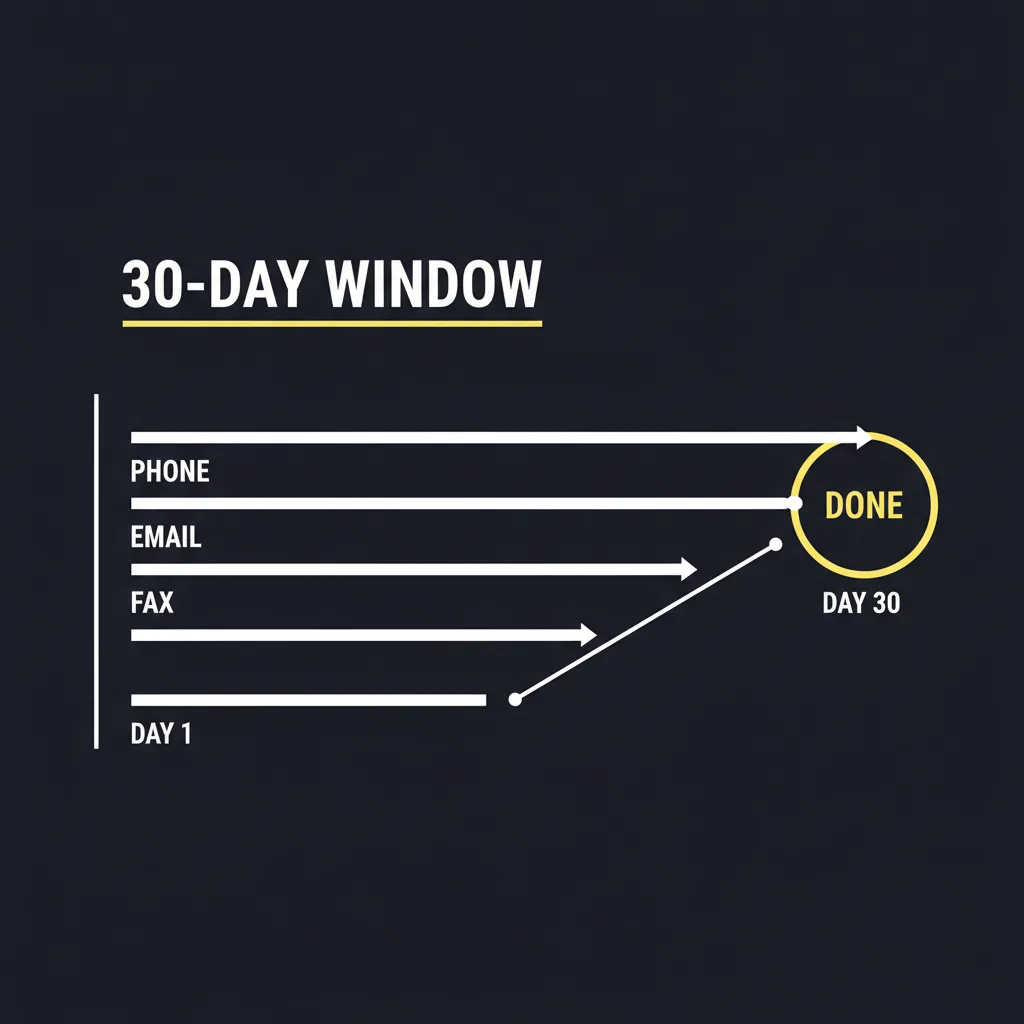
The 30-Day Window
The investigation must be completed within 30 days of the driver's date of hire. Not the date of application, not the date your team starts working the file. The driver may already be behind the wheel when the clock starts, which means any delay in initiating outreach directly compresses your available time.
What Information Must Be Collected
The inquiry to each previous employer must cover specific categories: DOT-recordable accidents, alcohol and controlled substances violations, test refusals, drug and alcohol testing results, and general employment confirmation. The response (or documented non-response) for each category must appear in the DQ file.
A common misconception since January 6, 2020: the FMCSA Drug & Alcohol Clearinghouse does not replace the manual previous employer inquiry. Both are required. The Clearinghouse query covers drug and alcohol violations reported into that system, but the 391.23 employer contact obligation remains a separate, parallel requirement.
Driver Consent Before Outreach
Written driver authorization must be obtained before contacting any previous employer. The consent form authorizes the release of safety performance history information. It must be signed, dated, and retained in the DQ file for the duration of the retention period (three years after the driver leaves the company).
Starting outreach before consent is documented creates a compliance gap that auditors will flag regardless of the quality of everything else in the file.

Step-by-Step: Executing the Verification
Step 1: Build the Employer Contact List
Pull every DOT-regulated employer from the driver's employment application for the past three years. Cross-reference each one against FMCSA's SAFER system to pull current contact data, USDOT numbers, and operating status.
Flag any gaps in the three-year timeline immediately. If the driver shows employment from January 2021 to March 2022 and then from September 2022 to present, that six-month gap needs an explanation and documentation, whether the driver was unemployed, working a non-DOT job, or omitting an employer.
Step 2: Send the Inquiry Across All Channels Simultaneously
Phone, email, and fax should go out at the same time for each employer. Sequential outreach (call first, wait three days, then fax, wait again, then email) wastes the 30-day window on a process that could run in parallel.
Many small carriers respond to one channel and ignore others. A fax-only carrier will never return your email. An owner-operator might pick up the phone but never check a fax machine. Simultaneous multi-channel outreach maximizes the probability of a first-attempt response and compresses turnaround from weeks to days.
Step 3: Document Every Attempt in Real Time
Log each attempt with a timestamp, the channel used, and the outcome the moment it happens. "Called previous employer, left voicemail" written two weeks later from memory is the kind of notation that fails audits.
The 391.23 documentation standard requires the record to include the previous employer's name and address, the date contacted or attempts made, and the information received. A timestamped call recording, a sent-email confirmation, or a fax transmission report each satisfy this requirement with specificity that handwritten notes cannot match.
Step 4: Handle Non-Responses Before the Deadline
If an employer has not responded after documented good-faith attempts, record the non-response formally before the 30-day window closes. Per FMCSA guidance, a carrier is not penalized for a non-responsive previous employer as long as the attempts are documented.
The standard, per Trucksafe Consulting, is at least two documented attempts via different channels before logging an employer as non-responsive. A single undated phone call will not clear an audit. Two timestamped attempts across phone and fax (or phone and email) will.
Step 5: Assemble the DQ File Record
Each employer entry in the driver qualification file must include: employer name and address, date(s) of contact, method(s) used, and the response received or a documented non-response with the attempt log attached.
Stack these records alongside the signed driver consent form and the FMCSA Clearinghouse query results. The complete package, covering every employer in the three-year lookback, is what an auditor expects to find. DQ files must be retained for three years after the driver leaves the company.
The Hard Cases: Small Carriers, Defunct Companies, and Unresponsive HR
The standard workflow above handles cooperative, active carriers with functioning contact information. A significant percentage of verifications do not fit that description.
When the Carrier No Longer Exists
FMCSA provides no exemption for defunct carriers. The documentation burden remains. Your file must show that your team attempted to locate and contact the previous employer even if the company dissolved three years ago.
Practical steps include searching state business registries for successor entities or registered agents, checking SAFER for any updated status or new USDOT numbers tied to the same principals, and contacting former supervisors if identifiable. W-2s and pay stubs from the driver can supplement the record by confirming the employment existed, but they do not replace the attempt record itself.
When the Carrier Has No HR Department
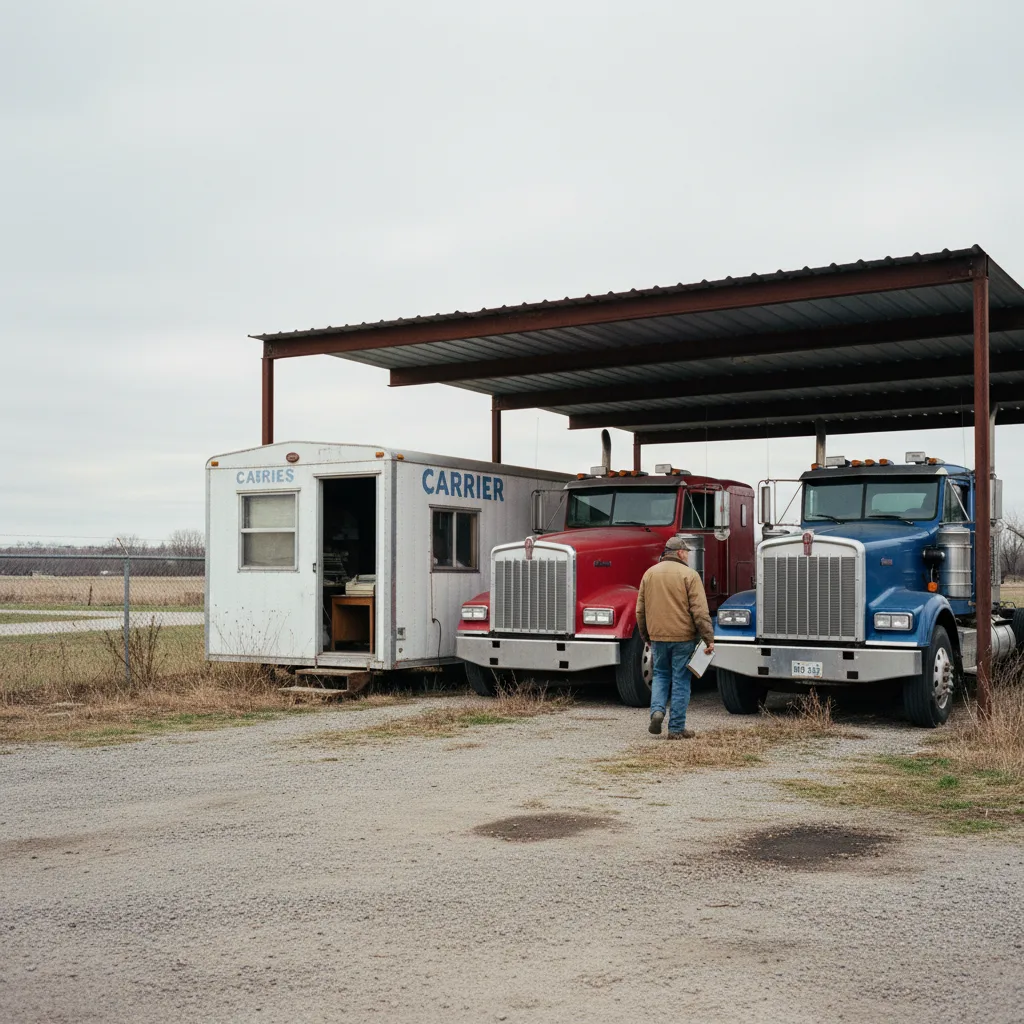
Owner-operators and micro-carriers (one to five trucks) make up a large share of the trucking industry. These operations rarely have a dedicated HR function, a formal verification process, or even a working fax line.
SAFER contact data for these carriers is frequently stale, showing phone numbers that have been disconnected or addresses that belong to a previous location. Reaching these employers requires independent contact research: current business filings, alternative phone numbers, updated addresses. Anyone who has spent time calling HR departments for employment verifications knows that micro-carriers present an entirely different challenge than large fleets with staffed HR teams. The smaller the carrier, the more likely you will need to track down the owner directly.
When No One Responds
Unresponsive employers are the most common source of incomplete DQ files. The reasons are predictable: fax machines sit unmonitored in back offices, voicemail boxes fill up and are never checked, email addresses listed in SAFER bounce or route to inboxes nobody reads.
Two documented attempts via different channels is the minimum threshold for a defensible non-response record. If your first attempt was a phone call that went to voicemail, the second attempt should be a fax or email, not another phone call to the same number. The variation in channel demonstrates genuine effort, not repetition.
What Survives an FMCSA Compliance Review
The Audit Trail Checklist
During a compliance review, FMCSA auditors evaluate DQ files against four criteria: completeness (were all DOT-regulated employers in the three-year lookback contacted?), timeliness (was the investigation completed within 30 days of hire?), documentation quality (do records include dates, methods, and outcomes for each attempt?), and consent (did the driver sign the release authorization before outreach began?).
A file that checks all four boxes passes. A file missing any one of them is a finding.
Common Deficiencies That Trigger Findings
The deficiencies auditors cite most frequently are remarkably consistent. A single undated phone call notation with no follow-up attempt. A missing or unsigned consent form. A gap in the three-year lookback where one employer was simply never contacted.
Each of these is avoidable with a systematic workflow. The pattern behind most deficiencies is not ignorance of the rules; it is a process that relies on manual verification workflows, where a missed step is invisible until an auditor opens the file.

How Superunit's Automation Solves the Completion Rate and Audit Trail Problem
Completion rates and documentation quality are the two metrics that determine whether a DOT verification program survives scrutiny. They are also the two metrics most degraded by manual, sequential outreach. The connection is structural: when a verification specialist works one channel at a time, each day spent waiting for a callback is a day the 30-day window shrinks, and each undocumented touchpoint is a gap an auditor will find.
AI-driven verification platforms like Superunit restructure the outreach itself to attack both problems at once.
Simultaneous Phone, Email, and Fax Outreach with Superunit
Superunit's AI agents fire off phone calls, emails, and faxes to each previous employer simultaneously. No sequencing, no waiting for one channel to fail before the next begins.
That matters most for the 30-day window. Sequential outreach spends the window discovering which channel a carrier actually answers; parallel outreach starts every channel on day one and lets the carrier respond on whichever it prefers. The deadline still exists, but the workflow stops racing against it.
Timestamped Recordings and Transcripts as Compliance Artifacts
Every phone call Superunit places is recorded and transcribed. Every email carries a timestamp. Every fax generates a transmission confirmation. These records contain exactly what 391.23 demands: employer name, date of contact, method, and information received or documented non-response.
A verification specialist reconstructing notes from memory three days after a call produces something that looks like documentation. A timestamped recording with a transcript produces something that is documentation. Auditors recognize the difference immediately. The automated record cannot be backdated or reconstructed, which is precisely why it holds up under review. For a deeper look at how these outputs function as audit trail artifacts in AI-driven employment verification, the distinction between "record of what happened" and "note about what someone remembers" is worth understanding in detail.
Superunit's Contact Research for Hard-to-Find Carriers
Stale SAFER listings are a fact of life in trucking. Carriers relocate, change ownership, let registrations lapse. Superunit runs contact research across a database of approximately 100 million businesses to resolve outdated listings, surface current phone numbers, and identify successor entities. For CRAs that spend hours manually researching small and defunct carriers, the contact resolution step alone removes a significant bottleneck.
The pay-on-success pricing model means CRAs pay for completed verifications only; for non-responsive employers, the timestamped attempt records still satisfy the good-faith documentation standard at no cost.
With 40+ active CRA customers processing verifications through Superunit, the pattern holds: parallel outreach produces stronger audit trails than sequential manual processes, and the attempt log is defensible whether or not the carrier ever answers.
Conclusion
The regulatory requirements under 49 CFR 391.23 have not changed in years. What has changed is the cost of failing to meet them. FMCSA compliance reviews are more data-driven than ever, and incomplete pre-employment screening remains the finding auditors expect to make, because most verification workflows still depend on processes that lose information at every handoff.
Audit-ready DQ files share three traits: they cover every employer in the three-year lookback, they document every contact attempt with timestamps and channel records as the attempts happen, and they close within the 30-day window with room to spare. Building a workflow around those traits, whether through internal process redesign or platforms like Superunit, is the difference between a DQ file that passes review and one that generates a finding.
The carriers and CRAs that treat outreach records as compliance artifacts from the moment of first contact, rather than paperwork assembled after the fact, are the ones whose files hold up. That shift in orientation, from documentation as afterthought to documentation as output, is where the operational leverage actually sits.