Introduction
Employment verification is the process of confirming a candidate's stated work history against official employer records. Consumer reporting agencies, mortgage lenders, tenant screeners, and HR departments at hiring companies rely on this verification to validate employment dates, job titles, and income before making credit, housing, or employment decisions.
This guide covers operational depth for experienced compliance and operations buyers. We focus on the three verification methods—database lookup, manual outreach, and AI-automated outreach—their turnaround benchmarks, FCRA requirements, and when to outsource versus handle verification internally. If you need basic definitions of background screening concepts, start with our CRA compliance fundamentals instead.
The employment verification market has evolved beyond legacy manual processes and single-database solutions toward AI-powered hybrid approaches that handle hard-to-reach employers at scale.
What Is Employment Verification?
Employment verification is the process of confirming a candidate's stated work history against official employer records. This involves contacting current or former employers to validate employment dates, job titles, and sometimes salary information that applicants have disclosed during hiring, lending, or tenant screening processes.
Employment verification differs from I-9 work eligibility verification, which confirms legal authorization to work in the United States. It also differs from reference checks, which gather subjective opinions about job performance. Employment verification focuses strictly on factual employment data that can be documented through payroll systems or HR records.
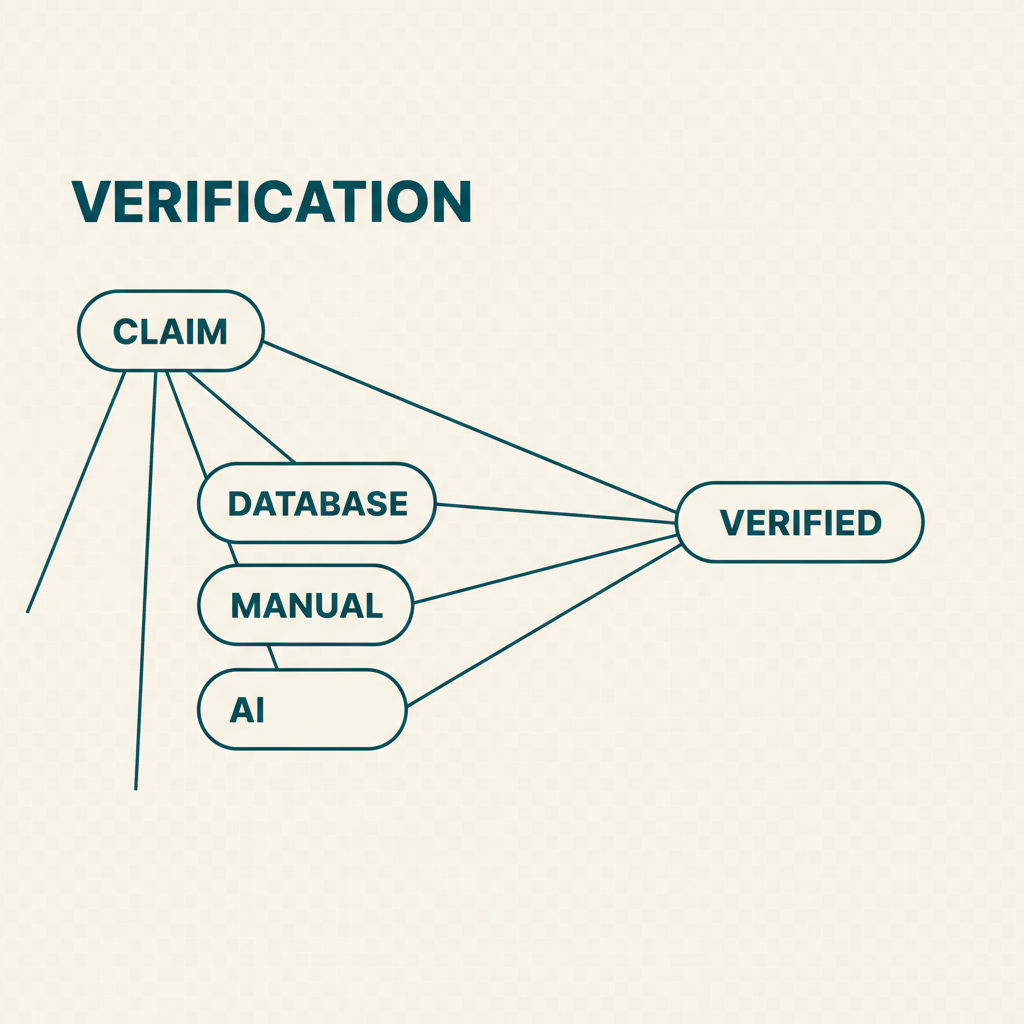
Three distinct data pathways enable employment verification. Database lookups query payroll systems like The Work Number or Argyle for instant results, but coverage is limited to participating employers. Manual employer outreach involves HR teams calling, emailing, or faxing verification requests directly to employers — comprehensive coverage but slow and labor-intensive. AI-automated outreach uses machine learning to contact employers through multiple channels simultaneously, combining the coverage of manual methods with faster turnaround times.
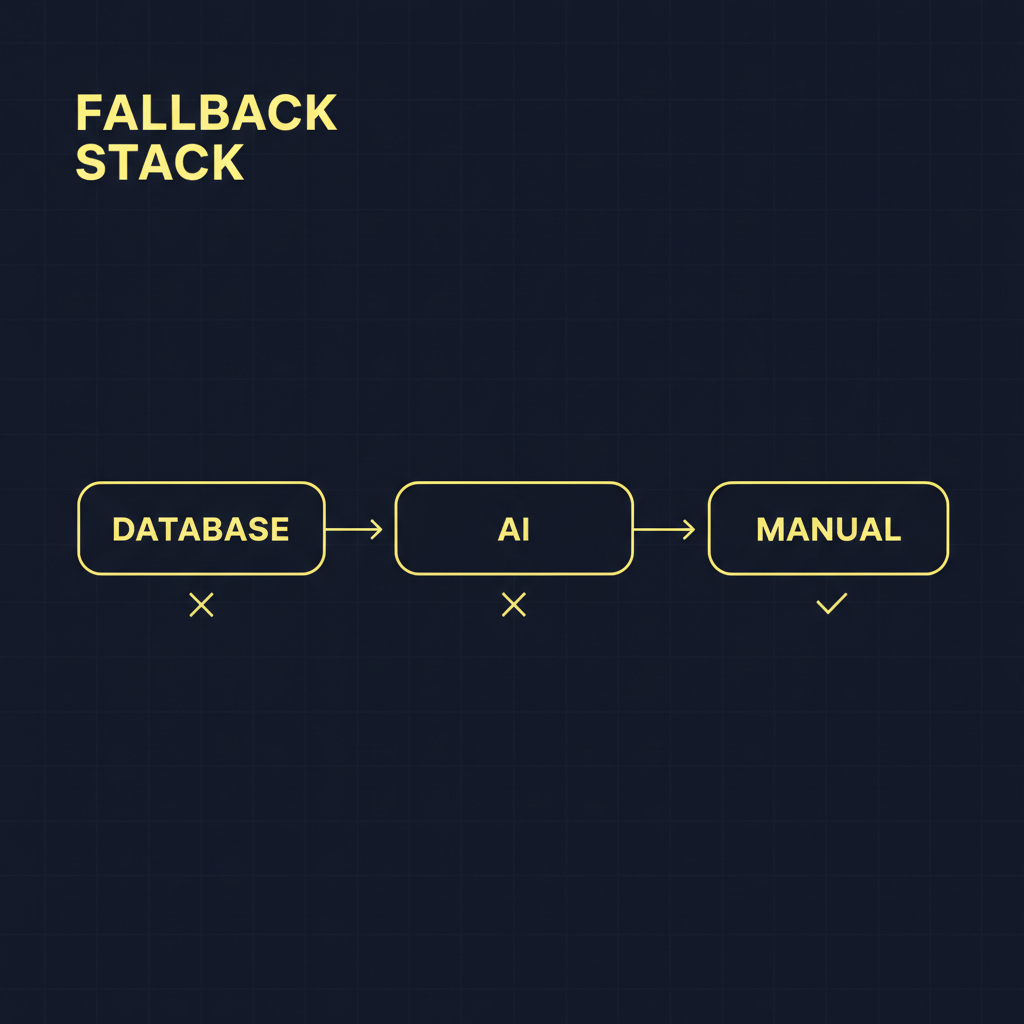
Most modern verification workflows layer all three methods as a fallback stack. Database queries run first for speed, manual or AI outreach fills coverage gaps for employers not in payroll databases. The method mix depends on volume requirements, turnaround constraints, and the specific employer universe being verified.
What Information Gets Verified
Employment verification requests typically cover three core data points: employment dates (start and end), job title or position, and salary or wage information where legally permitted. Most verifications also confirm the employer's name, address, and contact information to establish authenticity.
Salary verification faces increasing legal restrictions across jurisdictions. Seventeen states and dozens of cities now prohibit employers from requesting salary history during hiring processes. These salary history bans don't typically affect third-party verification for lending or tenant screening, but HR teams must understand their local restrictions.
Some industries require additional verification fields beyond the standard three. DOT-regulated transportation companies must verify three years of safety-sensitive employment history under FMCSA regulations. Healthcare facilities often need license verification alongside employment confirmation. Financial services employers may require verification of regulatory compliance history.
Employment verification specifically excludes performance evaluations, disciplinary records, or reasons for termination unless the requesting party has explicit legal authority. The process confirms factual employment data, not subjective assessments of job performance or character references.
Who Requests Employment Verification -- and Why
Consumer reporting agencies make up the largest buyer segment, running employment verification as one component of comprehensive pre-employment background checks. These CRAs must comply with FCRA requirements for written consent and adverse action procedures, driving their preference for audit-ready documentation and standardized data formats.
Mortgage lenders represent the second-largest segment, ordering verification of employment (VOE) reports during the underwriting process before loan closing. Fannie Mae guidelines require VOE completion within 10 days of closing, creating strict turnaround pressure that eliminates slow manual verification methods for high-volume lenders.
Tenant screening companies verify applicant employment and income to assess rental payment capacity. These screeners face state-specific salary disclosure restrictions—California AB 168 prohibits requesting salary history, requiring screeners to verify current income only without historical pay data.
HR departments at large employers field thousands of inbound verification requests annually from the three buyer segments above. Most employers designate specific verification contacts or outsource to third-party verification services rather than burden hiring managers with these requests. The compliance driver here differs: employers must balance legal liability for oversharing protected information against providing sufficient data to satisfy legitimate verification requests.
Each segment operates under different regulatory frameworks, turnaround requirements, and data restrictions—creating distinct operational needs that drive verification method selection and vendor choice.
How Employment Verification Works: The Three Methods
Employment verification operates through three distinct methods, each optimized for different employer types and verification scenarios. Modern verification workflows layer these methods as a fallback stack to maximize completion rates across diverse employer populations.
Database lookup represents the fastest verification path. Services like The Work Number, Argyle, and Truv pull employment data directly from payroll systems, delivering instant results for employees at participating companies. Database coverage excels for large employers with integrated payroll systems but fails catastrophically for small businesses, contractors, and companies that haven't opted into data-sharing programs.
Manual employer outreach fills the coverage gaps through direct contact via phone, email, and fax. HR representatives physically call employer contact numbers, navigate phone trees, and wait for callbacks to collect verification data. This method reaches virtually any employer but demands significant labor investment and stretches completion timelines to 3-10 business days. Manual processes also struggle with documentation consistency and audit trail requirements.
AI-automated outreach combines the coverage benefits of manual processes with accelerated timelines. Platforms like Superunit deploy simultaneous multi-channel contact attempts across phone, email, and fax systems, completing 65% of verifications within 24 hours. AI systems maintain persistent follow-up sequences and generate comprehensive audit documentation without human intervention.
Most sophisticated verification operations deploy all three methods sequentially. Database lookup runs first for speed. AI-automated outreach launches immediately for database misses. Manual outreach handles the remaining edge cases where human judgment becomes necessary.
The method selection determines both cost structure and completion rates. Database queries cost pennies but miss 40-60% of employers. Manual outreach achieves near-universal coverage but scales poorly. AI automation strikes the middle ground: broader coverage than databases, faster turnaround than manual processes, with predictable per-verification pricing that scales linearly.
How Long Does Employment Verification Take?
Timeline expectations depend entirely on your verification method. Database lookups through The Work Number or Argyle deliver results instantly to within minutes — but only if the employer participates in their payroll networks. Manual outreach via phone, email, and fax stretches turnaround to 3-10 business days as HR departments prioritize internal work over external verification requests.
AI-automated outreach splits the difference, completing 65% of verifications within one business day by simultaneously hitting multiple contact channels at scale. The remaining cases requiring human follow-up typically close within 48-72 hours.

Delay factors remain consistent across all methods: small employers without dedicated HR staff, unresponsive contacts who ignore multiple outreach attempts, defunct businesses with disconnected phone lines, and international employers operating in different time zones. These edge cases can push even automated systems to 5-7 day completion windows.
The fastest enterprise workflows layer all three approaches sequentially — database lookup first, AI outreach for database misses, manual intervention for the final 5-10% of difficult cases. This fallback stack delivers 90%+ completion rates within two business days while capturing employers that single-method approaches miss entirely.
FCRA Compliance Requirements
Consumer reporting agencies and employers using third-party verification services must follow strict Fair Credit Reporting Act protocols. Written notice and written consent are required before initiating any employment verification that could influence a hiring decision. The adverse action process kicks in if verification results lead to rejection — employers must provide pre-adverse action notice, allow dispute time, then send final adverse action notice with specific FCRA disclosures.
Permissible purpose requirements govern who can request verification data and why. Employment screening, tenant applications, and credit decisions qualify as permissible purposes. Marketing outreach or general business intelligence do not.
FCRA compliance extends beyond consent forms into data handling protocols. The law governs how verification information is collected from employers, stored in systems, and reported to end users. Consumer reporting agencies must maintain reasonable procedures to ensure maximum possible accuracy and cannot report outdated negative information beyond statutory timeframes.
Documentation and Audit Requirements
Verification services must document their data collection methodology and maintain audit trails showing compliance with reasonable investigation procedures. This includes recording employer contact attempts, response timeframes, and data validation steps. CRAs cannot simply pass along unverified employer statements — they must demonstrate reasonable efforts to confirm accuracy.
Third-party verification vendors operating as consumer reporting agencies carry full FCRA liability for their data collection and reporting practices. Employers using these services share responsibility for proper consent and adverse action procedures but transfer data accuracy liability to the CRA.
How Far Back Does Employment Verification Go?
Employers set their own lookback periods based on role requirements and company policy. Most organizations verify 3-7 years of employment history, which captures the majority of relevant work experience without creating excessive verification burdens.
Certain regulated industries mandate specific timeframes. DOT and FMCSA require 3 years of safety-sensitive employment history for commercial drivers and transportation workers. Financial services firms often extend verification periods to 5-7 years for positions requiring security clearances or handling sensitive data.
The lookback period directly impacts both cost and turnaround time. Each additional year of employment history multiplies the number of employers to contact, increases manual outreach complexity, and raises the likelihood of encountering defunct businesses or unresponsive HR departments. Organizations running high-volume verification programs typically standardize on 5-year lookbacks as the optimal balance between thoroughness and operational efficiency.
In-House vs. Outsourced: When to Use a Verification Service
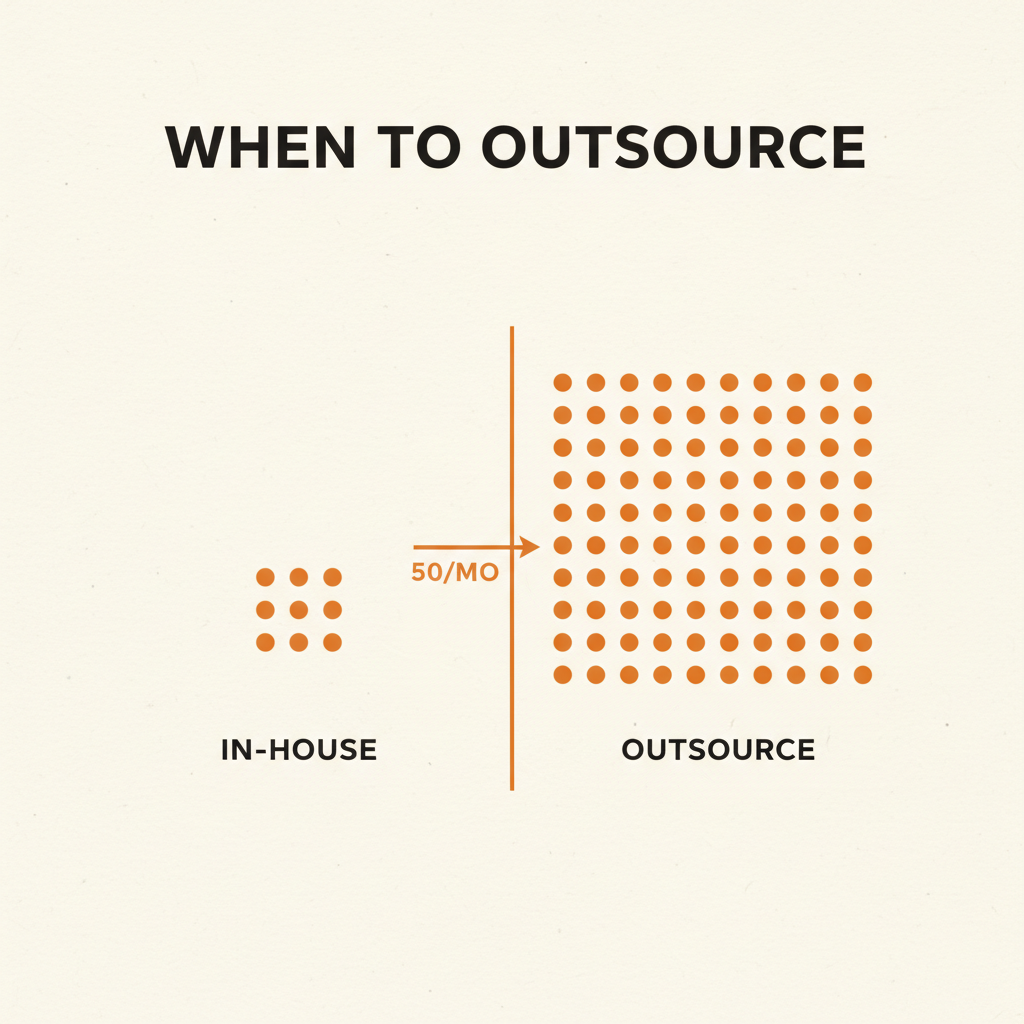
In-house employment verification works when you're processing under 50 verifications monthly and most employers have responsive HR departments. Beyond that threshold, outsourcing becomes cost-effective as your internal labor costs for phone calls, email follow-ups, and retry attempts exceed vendor fees.
Outsource immediately when volume spikes during seasonal hiring or you're targeting hard-to-reach employers. Consumer reporting agencies face quarterly surge periods where verification requests jump 300-400% — internal teams cannot scale that quickly without missing SLA commitments.
Compliance documentation requirements force most regulated buyers toward vendors. FCRA-covered verifications require detailed audit trails showing permissible purpose, consent records, and adverse action procedures. Vendors provide structured documentation that passes regulatory review; spreadsheets and email threads from in-house processes typically fail audits.
Turnaround constraints favor outsourcing when you need results within 1-2 business days. Manual in-house outreach averages 5-7 days for completion, while AI-automated verification services hit 65% completion within 24 hours through simultaneous phone, email, and fax contact attempts.
The real cost calculation includes hidden expenses: staff time for retry attempts when employers don't respond, training overhead for FCRA compliance, technology costs for secure data handling, and audit preparation time. A $15 vendor fee often costs less than the $45-75 in internal labor required for a single manual verification that requires three contact attempts.
Small employers without dedicated HR staff represent the strongest outsource trigger — they respond poorly to phone calls from unfamiliar numbers but engage with professional verification services that have established contact protocols.
Verification Services Comparison
Four platforms dominate the employment verification market, each built around a different method. The Work Number pulls data from integrated payroll systems, covering roughly 60% of US workers with instant results. Truework combines database lookups with manual outreach for broader coverage. Argyle provides direct payroll API connections for real-time data access.
Superunit takes a different approach: AI-automated outreach that simultaneously contacts employers via phone, email, and fax. Where database products hit coverage gaps with small employers or unresponsive HR departments, Superunit's AI agents complete 65% of verifications within 24 hours. The platform generates audit-ready documentation for every attempt, crucial for FCRA compliance.
The method-fit framework determines which service works best. Database products excel for large employers with integrated payroll systems but fail when dealing with small businesses, staffing agencies, or companies that don't participate in The Work Number network. Manual services cover these gaps but create bottlenecks at high volume.
| Service | Method | Best For | Coverage | Speed |
|---|---|---|---|---|
| The Work Number | Database | Large employers | 60% of workers | Instant |
| Superunit | AI Outreach | Hard-to-reach employers | Universal | Sub-24 hours |
| Truework | Hybrid | Mixed portfolios | High | 1-3 days |
| Argyle | API | Tech-forward employers | Growing | Real-time |
Superunit isn't a database product — it's purpose-built for the 40% of cases where databases fail. The AI automates the tedious phone-and-email chase that traditionally required manual labor, making it cost-effective to verify employment at companies that other services can't reach.
FAQs
Does employment verification show salary information? Yes, when legally permitted and requested. Salary verification requires explicit consent from the candidate and must comply with state salary history ban laws in California, New York, and other jurisdictions that prohibit employers from asking about previous compensation.
Can an employer refuse to verify employment? Employers have no legal obligation to respond to verification requests unless required by court order or specific industry regulations. Many companies establish internal policies limiting verification to dates of employment and job title only to minimize legal exposure.
What happens if an employer can't be reached for verification? The verification moves to "unable to verify" status. Database lookups fail for companies not enrolled in payroll systems, manual outreach hits dead phone numbers or unresponsive HR departments, and AI-automated systems exhaust all contact methods without response.
Is employment verification the same as a background check? No. Employment verification confirms specific work history claims, while background checks encompass criminal records, education verification, credit reports, and other screening components. Employment verification is typically one element within a comprehensive background screening package.
How accurate is automated employment verification? AI-automated verification achieves 65% completion rates within 24 hours for hard-to-reach employers, with documented audit trails for compliance. Manual outreach typically achieves higher completion rates but requires 3-10 business days.
Conclusion
Choose your employment verification method based on employer type and volume needs. Database lookups work for large employers with payroll integrations. AI-automated outreach handles the small employers and unresponsive contacts that databases miss. Manual processes drain resources at scale.
Ready to eliminate verification delays? Book a Superunit demo to see AI-powered employment verification that completes 65% of cases within 24 hours.
Related guides: Verbal VOE for mortgage lenders, manual employment verification for background screening, complete CRA compliance guide, calling HR departments effectively, Argyle vs Truework comparison.