Introduction
The FMCSA reviewer opens your driver's file and finds chaos: employment verification attempts logged in one system, outcomes stored in another, employer contact details buried in a spreadsheet. Your §391.23 pre-employment investigation generated scattered evidence across multiple platforms. Your §391.51 driver qualification file contains results without the audit trail showing how you obtained them.
This fragmentation kills carriers during compliance reviews. FMCSA expects one complete record per driver that documents both the investigation process and its outcomes. The agency doesn't care about your internal workflow inefficiencies — they want to see a unified audit trail that proves you followed the rules.
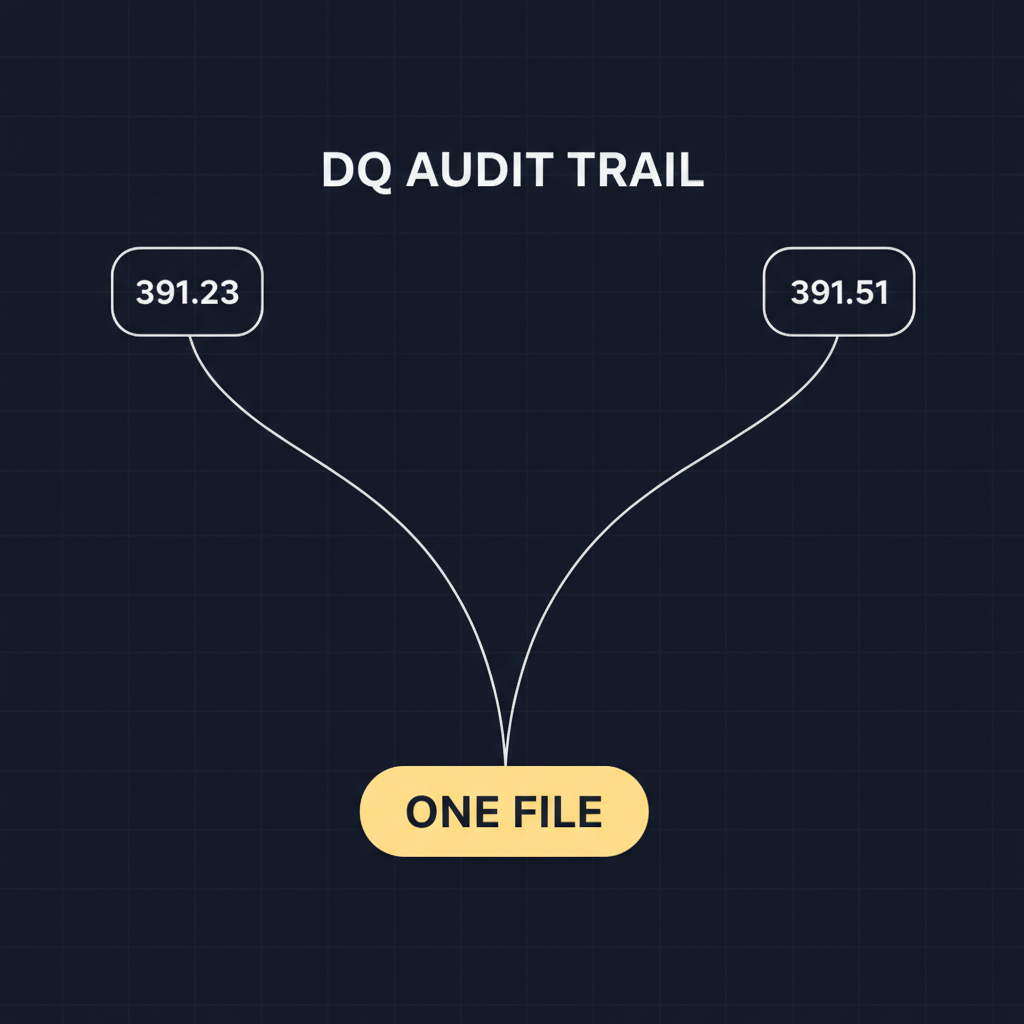
§391.23 and §391.51 aren't separate compliance tasks. They're two parts of the same driver qualification system: §391.23 creates the evidence through your pre-employment investigation, §391.51 governs how you store and retain that evidence. Treat them as a single unified record per driver, or watch your next DOT audit expose the gaps between your systems.
§391.23 vs. §391.51 in Plain English
Section 391.23 governs what you must do before hiring a driver — the pre-employment investigation process itself. Section 391.51 governs what you must keep after hiring them — the driver qualification file's contents and how long you retain it.
Think of §391.23 as the action rule and §391.51 as the record-keeping rule. When §391.23 requires you to verify a driver's employment history, it creates evidence — phone logs, emails, verification forms, employer responses. That evidence doesn't vanish once you make the hiring decision.
Section 391.51 captures that evidence and makes it part of the permanent driver file. The employment verification you performed under §391.23 becomes one of the seven required records under §391.51(b)(5). Your good faith effort documentation from §391.23(c)(2) — every attempt, timestamp, and contact method — travels with that verification record for the entire retention period.
The rules interlock by design. Section 391.23 creates the audit trail; §391.51 preserves it. Safety directors who treat them as separate processes end up with verification results sitting in one system and attempt logs scattered across email threads, handwritten notes, and vendor dashboards.
FMCSA reviewers request the complete driver file — both the investigation process and its outcomes in a single retrievable record.
The 7 Records That Must Live in Every Driver's DQ File
Every driver qualification file must contain these seven documents to survive an FMCSA compliance review under §391.51:
1. Signed employment application (§391.21) — Most carriers collect incomplete employment histories, missing exact dates or supervisor contact details that become critical during verification attempts.
2. Motor vehicle record (§391.23(a)(1)) — Carriers often file MVRs without documenting which state agency provided the record or when it was obtained.
3. Road test certificate or equivalent (§391.31, §391.33) — The certificate must specify who conducted the test and what equipment was used; generic forms fail audits.
4. Certificate of violations (§391.27) — Drivers must certify traffic violations within the past 12 months; unsigned or undated certificates invalidate the entire file.
5. Prior employment verification plus results (§391.23(c)) — This requires both the verification outcome and your attempt log showing good faith effort to contact each employer.
6. Medical examiner's certificate (§391.43, §391.45) — Current medical certificates are worthless without verifying the examiner's DOT registration number through FMCSA's National Registry.
7. Drug and alcohol pre-employment test results (§391.23(e), §382.301) — Test results must include the testing facility's information and chain of custody documentation.

The Audit-Trail Layer Most Carriers Miss
FMCSA auditors don't just want your verification results — they want proof of how you obtained them. The difference between a §391.23(c) attempt log and the final verification outcome determines whether your DQ file survives an audit. Most carriers document what they learned but ignore the investigative trail that led there.
Section 391.23(c)(2) requires carriers to demonstrate "good faith effort" when previous employers don't respond. This means every outreach attempt needs granular documentation: who you contacted, when, through which channel, and what happened next. A phone call logged as "no answer" without the number dialed, time stamp, and follow-up plan fails the good faith standard.
A complete per-attempt log entry captures five elements: precise timestamp, contact method (phone, email, certified mail), specific person or department targeted, outcome detail, and next planned action. For example: "2024-01-15 10:23 AM EST - Called Safety Director Mike Torres at XYZ Trucking (555-123-4567). Voicemail left requesting employment verification for John Smith, DOT ID 12345. Follow-up call scheduled 2024-01-17."
The escalation sequence matters as much as individual attempts. FMCSA reviewers expect logical progression through available channels — phone first, email follow-up, formal written notice, then supervisory contacts or corporate headquarters. Each escalation step needs its own attempt log with justification for the channel choice.
This audit trail must live alongside the actual verification data in your §391.51 DQ file. Separating process documentation from outcome records creates the split-file problem that destroys carriers during compliance reviews. When an auditor asks for "everything related to John Smith's employment verification," they mean both the two-year safety record you received and the fourteen phone calls it took to get it.
Most manual verification workflows can't produce this level of documentation without crushing administrative overhead. Every call requires real-time logging, every email needs thread preservation, every voicemail demands transcription. The attempt log becomes more complex than the verification itself.

Retention: §391.51's 3-Year-After-Termination Rule in Practice
The retention rule is simple: keep each driver's complete DQ file for the duration of employment plus three years after termination. FMCSA §391.51(c) starts the clock when the driver's last day of work ends, not when paperwork gets processed.
Motor carriers make three predictable mistakes that kill them during compliance reviews. First, they delete DQ files immediately after termination — the three-year post-employment period hasn't even started. Second, they retain verification results but not the attempt logs that show how those results were obtained, leaving FMCSA reviewers with conclusions but no supporting evidence. Third, they split records between digital systems and paper files, creating retrieval failures when investigators want one driver's complete record in a single folder.
The retention obligation covers everything: the original §391.51 DQ file contents plus all §391.23 pre-employment investigation documentation. This includes every attempt log, every follow-up email, every voicemail transcript, and every escalation record that shows the good faith effort standard was met.
Smart carriers build retention controls into their workflow from day one. When a driver's termination date gets entered, the system automatically flags that file for three-year preservation and blocks any deletion commands until the retention period expires.
Building the Unified File: Step by Step
Step 1: Capture Complete Employment History at Application Start with a compliant §391.21 application that collects every employer from the past three years. Don't settle for incomplete histories — gaps trigger FMCSA questions during audits. Record each employer's full contact information, including HR phone numbers, verification departments, and alternate contacts.
Step 2: Launch First Contact with Full Documentation Contact the first employer and immediately log Attempt 1 with precise timestamp, contact method (phone/email/fax), person contacted, and response received. Use a system that automatically captures this data rather than relying on manual notes. The employment verification software you choose determines whether this step creates audit-ready records or compliance gaps.
Step 3: Execute Multi-Channel Follow-Up Strategy When Attempt 1 fails, switch channels systematically. If the HR phone number doesn't answer, try the main switchboard, then email, then certified mail. Log every attempt with the same precision as Step 2. Document escalation paths — who transferred you, what departments you contacted, what automated systems you encountered.
Step 4: Preserve Source Documentation with Context When verification succeeds, record both the data received and how you obtained it. Save copies of employment verification letters, email confirmations, or completed forms alongside the contact log that shows your attempts. This paired documentation satisfies both §391.23's process requirements and §391.51's retention mandates.
Step 5: Assemble the Complete DQ File Package Combine all seven §391.51-required documents into a single driver record with the §391.23 attempt log attached as supporting documentation. Each employment verification should include both the verification result and the complete attempt history that produced it. This unified structure survives FMCSA document requests intact.
Step 6: Configure Automatic Retention Controls Set retention triggers tied to termination date, not hire date. The moment a driver leaves, start the three-year countdown clock per §391.51(c). Configure your system to flag files for review before deletion and maintain the complete record — attempt logs, verification results, and supporting documents — as an indivisible unit.

How AI Verification Agents Change the Audit-Trail Equation
The §391.23(c)(2) documentation problem is fundamentally a data-capture problem. Human verification staff make three attempts across different channels — phone, email, certified mail — but the actual evidence of those attempts often lives in scattered notes, email threads, and memory gaps that crumble under FMCSA scrutiny.
AI verification agents solve this by producing the attempt log as an automatic byproduct. Every phone call gets recorded, timestamped, and transcribed. Every email exchange gets captured with full headers and delivery confirmations. Every escalation path gets logged with contact details and response codes — no human note-taking required.
The difference shows up clearly during compliance reviews. Traditional background screening providers like HireRight and Foley Services deliver verification results in PDF reports, but the underlying attempt documentation often requires manual reconstruction. Tenstreet and DriverFacts capture some attempt data through their portals, but gaps remain where human judgment calls get made.
AI agents eliminate those gaps entirely. The complete §391.23(c)(2) audit trail exists before the first attempt gets made, updates automatically with each interaction, and links directly to the final verification outcome in the DQ file. The attempt log becomes evidence, not paperwork.
Frequently Asked Questions
What is FMCSA §391.23?
Section 391.23 requires motor carriers to investigate a driver's employment history for the three years preceding the application date. You must contact every employer where the applicant operated a commercial motor vehicle and document your attempts. The regulation specifies what information you must obtain and how to document your "good faith effort" when employers don't respond.
What's the difference between §391.23 and §391.51?
Section 391.23 governs the investigation process — what you must do before hiring. Section 391.51 governs file retention — what documents you must keep and for how long. Think of §391.23 as creating the evidence and §391.51 as storing it. Both the verification results and your attempt documentation must be retained in the driver qualification file.
How long must a DQ file be retained after a driver leaves?
Three years from the termination date, per §391.51(c). This is in addition to the period of employment. If a driver worked for you two years and left in January 2024, you must retain their complete DQ file until January 2027. The retention period applies to all seven required documents plus your §391.23 investigation records.
What does "good faith effort" mean under §391.23(c)?
Good faith effort requires documented attempts across multiple channels over reasonable time periods. You must record specific contact information tried, dates and times of attempts, communication methods used, and any responses received. A single phone call or email doesn't satisfy the standard. FMCSA reviewers expect escalation evidence when initial attempts fail.
Can AI-generated verification records satisfy FMCSA audit requirements?
Yes, if the AI system produces complete attempt logs with timestamps, contact details, and communication transcripts. The regulation requires documentation of your investigation process, not specific human involvement. AI verification agents that record every attempt automatically often provide more thorough audit trails than manual processes where details get lost or forgotten.
Ready to Automate Your DQ File Process?
Building audit-ready driver qualification files requires the right platform and process. For detailed vendor comparisons, see our employment verification software guide.
Ready to see how Superunit's AI verification agent builds complete §391.23 audit trails automatically? Schedule a demo to see attempt-level documentation in action.