An executive search firm sends four references a Crosschq survey for their finalist candidate. Three return glowing 8/10 scores within 48 hours. The fourth reference never responds. The firm moves forward with the hire.
Two months later, the new executive struggles with stakeholder management — exactly the leadership gap the silent reference would have flagged in a five-minute conversation. The survey architecture missed critical context that only emerges through dialogue.
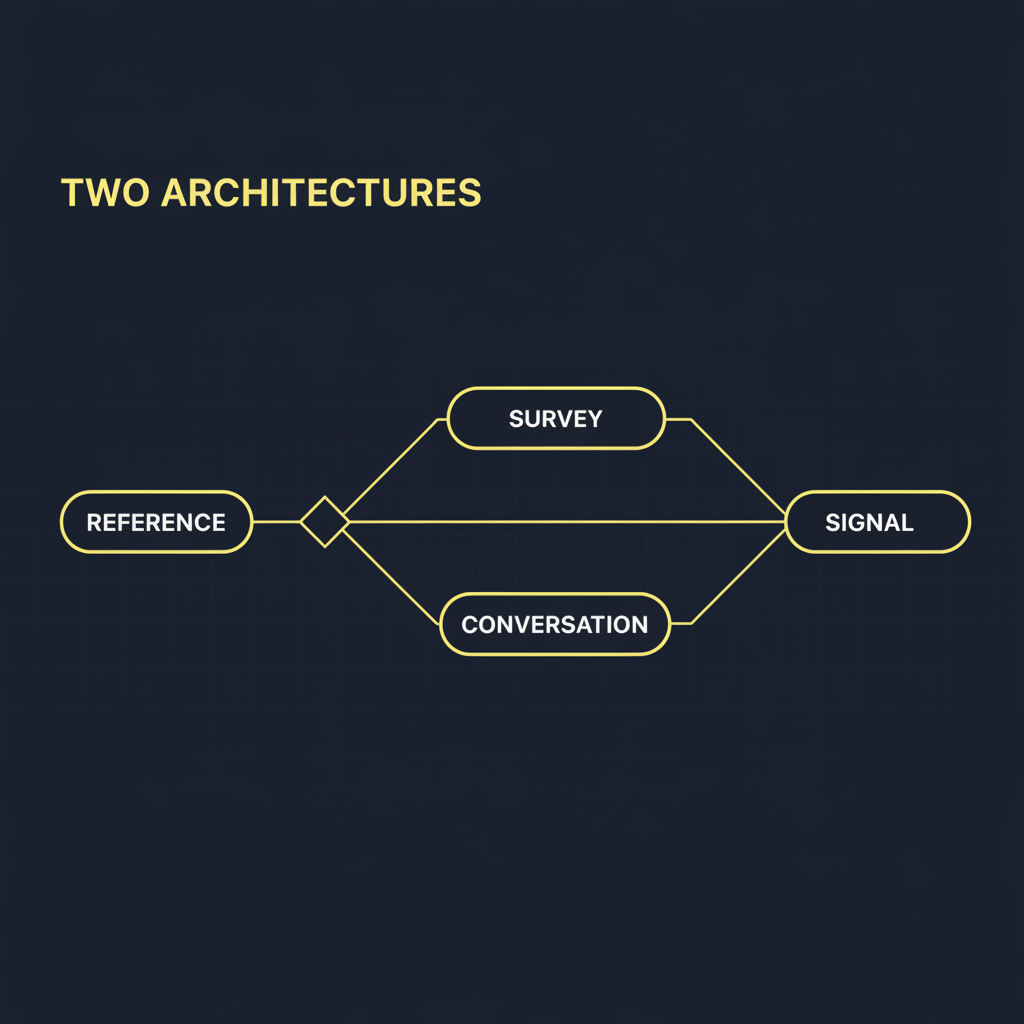
This scenario exposes the fundamental architecture question plaguing reference check automation. Most platforms treat survey-based and conversation-based approaches as interchangeable tools for the same job. They're not.
Survey platforms excel at volume hiring where you need standardized data points across hundreds of candidates. Conversation-based platforms capture nuanced insights about leadership style, cultural fit, and performance patterns that surveys can't touch.
The vendors below are ranked by signal depth — how much actionable intelligence each platform extracts from references. Corporate recruiters hiring account managers need different tools than executive search firms placing C-suite leaders. The architecture you choose determines what you'll learn about your candidates.
How we ranked reference check automation vendors
We evaluated platforms across six criteria that separate functional tools from hiring liability risks.
Signal depth measures the quality of information each platform extracts. Survey-based tools capture structured ratings and brief comments. Conversation-based platforms uncover nuanced feedback through follow-up questions and open dialogue. The depth gap becomes critical for senior hires where cultural fit and leadership style matter more than skill ratings.
Completion rate tracks how often references actually respond. Email surveys suffer from 60-70% completion rates. Phone-based approaches hit 85-90% because they accommodate reference preferences and scheduling constraints.
Fraud resistance evaluates how well platforms verify reference authenticity. Basic email validation catches obvious fakes but misses sophisticated schemes. Advanced tools cross-reference LinkedIn profiles, validate employment history, and flag suspicious response patterns.
FCRA compliance covers Fair Credit Reporting Act requirements for background screening companies. Most HR teams ignore this until they face litigation. Only platforms with proper adverse action workflows and dispute handling qualify for CRA use.
ATS and BGC platform integration determines workflow efficiency. Native integrations beat CSV exports and manual data entry. The best platforms sync directly with Greenhouse, Workday, and major background check providers.
Pricing model ranges from per-check fees to enterprise subscriptions. Volume discounts vary dramatically between vendors.
Survey-based vs. conversation-based: the architecture question
Reference check automation splits into two fundamentally different architectures. Survey-based platforms send structured questionnaires to references, collecting standardized ratings and brief text responses. Conversation-based platforms conduct actual dialogues — whether through AI voice calls, text exchanges, or email conversations that mirror human interaction patterns.
Survey platforms excel at capturing quantifiable data: performance ratings, skill assessments, and yes/no confirmations. They process hundreds of checks daily with minimal human oversight. But surveys miss the nuanced insights that emerge from open-ended conversation — the hesitation before answering about teamwork, the unsolicited warning about stress management, or the enthusiastic endorsement that goes beyond any rating scale.
Conversation platforms capture these behavioral signals and contextual details that predict job performance. References share more when they feel heard rather than surveyed. The tradeoff: conversations take longer and cost more to process, even with AI automation.

| Architecture | Best For | Signal Depth | Volume Capacity | Cost Per Check |
|---|---|---|---|---|
| Survey-based | High-volume, hourly/operational roles | Structured ratings | 500+ daily | $15-25 |
| Conversation-based | Senior, executive, specialized roles | Behavioral insights | 50-100 daily | $35-75 |
Manufacturing companies hiring warehouse staff choose surveys for speed and standardization. Executive search firms conducting C-suite reference checks choose conversations for the depth that justifies six-figure placements. The architecture determines what signal you capture — and what you miss.
The 9 best reference check automation platforms in 2026
These platforms split into two architectures: survey-based systems that scale efficiently for volume hiring, and conversation-based tools that extract deeper insights for senior roles. We ranked by signal depth — how much actionable intelligence each platform delivers about candidate performance, cultural fit, and potential red flags.
Survey platforms dominate because they're cheaper and faster. But speed means nothing if you're hiring the wrong person.
1. Crosschq — survey-based
Crosschq leads the survey category with 85% completion rates and the strongest analytics dashboard. Their "Quality of Hire" scoring system correlates reference ratings with actual performance data, making predictions more reliable than raw survey scores.
The platform excels at mid-level hires where you need consistent data points across multiple candidates. References answer 12-15 standardized questions about work quality, teamwork, and growth areas. Crosschq's strength is turning subjective feedback into quantified hiring intelligence.
FCRA compliance is built-in with automated consent workflows. ATS integrations cover most major platforms including Greenhouse, Lever, and Workday. Pricing starts at $25 per reference check.
The limitation: surveys capture what references think you want to hear, not what they'd share in conversation. For executive hires where nuance matters, Crosschq misses the subtext that determines success or failure.
2. Superunit — conversation-based (AI voice, text & email)
Superunit is the only reference check platform built on the same architecture as its employment verification product: AI agents that reach references simultaneously via phone, text, and email — at any volume. Where survey platforms send a form and wait, Superunit conducts actual conversations, capturing the kind of unstructured signal that only comes from a real exchange.
The scale advantage is meaningful. Superunit can run thousands of reference conversations in parallel, the same way it handles employment verifications. There's no queue, no scheduling bottleneck, no staffing constraint. Average turnaround is around 3 hours. Completion rates hit 80% — higher than most survey platforms — because references can respond through whatever channel they prefer.
Question sets are fully customizable per role, so CRAs and employers aren't locked into a generic competency framework. The output is a structured transcript and summary for every reference, documented with timestamps and chain of custody — the same audit-ready format as Superunit's employment and income verification product. For CRAs bundling reference checks into a BGC package, that consistency matters.
Pricing: Under $5 per reference. No volume minimums.
FCRA compliance: Purpose-built for pre-employment screening with proper disclosures and adverse action workflows. CRAs can deploy without compliance modifications.
Best for: CRAs adding reference checks to existing BGC packages; employers making mid-senior or executive hires where signal depth and turnaround speed both matter.
3. Xref — survey-based
Xref delivers the most polished survey experience in reference checking, with response rates consistently hitting 85-90% across their client base. Their platform automates follow-up sequences and uses behavioral nudges that actually get references to complete questionnaires.
The Australian-founded company excels at customizable question sets that go beyond basic performance ratings. Hiring managers can drill into specific competencies, cultural fit indicators, and scenario-based questions that reveal how candidates handle stress or conflict. Xref's reporting dashboard presents this data through visual scorecards and trend analysis that make patterns obvious at a glance.
Where Xref separates itself from competitors is fraud detection. Their system flags suspicious response patterns, IP address anomalies, and completion times that suggest candidates are gaming the system. For CRAs handling volume hiring, this built-in verification saves hours of manual review.
The platform integrates cleanly with major ATS systems and offers white-label options for agencies wanting to maintain brand consistency. Pricing starts at $15 per reference check, with volume discounts available for enterprise accounts.
Xref works best for mid-level professional roles where you need standardized data points across multiple candidates. The survey architecture means you'll miss the nuanced insights that emerge from actual conversations, but for roles where behavioral consistency matters more than executive judgment, Xref delivers reliable signal at scale.
4. Checkster (Harver) — survey-based
Checkster positions itself as the behavioral assessment arm of talent acquisition, extending reference checks into predictive analytics territory. The platform collects 360-degree feedback from multiple reference sources — not just former managers but peers, direct reports, and clients — then applies psychometric modeling to generate behavioral predictions.
The core differentiator lies in Checkster's competency mapping engine. References rate candidates across pre-defined behavioral dimensions (leadership style, conflict resolution, decision-making speed) rather than answering generic performance questions. This structured approach produces more consistent data than open-ended surveys, though it sacrifices the narrative detail that emerges from actual conversations.
Checkster's fraud detection relies on IP tracking and response pattern analysis to flag suspicious submissions. Multiple references from the same location or identical response timing trigger review protocols. The system integrates with major ATS platforms through API connections, automatically pulling candidate data and pushing completed assessments back to hiring workflows.
Since Harver's acquisition, Checkster has evolved toward volume hiring scenarios where behavioral fit matters more than deep performance history. Manufacturing, retail, and customer service roles benefit most from the competency-based approach. Executive search firms find the behavioral predictions useful but often supplement with live calls for senior positions where relationship dynamics and leadership nuance matter more than standardized competency scores.
5. SkillSurvey (iCIMS) — survey-based
SkillSurvey captures the deepest behavioral insights of any survey-based platform through its science-backed competency framework. The platform maps reference responses to specific job competencies rather than generic performance ratings, delivering predictive analytics that correlate with actual job success.
The 12-competency model covers leadership, problem-solving, and cultural fit dimensions that most surveys reduce to single-digit scales. References rate candidates across granular behaviors: "Takes initiative without being asked" versus broad categories like "work quality." This specificity produces actionable hiring intelligence instead of feel-good scores.
Integration depth sets SkillSurvey apart from standalone tools. The iCIMS acquisition embedded reference checks directly into applicant workflows, automatically triggering surveys when candidates advance to finalist stages. Hiring managers see competency heat maps alongside interview scorecards without platform switching.
Enterprise pricing reflects the sophistication: expect $8,000+ annually for mid-market teams. The investment pays off for companies hiring managers, directors, and executive roles where competency gaps cost six-figure mistakes. Volume hirers will find better ROI with Crosschq's streamlined approach.
SkillSurvey's completion rates hover around 65% — respectable but not exceptional. The longer survey format trades response speed for data depth, making it ideal for senior hires where thorough vetting justifies extended timelines.
6. Searchlight.ai — survey-based + AI summarization
Searchlight positions itself as the "AI-powered reference check platform," but the AI layer sits on top of traditional survey architecture. References receive structured questionnaires, then Searchlight's models analyze responses to generate candidate insights and red flag patterns.
The platform excels at pattern recognition across reference datasets. If a candidate's references consistently mention "works well under pressure" but dodge questions about collaboration, Searchlight's AI will surface that discrepancy in its summary reports. This makes it valuable for high-volume hiring where recruiters need quick signal extraction from survey data.
Searchlight integrates with major ATS platforms and offers customizable question sets for different roles. The AI summarization reduces time-to-insight compared to raw survey platforms, though it still inherits the fundamental limitations of survey-based reference checks — shallow responses and low completion rates for senior hires.
Best fit for mid-market companies running structured hiring processes where speed matters more than reference depth. The AI layer adds genuine value for pattern detection, but won't solve the core problem of getting candid feedback from busy executives who ignore surveys.
Pricing starts around $15 per reference check with volume discounts available.
7. HiPeople — survey-based + AI summarization
HiPeople targets volume hiring teams that need reference data fast. Their platform sends structured surveys to references and uses AI to extract insights from open-text responses, positioning itself as a middle ground between pure survey tools and conversation-based platforms.
The AI summarization feature attempts to identify red flags and patterns across multiple references for the same candidate. HiPeople's algorithms scan for consistency issues, performance concerns, and cultural fit indicators that might get buried in lengthy survey responses.
Integration capabilities include major ATS platforms and basic FCRA compliance features for pre-employment screening. The platform emphasizes speed over depth — most reference cycles complete within 24-48 hours when references respond promptly.
HiPeople works best for mid-market companies hiring at scale where reference checking needs to happen quickly but still requires more insight than basic 1-10 ratings. The AI layer adds value for HR teams that lack time to manually review dozens of reference responses per week.
The limitation remains fundamental to survey architecture: references self-censor in written formats. No AI summarization can extract insights that references choose not to share in the first place.
8. Checkr — survey-based
Checkr is best known as a background screening platform, but its dedicated reference check product has become a serious standalone option for employers that want survey-based references integrated into the same workflow as criminal and employment verification. References receive a structured digital questionnaire, and results feed directly into Checkr's candidate dashboard alongside other screening components.
The integration angle is Checkr's main differentiator. For employers already running background checks through Checkr, adding reference checks requires no additional vendor relationship — the data lands in one place, the consent flow is unified, and adverse action documentation covers both check types. Checkr's ATS integrations span Greenhouse, Lever, Workday, and most major platforms.
Checkr's reference product is survey-based, which means the same depth limitations apply. It won't capture hesitation or follow-up context. But for mid-volume hiring teams that want reference checks bundled cleanly with their existing BGC workflow — without switching to a dedicated reference platform — Checkr removes meaningful friction.
Pricing is per-check and varies by volume; contact Checkr directly for reference check add-on rates within an existing BGC contract.
9. First Advantage — hybrid (BGC suite module)
First Advantage built their reference check automation as a module within their broader background screening suite, creating the industry's only true hybrid architecture. Their platform combines automated survey distribution with live verification calls when responses flag concerns or fail to return.
The hybrid approach works like this: candidates receive standard survey questionnaires, but First Advantage analysts trigger phone interviews when survey scores fall below client thresholds or when references provide incomplete responses. This catches the nuanced feedback that pure automation misses while maintaining efficiency for straightforward checks.
Integration with their background check infrastructure gives First Advantage unique fraud detection capabilities. Cross-referencing reference contact information against criminal databases and employment verification records helps identify fake references that slip past other platforms.
The downside: you're locked into First Advantage's background check ecosystem. Their reference module isn't sold standalone, making it expensive for companies that don't need comprehensive background screening. Pricing starts at enterprise levels, typically $45-75 per combined background and reference check.
First Advantage works best for large employers and CRAs already using their background screening services who want reference checks integrated into their existing workflow. The hybrid model delivers stronger signal quality than pure surveys while remaining more scalable than full conversation platforms.
FCRA and reference checks: what most teams get wrong
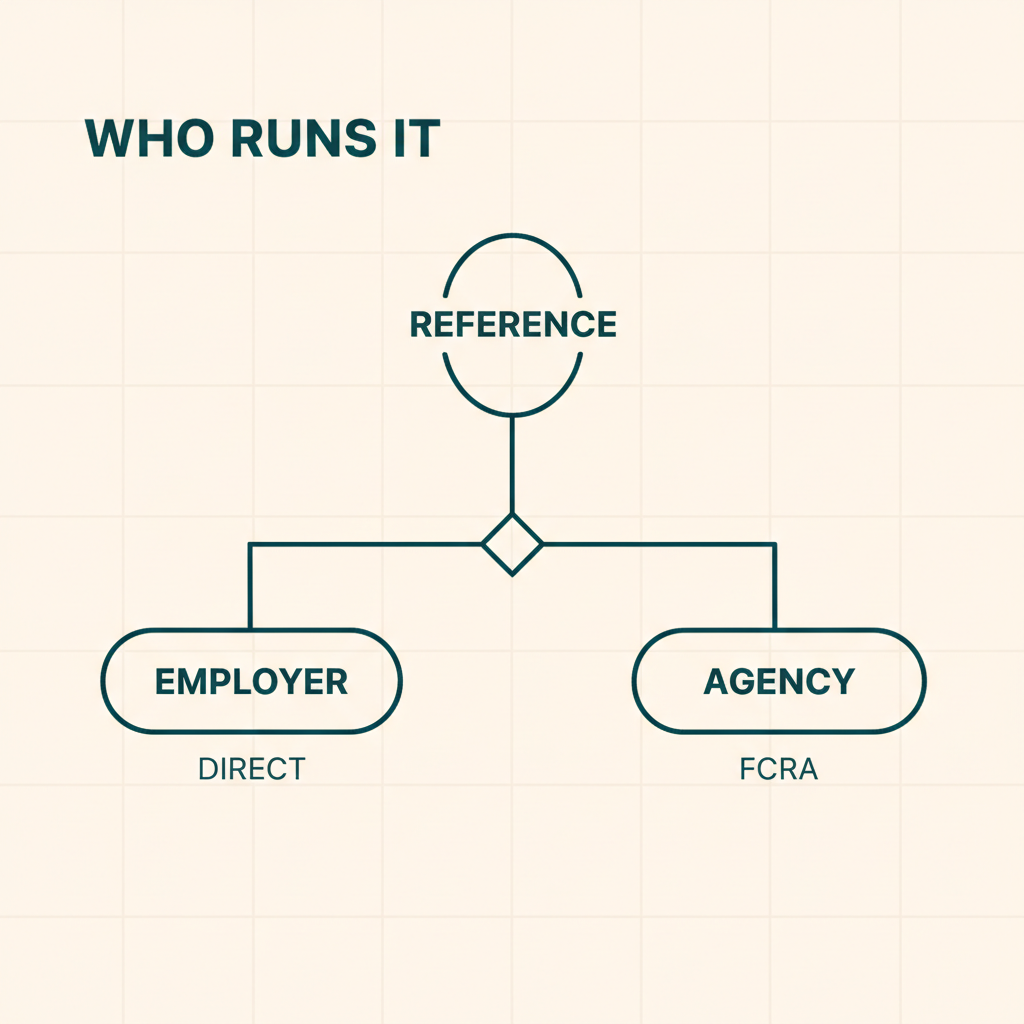
Most employers treat reference checks like background checks under FCRA rules. They don't need to. Reference checks are employment verifications with opinion elements, not consumer reports, when conducted by the hiring employer directly.
The confusion starts when Consumer Reporting Agencies handle reference checks. CRAs must follow FCRA protocols: adverse action notices, dispute procedures, consent forms. But employers using reference check platforms as their own tools operate under different rules. The platform acts as a data processor, not a CRA.
Here's where teams mess up: they apply CRA-level compliance to direct employer reference checks. This creates unnecessary friction and legal exposure. FCRA Section 603(f) defines consumer reports narrowly. Reference opinions gathered by employers for their own hiring decisions typically fall outside this definition.
Background check companies offering reference modules complicate this further. If the same vendor handles criminal records and references, FCRA obligations may extend to the entire relationship. Smart employers separate these functions or choose platforms that clearly position themselves as employer tools, not CRAs.
The safe approach: understand whether your reference check platform operates as your agent or as an independent reporting agency. This determines your compliance requirements.
How to choose by hiring scenario
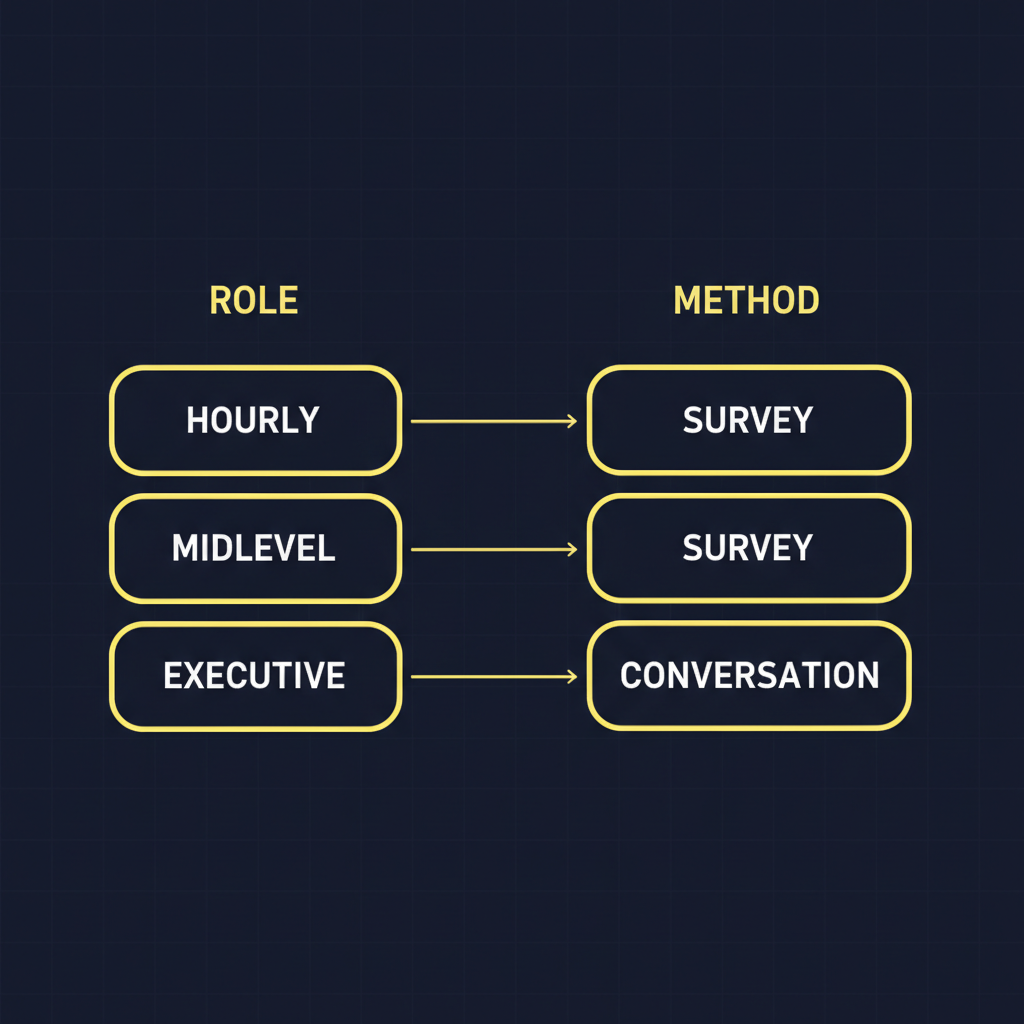
Volume hiring (hourly, entry-level): Survey-based platforms like Crosschq or Xref deliver the speed you need. References complete 5-minute forms in 24-48 hours, giving you basic performance indicators and red flags. The shallow signal depth doesn't matter when you're hiring cashiers or warehouse workers who need basic competency validation.
Mid-level professional roles: Survey platforms with AI summarization like Searchlight.ai or HiPeople offer the best middle ground. You get structured data for comparison while AI extracts nuanced insights from open-ended responses. This works for account managers, project coordinators, and similar roles where you need more than ratings but can't justify conversation costs.
Senior and executive hires: Conversation-based platforms like Superunit become essential. C-suite references won't fill out surveys, but they'll spend 15 minutes on a call discussing leadership style, decision-making patterns, and team dynamics. The unstructured insights from these conversations often reveal deal-breakers that surveys miss entirely.
FCRA-regulated positions: Any platform you choose must document consent and adverse action procedures. First Advantage handles this seamlessly within their BGC suite, while standalone tools like Crosschq provide compliant workflows.
High-security roles: Fraud resistance matters most. Look for platforms that verify reference identity through LinkedIn integration or phone validation. Conversation-based tools inherently resist gaming since live discussions expose fabricated references immediately.
Budget-constrained teams: Start with free tiers from HiPeople for basic survey functionality, then upgrade based on volume and role criticality.
Frequently asked questions
Do reference check automation platforms comply with FCRA requirements?
Most platforms handle FCRA compliance poorly. Survey-based tools like Crosschq and Xref collect opinions that trigger FCRA disclosure requirements but often lack proper adverse action workflows. Conversation-based platforms like Superunit maintain FCRA compliance through structured documentation and automated adverse action processes.
What's the difference between survey-based and conversation-based reference checks?
Survey-based platforms send standardized questionnaires to references who rate candidates on numerical scales. Conversation-based platforms conduct actual phone, text, or email conversations that capture context and follow-up questions. Survey tools excel at volume hiring; conversation tools reveal nuanced insights for senior roles.
How long do automated reference checks take to complete?
Survey-based checks typically complete within 24-48 hours with 60-70% response rates. Conversation-based platforms achieve 85-95% completion rates but require 2-4 business days due to back-and-forth dialogue complexity.
Can I integrate reference check software with my existing ATS?
Most platforms integrate with major ATS systems like Greenhouse, Lever, and Workday. Crosschq offers the broadest integration library for survey-based checks, while conversation-based tools typically require custom API connections.
What do reference check automation platforms cost?
Pricing ranges from $15-50 per check for survey-based platforms to $75-150 per check for conversation-based options. Volume discounts apply at 100+ checks monthly. Enterprise contracts often bundle with broader talent acquisition suites.
Choose by signal, not by default
Your reference checks determine whether great hires succeed or mediocre candidates slip through. The architecture you choose — survey or conversation — shapes every hiring decision downstream.
For high-volume hiring, survey platforms like Crosschq and Xref deliver speed and standardization. For executive and senior roles where nuance matters, conversation-based platforms like Superunit capture the context that surveys miss.
Start with your hiring volume and seniority mix. If you're screening 50+ candidates monthly for mid-level roles, survey automation wins. If you're placing executives or specialized talent where one bad hire costs six figures, invest in conversation depth.
CRAs have additional considerations: FCRA compliance requirements and client service differentiation. Survey platforms handle compliance documentation automatically. Conversation platforms like Superunit offer white-label options that position you as a premium service provider.
Don't default to the platform your ATS vendor recommends. Evaluate signal quality first, integration second. The best reference check is the one that prevents your next regrettable hire.
Ready to upgrade your reference process? Most platforms offer free trials. Test completion rates with your actual reference network before committing to annual contracts.